Scaling a marketing team is one of the most important challenges growing companies face. What works when a business has a single marketer or a small group of generalists rarely works when the organization is responsible for managing multiple acquisition channels, supporting sales, launching products, maintaining a brand presence, and generating predictable pipeline growth.
In the early stages of growth, marketing teams often operate with a high degree of flexibility. Team members wear multiple hats, decisions happen quickly, and communication is informal. As the company grows, however, the demands placed on marketing increase dramatically. More campaigns are running simultaneously, more stakeholders need visibility, and more specialized skills become necessary to maintain performance.
Many organizations assume scaling simply means hiring more marketers. In reality, growth introduces new operational challenges. Without the right structure, additional hires can create confusion rather than efficiency. Teams may struggle with unclear ownership, duplicated work, inconsistent processes, and communication bottlenecks that slow execution.
Successful marketing organizations scale by intentionally evolving their structure, responsibilities, and workflows at each stage of growth. They build systems before chaos appears, define ownership clearly, and introduce specialization only when it creates measurable value.
This guide explains how marketing team structures evolve, why many teams break down as they grow, and how to scale your marketing organization through each stage of development.
Why Does Marketing Team Structure Break Down at Scale?

Marketing structures rarely fail because teams lack talent. More often, they fail because the systems that worked for a small team cannot support a larger organization.
As marketing complexity increases, operational friction increases as well. New channels, campaigns, products, and stakeholders create dependencies that require more coordination than a startup-style structure can handle.
Communication Becomes a Bottleneck
In small teams, communication happens naturally. Team members sit in the same meetings, share information quickly, and have visibility into most projects.
As headcount grows, communication paths multiply. A five-person team has relatively few communication relationships. A twenty-five-person team has hundreds of potential information-sharing connections.
Without clear processes, important information becomes fragmented. Teams begin operating in silos, decisions become inconsistent, and projects take longer to complete.
Generalists Reach Their Limits
Early-stage marketing teams often rely heavily on generalists who manage multiple responsibilities simultaneously.
A single marketer may handle:
- Content creation
- SEO
- Email marketing
- Paid advertising
- Analytics
- Social media
This approach works during the startup phase because workloads remain manageable. As marketing investment increases, however, each discipline becomes more sophisticated.
Eventually, one person cannot effectively manage every channel at a professional level. Performance plateaus, priorities compete for attention, and opportunities are missed.
Process Debt Accumulates
Many growing organizations focus on campaign execution while postponing process development.
At first, this seems efficient. Teams move quickly and avoid bureaucracy. Over time, however, undocumented workflows create hidden inefficiencies.
Common symptoms include:
- Repeated mistakes
- Inconsistent campaign launches
- Missing deadlines
- Poor handoffs
- Knowledge trapped with individual employees
Without documented processes, scaling becomes increasingly difficult because every new hire must learn through observation rather than established systems.
Channel Expansion Creates Complexity
Most growing companies gradually expand beyond a single marketing channel.
A company that initially relied on content marketing may eventually add:
- SEO
- Paid search
- Social media
- Email marketing
- Events
- Partnerships
- Product marketing
- Customer marketing
Each channel requires unique expertise, tools, reporting structures, and optimization strategies.
Without proper organizational design, channel growth creates overlapping responsibilities and unclear accountability.
Reporting and Measurement Become More Difficult
As teams grow, executives require more visibility into performance.
Leadership wants answers to questions such as:
- Which channels generate revenue?
- Which campaigns drive pipeline?
- Which activities deserve additional investment?
- Where are bottlenecks occurring?
If data systems and reporting structures do not evolve alongside team growth, decision-making becomes increasingly difficult.
Marketing leaders may struggle to allocate resources effectively because they lack a unified view of performance.
Scaling Exposes Ownership Gaps
Small teams often rely on informal ownership models.
When only a few people are involved, everyone generally knows who is responsible for what. Larger teams require significantly more clarity.
Without defined ownership:
- Projects stall
- Decisions get delayed
- Accountability becomes unclear
- Teams duplicate effort
One of the primary goals of scaling a marketing team is establishing clear responsibility for outcomes, channels, and strategic initiatives.
What Are the Common Marketing Team Structures?

As organizations grow, they typically adopt one of several common marketing structures. Each model offers different advantages depending on company size, product complexity, and market strategy.
Functional Structure
The functional structure is the most common marketing organizational model.
In this approach, team members are grouped according to their expertise.
A typical functional marketing team might include:
- Content marketing
- SEO
- Paid media
- Email marketing
- Marketing operations
- Product marketing
- Design
- Analytics
Each specialist focuses on a specific discipline and reports to a marketing manager or director responsible for that function.
Advantages
- Deep expertise within each marketing channel
- Clear ownership and accountability
- Easier hiring and career progression
- Consistent processes within departments
Challenges
- Teams may become siloed
- Cross-functional collaboration requires coordination
- Campaign execution can involve multiple handoffs
The functional structure works particularly well for companies transitioning from startup growth into a more mature marketing organization.
Product-Based or Market-Based Structure
As companies expand products, customer segments, or geographic regions, functional structures may become less effective.
In these situations, organizations often organize teams around products, customer groups, or markets.
Examples include:
- SMB marketing team
- Mid-market marketing team
- Enterprise marketing team
Or:
- Product A marketing team
- Product B marketing team
- Product C marketing team
Each team owns strategy and execution for its assigned market or product area.
Advantages
- Strong alignment with business objectives
- Faster decision-making
- Better customer understanding
- More focused messaging
Challenges
- Resource duplication
- Inconsistent execution across teams
- Potential inefficiencies
This structure becomes increasingly valuable when different customer segments require significantly different marketing approaches.
Hybrid or Matrix Structure
Many modern organizations adopt a hybrid structure that combines functional expertise with product or market ownership.
In a matrix model, specialists belong to functional departments while simultaneously supporting specific business units or product teams.
For example:
- SEO specialists remain part of the SEO team
- Content marketers remain part of content marketing
- Paid media specialists remain part of paid acquisition
However, they collaborate closely with dedicated product or market teams.
Advantages
- Maintains specialist expertise
- Improves cross-functional collaboration
- Supports complex organizations
- Enables efficient resource sharing
Challenges
- Dual reporting relationships
- Increased coordination requirements
- Potential ownership conflicts
Although more complex to manage, hybrid structures often provide the best balance between specialization and business alignment in larger organizations.
How to Scale a Marketing Team Phase by Phase

The most effective marketing organizations evolve gradually. Rather than hiring every specialist immediately, they add roles as complexity and business needs increase.
Foundation Stage (1–10 Marketing Roles)
At this stage, the primary objective is proving marketing effectiveness while building repeatable systems.
Most companies rely heavily on versatile marketers who can contribute across multiple disciplines.
Typical foundation-stage roles include:
- Marketing manager or head of marketing
- Content marketer
- Growth marketer
- Designer
- Marketing coordinator
In many organizations, a single individual may cover several of these responsibilities.
Key Priorities
Establish Core Positioning
Before scaling marketing activities, the team must define:
- Brand messaging
- Value proposition
- Customer personas
- Market positioning
Without these foundations, future marketing investments become less effective.
Build Initial Acquisition Channels
Rather than pursuing every channel simultaneously, successful teams focus on a small number of channels that show early traction.
Examples include:
- SEO
- Content marketing
- Paid search
- Email marketing
- Partnerships
The goal is identifying repeatable growth opportunities before expanding resources.
Create Basic Processes
Many teams postpone documentation until they become larger.
The opposite approach works better.
Foundational processes should include:
- Campaign planning
- Content production
- Approval workflows
- Reporting procedures
- Asset management
Early documentation reduces future scaling challenges.
Measure Performance Consistently
Even small teams benefit from clear performance measurement.
Key metrics often include:
- Website traffic
- Leads generated
- Marketing-qualified leads
- Customer acquisition cost
- Conversion rates
Consistent reporting creates the foundation for future decision-making.
Specialization Stage (10–25 Marketing Roles)
As growth accelerates, marketing complexity increases significantly.
This is the stage where generalists begin transitioning into specialists.
Common additions include:
- SEO specialist
- Content strategist
- Paid media manager
- Marketing operations manager
- Product marketer
- Email marketing specialist
- Analytics specialist
Key Priorities
Introduce Channel Ownership
Each major marketing channel should have a dedicated owner responsible for performance.
This improves:
- Accountability
- Optimization speed
- Strategic focus
Specialists can dedicate more attention to experimentation and continuous improvement.
Formalize Team Structure
Reporting relationships should become more clearly defined.
Many organizations establish:
- Demand generation team
- Content team
- Product marketing team
- Marketing operations function
Formal structures reduce ambiguity and improve execution consistency.
Invest in Marketing Operations
Marketing operations becomes increasingly important during this phase.
Responsibilities often include:
- Data management
- Automation
- CRM administration
- Reporting systems
- Workflow optimization
Strong operations functions help marketing scale without proportionally increasing headcount.
Improve Cross-Functional Alignment
Marketing now interacts more frequently with:
- Sales
- Customer success
- Product teams
- Executive leadership
Formal communication processes become essential to maintain alignment across departments.
Full-Scale Marketing Department (25+ Roles)
At this stage, marketing functions as a sophisticated business unit rather than a small team.
The organization typically includes multiple layers of management and specialized expertise.
Common departments include:
- Demand generation
- Content marketing
- SEO
- Product marketing
- Brand marketing
- Marketing operations
- Lifecycle marketing
- Analytics
- Creative services
- Public relations
- Customer marketing
Key Priorities
Build Leadership Layers
Marketing leaders can no longer directly manage every initiative.
Organizations typically introduce:
- Directors
- Senior managers
- Team leads
Leadership layers create scalability while maintaining strategic oversight.
Develop Specialized Centers of Excellence
Advanced marketing organizations often establish expert teams focused on:
- Analytics
- Automation
- Conversion optimization
- Research
- Creative strategy
These teams support multiple marketing functions simultaneously.
Standardize Workflows Across Teams
As complexity increases, consistency becomes critical.
Leading organizations document:
- Campaign frameworks
- Planning processes
- Reporting standards
- Performance reviews
- Resource allocation models
Standardization improves quality while reducing operational friction.
Focus on Strategic Growth
Large marketing departments spend less time managing individual tasks and more time driving strategic outcomes.
Leadership attention shifts toward:
- Market expansion
- Revenue growth
- Customer retention
- Brand development
- Competitive positioning
At this stage, success depends not only on hiring more people but on creating systems that allow teams to execute efficiently at scale.
The companies that scale marketing most effectively are those that evolve their structure intentionally, introduce specialization at the right time, and build operational foundations before complexity overwhelms execution.
How AI Changes the Math on Scaling a Marketing Team

For years, scaling a marketing team followed a predictable formula: more campaigns required more people. More content meant hiring more writers. More leads meant hiring more marketers to manage channels, reporting, and operations.
Artificial intelligence has fundamentally changed that equation.
Modern marketing teams can now accomplish significantly more work with fewer manual processes. AI does not eliminate the need for marketers, but it allows organizations to delay certain hires, increase productivity, and focus human talent on higher-value activities.
The most successful marketing teams in 2026 are not replacing people with AI. They are combining AI-powered workflows with specialized human expertise.
AI Reduces Operational Bottlenecks
Many marketing activities involve repetitive work:
- Content briefs
- Keyword research
- Campaign reporting
- Audience segmentation
- Ad variation testing
- Social media scheduling
- Email personalization
AI can automate or accelerate these tasks, reducing the administrative burden on marketers.
Instead of spending hours compiling reports, teams can focus on interpreting results and improving performance.
Small Teams Can Operate Like Larger Teams
One of the biggest changes AI introduces is leverage.
A five-person marketing team equipped with AI tools can often produce output comparable to what previously required ten or more employees.
For example:
- A content strategist can generate first drafts faster.
- A paid media specialist can create dozens of ad variations in minutes.
- An SEO manager can analyze large keyword datasets more efficiently.
- Marketing operations teams can automate reporting and workflows.
This allows growing businesses to extend the lifespan of lean marketing teams before adding additional headcount.
AI Increases the Importance of Specialists
While AI improves execution efficiency, it does not replace strategic thinking.
Organizations still need people who can:
- Develop positioning
- Understand customer behavior
- Build demand generation strategies
- Interpret analytics
- Make budget decisions
- Manage brand reputation
As AI handles more tactical work, marketers increasingly focus on decision-making, creativity, and business strategy.
AI Makes Marketing Operations More Valuable
Marketing operations has become one of the most important functions in a modern marketing organization.
Teams that connect AI tools, CRM platforms, automation systems, and reporting dashboards create significant efficiency advantages.
Rather than adding more people to handle growing workloads, companies can often scale through better systems and automation.
The result is a marketing organization that grows revenue faster than headcount.
Which Marketing Roles to Hire at Each Growth Stage

Hiring too early creates unnecessary overhead. Hiring too late creates bottlenecks that slow growth.
The most effective marketing organizations add roles based on operational needs rather than arbitrary headcount targets.
Foundation Hires (Generalists and Marketing Leads)
In the earliest stage of growth, versatility matters more than specialization.
The primary goal is establishing market traction, validating messaging, and identifying repeatable acquisition channels.
Common foundation-stage hires include:
Head of Marketing or Marketing Manager
This person owns overall marketing strategy and execution.
Responsibilities often include:
- Brand positioning
- Campaign planning
- Budget allocation
- Reporting
- Cross-functional coordination
In smaller organizations, this individual may also manage content, SEO, email marketing, and paid acquisition.
Growth Marketing Generalist
Growth marketers help identify which channels generate measurable business results.
Typical responsibilities include:
- Lead generation
- Conversion optimization
- Paid advertising
- Analytics
- Marketing automation
A strong generalist provides flexibility while the company determines where to invest further resources.
Content Marketer
Content often becomes one of the first scalable marketing assets.
A content marketer may handle:
- Blog content
- Case studies
- Email campaigns
- Social content
- Customer stories
Because content supports multiple channels simultaneously, it frequently delivers strong returns during early growth.
Marketing Coordinator
As marketing activities expand, coordination becomes increasingly important.
This role often supports:
- Campaign execution
- Project tracking
- Reporting
- Vendor management
- Content publishing
A coordinator helps reduce administrative workload across the team.
Specialist Hires (Channel Experts and Marketing Ops)
Once marketing reaches approximately 10–25 people, specialization becomes necessary.
Each major channel begins requiring dedicated expertise.
SEO Specialist
SEO becomes more complex as content volume increases.
Responsibilities include:
- Technical SEO
- Keyword strategy
- Site audits
- Content optimization
- Performance monitoring
Dedicated SEO ownership often improves long-term organic growth.
Paid Media Manager
As advertising budgets increase, campaign management becomes increasingly sophisticated.
This role typically manages:
- Google Ads
- LinkedIn Ads
- Meta campaigns
- Budget allocation
- Performance optimization
Even small improvements in efficiency can significantly impact customer acquisition costs.
Product Marketer
Product marketing becomes critical as organizations expand offerings and customer segments.
Responsibilities include:
- Positioning
- Messaging
- Launch planning
- Competitive intelligence
- Sales enablement
Product marketers help align market demand with business objectives.
Email and Lifecycle Marketing Specialist
Customer retention becomes increasingly important as acquisition costs rise.
Lifecycle marketers focus on:
- Customer onboarding
- Retention campaigns
- Expansion opportunities
- Customer engagement
- Marketing automation
These programs often generate some of the highest ROI within marketing.
Marketing Operations Manager
Marketing operations serves as the infrastructure layer of the marketing organization.
Responsibilities typically include:
- CRM management
- Workflow automation
- Reporting systems
- Data governance
- Technology stack management
Many scaling challenges can be solved through strong marketing operations rather than additional hiring.
When Should You Keep Marketing In-House vs. Outsource?
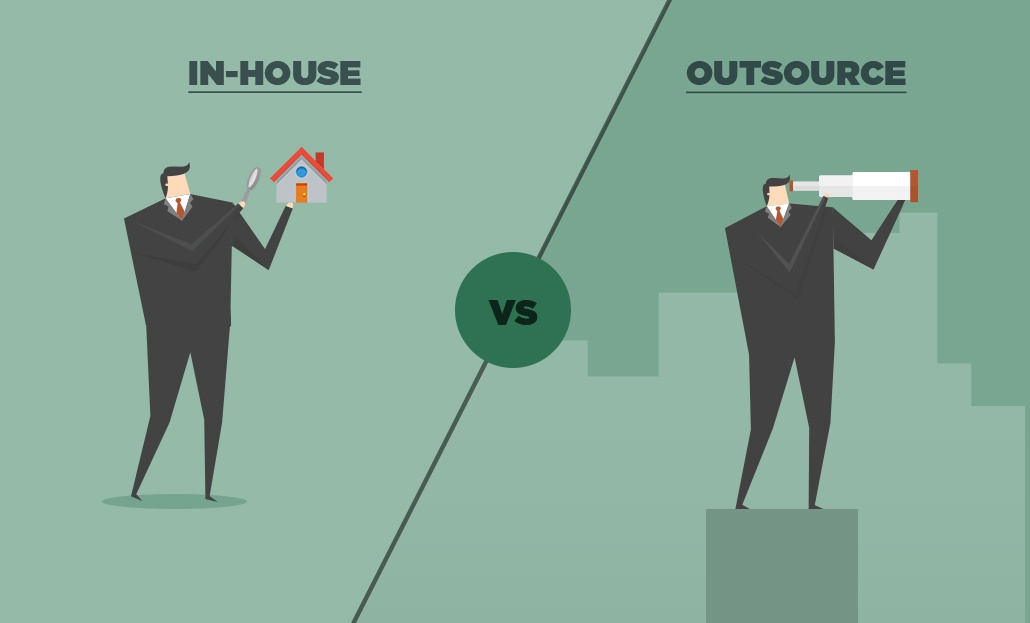
One of the most important decisions during growth is determining which marketing functions should remain internal and which can be outsourced.
There is no universal answer. The right approach depends on strategic importance, available expertise, and resource constraints.
Keep Marketing In-House When
Certain activities directly influence company strategy and customer perception.
These functions usually benefit from internal ownership.
Examples include:
- Brand strategy
- Positioning
- Product marketing
- Customer insights
- Marketing leadership
- Revenue planning
Internal teams typically possess deeper organizational knowledge and stronger alignment with business objectives.
Consider Outsourcing When
Some marketing functions require highly specialized expertise or fluctuating workloads.
Examples include:
- Technical SEO projects
- Video production
- Public relations
- Website development
- Design overflow work
- Paid advertising audits
Outsourcing can provide access to expert talent without requiring permanent headcount.
The Hybrid Model Often Works Best
Many high-growth organizations use a hybrid approach.
Internal teams retain ownership of strategy while external partners provide specialized execution.
This model allows companies to:
- Maintain control
- Scale faster
- Access specialized expertise
- Improve resource efficiency
As the marketing organization matures, some outsourced functions may eventually move in-house.
How to Set KPIs for Every Marketing Role and Channel

Marketing KPIs should connect individual performance to broader business outcomes.
The goal is not simply measuring activity. The goal is measuring impact.
Marketing Leadership KPIs
Marketing leaders are typically accountable for:
- Pipeline contribution
- Revenue influence
- Customer acquisition cost
- Marketing ROI
- Budget efficiency
These metrics align marketing performance with company growth objectives.
Content Marketing KPIs
Content teams often track:
- Organic traffic growth
- Keyword rankings
- Content engagement
- Lead generation
- Conversion rates
Strong content programs support both brand visibility and demand generation.
SEO KPIs
SEO performance commonly includes:
- Organic sessions
- Ranking improvements
- Share of search
- Backlink growth
- Organic conversions
The most valuable SEO metrics ultimately connect to revenue outcomes.
Paid Media KPIs
Paid acquisition teams frequently measure:
- Cost per lead
- Cost per acquisition
- Return on ad spend
- Conversion rate
- Pipeline generated
Budget efficiency is typically a primary objective.
Email Marketing KPIs
Lifecycle and email teams often focus on:
- Open rates
- Click-through rates
- Revenue per campaign
- Retention rates
- Customer engagement
As privacy changes affect open-rate reliability, conversion-based metrics continue gaining importance.
Marketing Operations KPIs
Marketing operations teams may track:
- Automation adoption
- Reporting accuracy
- Data quality
- Campaign deployment speed
- Operational efficiency
Their success often enables improvements across the entire marketing organization.
How We Track Marketing Team Scaling in Corexta
As marketing teams grow, one of the biggest challenges is maintaining visibility across people, projects, workloads, and performance.
Corexta helps solve this by bringing multiple operational functions into a single platform. Rather than managing projects, resources, reporting, HR processes, and client activities across disconnected tools, teams can centralize operations and reduce workflow fragmentation.
For scaling marketing teams, visibility becomes just as important as execution.
With Corexta, marketing leaders can:
- Track campaigns and projects from a unified dashboard
- Assign tasks and monitor progress across teams
- Manage resource allocation and workloads
- Monitor time tracking and project performance
- Coordinate hiring and onboarding as teams grow
- Centralize reporting and operational data across departments
As organizations move from a handful of marketers to multiple specialized teams, maintaining operational alignment becomes increasingly difficult.
Corexta supports this transition through integrated project management, HR management, recruitment, client management, and reporting capabilities that help leaders maintain visibility as complexity increases.
Instead of scaling through disconnected spreadsheets and separate software systems, marketing leaders gain a centralized operational view that supports faster decision-making and better accountability. Try Corexta free today!
Frequently Asked Questions
Who should the marketing team report to?
In most organizations, marketing reports to the Chief Marketing Officer (CMO), VP of Marketing, or Head of Marketing. In smaller companies, marketing often reports directly to the CEO or founder until dedicated executive leadership is established.
What does a marketing org chart look like at 50 employees?
A company with approximately 50 total employees often has a marketing team consisting of 5–10 professionals. Typical functions include demand generation, content marketing, SEO, product marketing, design, and marketing operations, all reporting through a marketing leader.
What is the ideal marketing team size for a startup?
There is no universal number, but many startups begin with one to three marketers. Early hires typically focus on growth, content, and overall marketing leadership before introducing channel specialists.
How much of the headcount or budget should go to marketing?
The answer depends on industry, growth goals, and business model. Growth-stage companies often invest more heavily in marketing than mature organizations because customer acquisition remains a top priority.
What’s the difference between a marketing team and a marketing department?
A marketing team usually refers to a smaller group responsible for marketing activities. A marketing department is a larger organizational unit containing multiple specialized teams, managers, and operational functions.
How do you structure a SaaS marketing team specifically?
Most SaaS organizations structure marketing around demand generation, content marketing, product marketing, lifecycle marketing, customer marketing, and marketing operations. As the company scales, each function typically gains dedicated ownership.
What are the biggest challenges when scaling a marketing team?
Common challenges include communication breakdowns, unclear ownership, process inconsistency, data fragmentation, reporting complexity, hiring the right specialists, and maintaining alignment between marketing activities and business goals.
Successfully scaling a marketing team requires more than increasing headcount. Organizations that build clear structures, establish repeatable processes, invest in operations, and strategically apply AI are better positioned to support sustainable growth without sacrificing efficiency.
Read More: How to Write Procedures in 7 Clear Steps