Managing one marketing project is already a challenge—but handling multiple campaigns at the same time can feel overwhelming if you don’t have the right system in place. Between balancing deadlines, aligning team members, and ensuring consistent brand messaging, marketers often find themselves juggling too many moving parts at once.
The reality is that today’s fast-paced digital world demands multitasking. From social media campaigns and email newsletters to product launches and paid ads, every project competes for time and attention. Without a clear structure, it’s easy to miss deadlines, duplicate work, or lose track of campaign performance.
That’s why effective multi-project management is not just a skill—it’s a necessity for modern marketing teams. With the right approach, you can streamline workflows, keep everyone on the same page, and deliver successful campaigns without burning out your team.
This guide will walk you through proven strategies, common mistakes to avoid, and the tools—like Corexta—that can help you manage several marketing projects smoothly and confidently.
The Reality of Managing Several Marketing Projects

Juggling multiple marketing projects is not as simple as running one campaign after another. In reality, most businesses operate with overlapping timelines, shared resources, and competing priorities. A single campaign might require coordination across design, content, paid ads, and analytics—now multiply that by three, five, or even ten campaigns happening at the same time.
This constant overlap can quickly create chaos if teams don’t have visibility into who’s doing what and when. Missed deadlines, duplicated efforts, and inconsistent messaging are common side effects of poor project management. Even the most skilled marketers can feel stretched thin when every project is labeled as “urgent.”
Another challenge is that marketing campaigns often depend on external factors—client approvals, vendor timelines, or shifting market trends. These moving parts make planning even more complex. Without a clear system, teams risk spending more time putting out fires than actually driving results.
The reality is simple: managing several marketing projects requires more than hard work. It demands structure, prioritization, and the right tools to keep projects aligned without burning out your team.
How to Manage Multiple Marketing Projects Effectively
Running several marketing projects at once doesn’t have to feel overwhelming. The key is to build systems that bring clarity, prevent duplication, and keep your team focused on what truly matters. Here’s how you can do it effectively:
1. Create a single source of truth—before things get messy
When multiple campaigns are running, it’s easy for information to scatter across emails, chat threads, or spreadsheets. A single source of truth (SSOT) ensures everyone knows where to find the latest updates, assets, and deadlines. Whether you use a dedicated project management tool like Corexta or a shared workspace, keeping everything centralized prevents miscommunication and wasted effort.
2. Break projects down by how your team actually works
Every team has its own rhythm. Some prefer agile sprints, while others rely on detailed step-by-step task lists. Break down each project into actionable tasks that reflect how your team executes best. For example, a social media campaign might be broken into content creation → design → scheduling → reporting. Matching workflows to your team’s natural style keeps things moving smoothly.
3. Prioritize across campaigns
Not all projects are created equal. A product launch may take priority over a seasonal email campaign. Establish clear priorities and communicate them to your team so they can allocate their time and energy effectively. Using frameworks like Eisenhower Matrix or setting project tiers (high, medium, low) helps prevent everything from being treated as equally urgent.
4. Use a timeline that prevents overlaps and missed dependencies
Overlapping deadlines and hidden dependencies are major roadblocks. A visual project timeline (like a Gantt chart) makes it easier to see where tasks intersect. This helps you avoid bottlenecks, such as waiting on design approval before content goes live. Planning with dependencies in mind ensures campaigns launch on time without last-minute scrambles.
5. Automate handoffs and logistics (not just reminders)
Manually following up on every handoff wastes time and increases the risk of things slipping through the cracks. Automation tools can streamline transitions—for example, automatically assigning the next task once the previous one is completed. Instead of just setting reminders, focus on building self-moving workflows that reduce friction and keep projects flowing.
6. Anchor feedback to the work
Feedback can derail projects when it’s scattered across email threads or chat apps. To keep it organized, anchor feedback directly to the relevant task, document, or asset. For instance, leaving comments on a draft within your project tool ensures the context is never lost. This eliminates confusion and speeds up revisions.
7. Track progress and report without scrambling
When managing multiple campaigns, stakeholders expect regular updates. Instead of scrambling to create reports at the last minute, set up dashboards or automated reporting systems. These give real-time visibility into progress, performance, and potential risks. With data readily available, you can make faster decisions and show the impact of your team’s work.
What a Multi-Project Marketing Workspace Looks Like in Corexta
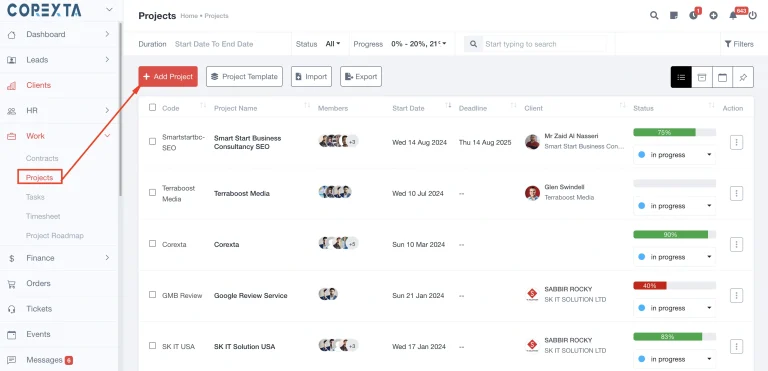
When you’re running several campaigns at once, visibility is everything. Corexta is designed as an all-in-one marketing workspace that gives teams a clear view of every project, task, and deadline in one place. Instead of jumping between spreadsheets, chat apps, and scattered documents, Corexta centralizes everything in a single dashboard.
A multi-project marketing workspace in Corexta typically includes:
-
Campaign dashboards – A bird’s-eye view of all active campaigns with timelines, priorities, and assigned team members.
-
Task boards – Visual workflows (Kanban boards, lists, or timelines) that show exactly who is working on what, and what’s next.
-
Collaboration hub – Built-in communication so that feedback, briefs, and approvals stay tied to specific tasks.
-
Automated workflows – Rules that move tasks forward once a step is complete, reducing delays and manual follow-ups.
-
Analytics and reporting – Real-time insights into performance, progress, and potential bottlenecks, all without scrambling for data.
In practice, this means you can launch a product campaign, manage a content calendar, and track paid ad performance side by side—without losing track of deadlines or duplicating efforts. Corexta gives marketing teams a single source of truth and a workspace that scales with growing workloads.
How Marketing Project Management Saves You Time
Time is often the biggest casualty when managing multiple marketing projects. Without structure, teams spend more time searching for information, chasing approvals, or fixing miscommunication than actually executing campaigns. Marketing project management flips this problem on its head by giving you systems that reduce waste and boost productivity.
Here’s how it saves time:
-
Clear priorities – With a structured system, your team knows what comes first, avoiding endless back-and-forth about “urgent” tasks.
-
Streamlined communication – Instead of digging through emails, all project updates and feedback live in one place, saving hours of searching.
-
Automated workflows – Repetitive handoffs and status updates happen automatically, freeing up your team to focus on creative work.
-
Reduced rework – Anchoring feedback and tasks in the right place prevents errors and duplicate work, which often cost valuable time.
-
Smarter resource allocation – Project visibility ensures the right people are working on the right tasks, preventing burnout and delays.
When applied consistently, marketing project management ensures that no time is wasted on logistics. Instead, your team spends more energy on strategic, creative, and high-impact activities—the kind of work that drives growth.
Common Mistakes to Avoid When Managing Multiple Marketing Projects

Even with the best intentions, many marketing teams fall into patterns that make managing several projects harder than it needs to be. By recognizing these common mistakes, you can avoid wasted effort and keep campaigns running smoothly.
❌ Mistake 1: Treating every campaign like a blank slate
Starting from scratch with each campaign eats up valuable time and resources. While every project has unique goals, most campaigns share repeatable elements—like content workflows, design approvals, or reporting formats. Instead of reinventing the wheel, build templates and standardized processes you can reuse. This not only saves time but also ensures consistency across campaigns.
❌ Mistake 2: Splitting planning and execution across tools
Many teams brainstorm in one tool, assign tasks in another, and track progress in yet another. This fragmented approach creates silos and forces people to waste time searching for updates. The fix? Use an integrated workspace—like Corexta—where planning, execution, and reporting live together. A single platform keeps everyone aligned and reduces context switching.
❌ Mistake 3: Forgetting to map dependencies
Campaigns often rely on sequential tasks. For example, ad copy can’t be published before the visuals are designed, and an email campaign can’t go live before the landing page is approved. Forgetting to map these dependencies leads to bottlenecks, missed deadlines, and team frustration. By visualizing dependencies in a project timeline, you can spot risks early and prevent overlaps.
❌ Mistake 4: Reporting manually
Manual reporting is time-consuming and error-prone. Gathering data from different platforms, formatting it into a presentation, and sending updates can take hours each week. Instead, set up automated reporting dashboards that pull data in real-time. This not only saves time but also ensures stakeholders always have up-to-date insights without waiting for manual reports.
Tools That Help You Stay on Track
Managing multiple marketing projects requires more than just good planning—it also calls for the right set of tools to keep everything running smoothly. The right tech stack can save hours of manual work, improve collaboration, and ensure that nothing slips through the cracks. Here are some powerful tools that can make a big difference:
Corexta: The all-in-one workspace for marketing teams
Corexta is built to be the single source of truth for marketing teams. From campaign planning and task assignments to collaboration and reporting, everything happens in one place. Teams can manage multiple projects side by side, track dependencies, automate workflows, and create real-time dashboards—all without switching tools. This level of integration makes Corexta a game-changer for marketing project management.
Zapier – Automate repetitive tasks across your stack
Zapier connects the apps you already use, allowing you to create automations called “Zaps.” For example, you can automatically send new leads from a form to your CRM, or trigger Slack notifications when a task is completed in Corexta. By eliminating repetitive manual work, Zapier helps teams focus on strategy and execution.
Loom – Fast, async updates for your team or clients
Sometimes a quick video update is faster and clearer than a long email. Loom lets you record your screen and voice to explain progress, share feedback, or walk clients through campaign results. Because it’s asynchronous, teammates and clients can watch when it’s convenient, cutting down on endless meetings while keeping everyone informed.
Grammarly – Keep your brand voice sharp across every asset
Consistency in tone and grammar is vital when managing multiple marketing campaigns. Grammarly helps by checking grammar, spelling, clarity, and tone across everything from emails to ad copy. This ensures your brand messaging stays sharp, professional, and aligned—no matter how many campaigns you’re juggling.
Corexta: The all-in-one workspace for marketing teams
When it comes to managing multiple marketing projects, Corexta stands out as the ultimate solution. Unlike scattered tools that only solve part of the problem, Corexta provides an integrated workspace where marketing teams can plan, execute, and measure campaigns—all under one roof.
Here’s what makes Corexta so powerful for marketing teams:
-
Centralized campaign management – Run multiple campaigns side by side with full visibility into tasks, timelines, and dependencies.
-
Customizable workflows – Whether your team works in agile sprints, Kanban boards, or detailed task lists, Corexta adapts to your style.
-
Seamless collaboration – Feedback, briefs, and approvals stay attached to specific tasks, so nothing gets lost in endless email chains.
-
Automation built in – From task handoffs to reporting, Corexta reduces repetitive manual work, freeing your team for creative problem-solving.
-
Real-time reporting – Dashboards give instant insights into campaign performance, so you can make data-driven decisions without scrambling for updates.
-
Scalable for growth – As your team and projects grow, Corexta scales with you, keeping your workspace organized and efficient.
By using Corexta as your single source of truth, you eliminate silos, reduce wasted time, and keep projects on track without burning out your team. It’s not just a project management tool—it’s a productivity hub designed specifically for marketing success.
👉 If your team is ready to manage multiple campaigns with less chaos and more clarity, Corexta is the all-in-one workspace you’ve been looking for.