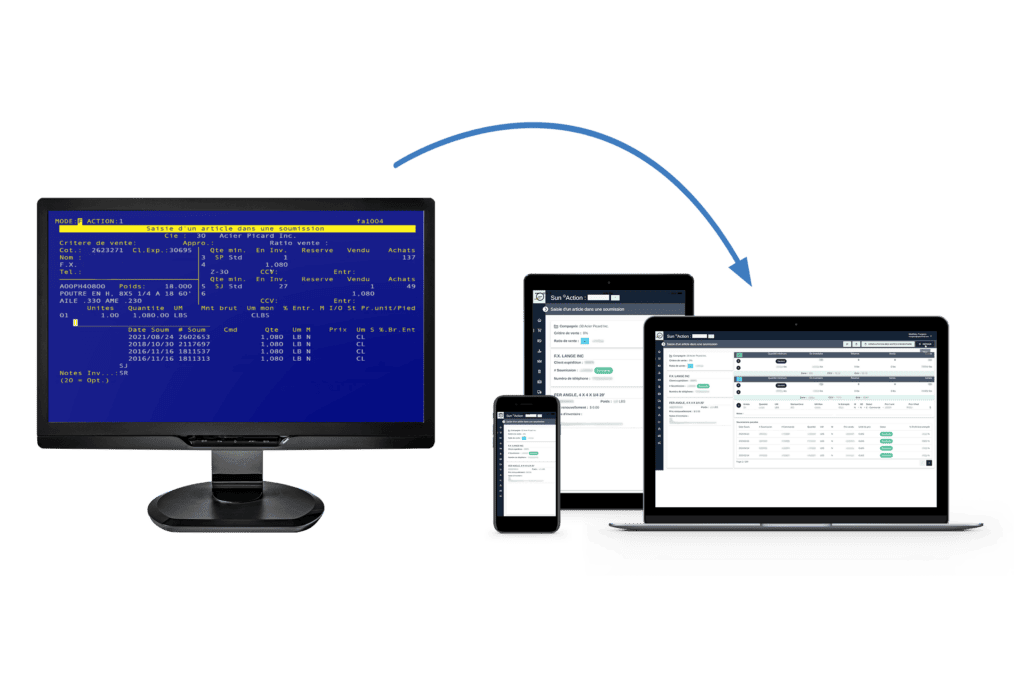
Enterprise Resource Planning (ERP) systems have long served as the operational backbone of modern organizations. From finance and procurement to inventory management, logistics, human resources, and customer operations, ERP platforms centralize business processes and data into a unified environment. However, many organizations still rely on legacy ERP systems that were built for a different technological era — one defined by on-premise infrastructure, rigid architectures, limited integrations, and slow innovation cycles.
Today’s digital economy demands far greater agility, scalability, and connectivity. Businesses are expected to support omnichannel operations, remote workforces, AI-driven analytics, real-time decision-making, and rapidly evolving customer expectations. Traditional ERP environments often struggle to support these modern requirements, creating operational bottlenecks and increasing technical debt.
ERP modernization is the process of transforming outdated ERP systems into flexible, cloud-enabled, API-first, and future-ready platforms. Rather than simply replacing software, modernization focuses on improving business agility, streamlining operations, enhancing data visibility, and enabling continuous innovation. Organizations are increasingly adopting composable ERP architectures, cloud-native services, and modular integrations to build ecosystems that evolve with business needs.
A successful ERP modernization strategy can help organizations reduce operational costs, improve employee productivity, strengthen cybersecurity, accelerate decision-making, and unlock advanced capabilities such as automation, predictive analytics, and artificial intelligence. As digital transformation accelerates across industries, ERP modernization has become a strategic initiative rather than just an IT upgrade.
What is legacy ERP modernization?
Legacy ERP modernization refers to the process of upgrading, restructuring, integrating, or replacing outdated ERP systems to align with modern business and technology requirements. The objective is not only to improve software performance but also to create a more agile, scalable, and connected digital enterprise environment.
A legacy ERP system typically relies on aging infrastructure, monolithic architecture, highly customized codebases, and limited integration capabilities. These systems may still support core business operations, but they often lack the flexibility required for modern digital transformation initiatives. Modernization enables organizations to preserve critical business processes while introducing newer technologies such as cloud computing, APIs, automation, AI, and microservices.
ERP modernization can take several forms depending on business goals, budget, and technical complexity. Common approaches include:
- Migrating from on-premise ERP to cloud ERP
- Replacing monolithic systems with modular ERP platforms
- Implementing API-first integration layers
- Rebuilding outdated interfaces and workflows
- Modernizing databases and infrastructure
- Introducing composable ERP architecture
- Integrating AI, analytics, and automation capabilities
In many cases, businesses adopt a phased modernization strategy rather than a complete replacement. This allows them to reduce operational risk, protect mission-critical processes, and gradually modernize specific functions over time. API wrapping, hybrid cloud deployment, and incremental refactoring are increasingly common approaches for organizations that cannot afford major operational disruptions.
Modern ERP modernization strategies are also heavily influenced by MACH principles — Microservices, API-first, Cloud-native, and Headless architecture. These frameworks allow organizations to build scalable and adaptable ERP ecosystems that integrate seamlessly with third-party applications, customer platforms, e-commerce systems, and supply chain technologies.
The limitations and shortcomings of a legacy ERP
Although legacy ERP systems were once considered powerful enterprise solutions, many now struggle to meet the operational, technological, and strategic demands of modern businesses. As organizations pursue digital transformation, outdated ERP environments often become barriers to innovation and growth.
Limited flexibility and scalability
Legacy ERP platforms are commonly built on rigid monolithic architectures. Adding new capabilities, expanding to new markets, or adapting workflows can require extensive customization and long deployment cycles. This lack of flexibility slows business responsiveness and increases implementation costs.
High maintenance and operational costs
Older ERP systems typically require expensive hardware, manual maintenance, specialized IT teams, and ongoing infrastructure management. Organizations often spend significant resources maintaining outdated environments instead of investing in innovation and strategic growth initiatives.
Poor integration capabilities
Modern businesses depend on interconnected ecosystems involving CRM platforms, e-commerce systems, analytics tools, AI applications, supplier networks, and cloud services. Legacy ERP systems frequently lack modern API support, making integrations complex, costly, and difficult to maintain.
Slow innovation cycles
Many legacy ERP systems require lengthy upgrade processes that can disrupt operations and create significant downtime. Customizations often complicate future upgrades, forcing organizations into outdated software versions that hinder innovation.
Data silos and limited visibility
Traditional ERP environments often struggle to provide real-time insights across departments. Data fragmentation, duplicate records, and disconnected systems can reduce operational visibility and slow strategic decision-making. Modern businesses increasingly require unified data environments with live analytics and predictive reporting capabilities.
Security and compliance risks
Outdated ERP infrastructure may not meet current cybersecurity standards or compliance requirements. Unsupported software, delayed patches, and aging architecture increase exposure to security vulnerabilities and regulatory risks.
Poor user experience
Legacy ERP systems often have outdated interfaces and inefficient workflows that negatively impact employee productivity and adoption. Modern users expect intuitive dashboards, mobile accessibility, self-service tools, and seamless digital experiences.
Inability to support AI and automation
As AI-powered business operations become increasingly important, many legacy ERP systems cannot effectively support machine learning, automation, or intelligent workflows. Their closed architecture and outdated data structures make advanced innovation difficult to implement.
What is a modern ERP and what are its benefits?
A modern ERP is a cloud-enabled, API-first, and highly integrated enterprise management platform designed to support agile, data-driven, and digitally connected business operations. Unlike traditional monolithic ERP systems, modern ERP solutions emphasize modularity, scalability, automation, real-time visibility, and seamless integration with external platforms and services.
Modern ERP systems are increasingly built around composable and cloud-native architectures. Instead of relying on a single rigid application, organizations can combine specialized business capabilities, microservices, and third-party applications into a unified ecosystem tailored to operational requirements.
Key benefits of modern ERP systems
Improved business agility
Modern ERP platforms allow organizations to respond faster to market changes, customer demands, and operational challenges. Modular architecture and cloud deployment make it easier to add new capabilities and scale operations quickly.
Real-time data and analytics
Advanced ERP systems provide centralized, real-time access to operational and financial data. Decision-makers can use dashboards, AI-powered reporting, and predictive analytics to improve forecasting and strategic planning.
Better integration and connectivity
API-first ERP architecture enables seamless integration with CRM systems, e-commerce platforms, supplier portals, AI tools, IoT devices, and external applications. This improves operational efficiency and eliminates disconnected workflows.
Lower infrastructure costs
Cloud ERP reduces the need for expensive on-premise infrastructure and manual maintenance. Organizations benefit from subscription-based pricing, automatic updates, and scalable cloud resources.
Enhanced automation
Modern ERP systems integrate workflow automation, robotic process automation (RPA), and AI-driven processes that reduce manual tasks and improve productivity. Automated approvals, procurement workflows, financial reconciliation, and inventory optimization are increasingly common.
Stronger security and compliance
Modern ERP providers continuously update security controls, encryption protocols, identity management, and compliance frameworks. Cloud-native systems often provide stronger resilience against cyber threats than outdated on-premise environments.
Improved user experience
Modern ERP platforms prioritize usability with responsive interfaces, mobile access, self-service portals, and personalized dashboards. Better user experience improves adoption and employee efficiency across departments.
Future-ready architecture
Modern ERP systems are designed to support AI agents, machine learning, advanced analytics, and evolving digital ecosystems. Their flexible architecture enables continuous innovation without major system overhauls.
Comparison chart: Legacy ERP vs. Modern ERP
| Feature | Legacy ERP | Modern ERP |
|---|---|---|
| Architecture | Monolithic and tightly coupled | Modular, composable, and API-first |
| Deployment | Primarily on-premise | Cloud-native or hybrid cloud |
| Scalability | Limited and costly to scale | Elastic and highly scalable |
| Integration | Complex custom integrations | Seamless API-driven connectivity |
| Data Access | Delayed or siloed reporting | Real-time centralized analytics |
| Upgrades | Slow and disruptive | Continuous and automated updates |
| User Experience | Outdated interfaces | Modern, mobile-friendly UX |
| Customization | Heavy code customization | Configurable low-code capabilities |
| Maintenance Costs | High infrastructure and support costs | Lower operational overhead |
| Innovation Speed | Slow deployment cycles | Rapid innovation and feature rollout |
| Security | Greater exposure to outdated vulnerabilities | Modern security and compliance frameworks |
| AI & Automation | Limited support | Built-in AI, automation, and analytics |
| Business Agility | Rigid operational structure | Flexible and adaptive workflows |
| Ecosystem Support | Vendor-dependent and isolated | Open ecosystem integrations |
| Decision-Making | Reactive and historical | Predictive and data-driven |
Real-world use cases by industry
ERP modernization affects every industry differently because operational priorities, customer expectations, compliance requirements, and supply chain complexity vary across sectors. Modern ERP systems enable organizations to move beyond transactional management and create connected, intelligent, and data-driven operations. Industries such as retail, manufacturing, and logistics are increasingly adopting cloud ERP, AI-powered automation, and API-first architectures to improve agility and operational efficiency.
Retail and e-commerce:
Retail and e-commerce companies operate in highly competitive environments where customer expectations evolve rapidly. Legacy ERP systems often struggle to support omnichannel commerce, real-time inventory synchronization, and personalized customer experiences. ERP modernization helps retailers unify online and offline operations while improving operational visibility and fulfillment speed.
Modern ERP systems in retail are commonly used for:
- Real-time inventory tracking across stores, warehouses, and e-commerce channels
- Omnichannel order management and fulfillment
- AI-driven demand forecasting and seasonal planning
- Automated procurement and supplier management
- Personalized customer experiences through integrated CRM and analytics
- Dynamic pricing and promotion management
- Financial consolidation across multiple sales channels
For example, a modern retail ERP can automatically synchronize inventory between physical stores, online marketplaces, and fulfillment centers. This reduces stock discrepancies, prevents overselling, and improves customer satisfaction. AI-powered analytics also help retailers forecast demand more accurately, optimize replenishment cycles, and reduce excess inventory costs.
Cloud-based ERP platforms are especially valuable for growing e-commerce businesses because they allow rapid scalability during seasonal spikes, international expansion, and multi-channel growth. Retailers can also integrate ERP platforms with payment systems, logistics providers, customer support tools, and digital marketing platforms using APIs and composable architectures.
Manufacturing and production:
Manufacturing organizations face operational challenges involving production scheduling, supply chain disruptions, equipment monitoring, quality assurance, and inventory optimization. Legacy ERP environments often create bottlenecks because they cannot process real-time operational data efficiently or integrate seamlessly with shop-floor technologies.
Modern ERP systems help manufacturers create connected and intelligent production environments through:
- Real-time production planning and scheduling
- Integrated supply chain and procurement management
- Bill of materials (BOM) management
- Shop-floor monitoring and machine integration
- Predictive maintenance using IoT and AI
- Quality control and compliance tracking
- Warehouse and inventory automation
- Demand forecasting and production optimization
Manufacturers increasingly integrate ERP systems with IoT sensors, Manufacturing Execution Systems (MES), robotics, and AI-driven analytics platforms. These integrations provide real-time operational visibility and help reduce downtime, material waste, and production delays.
For example, modern ERP platforms can automatically adjust production schedules based on supplier delays, changing customer demand, or machine performance data. Predictive analytics can identify equipment maintenance needs before failures occur, improving operational continuity and reducing maintenance costs.
Manufacturers also benefit from improved traceability and regulatory compliance. Modern ERP systems can track materials, production batches, and quality inspections across the entire production lifecycle, which is particularly important in industries such as automotive, pharmaceuticals, electronics, and food manufacturing.
Logistics and supply chain:
Logistics and supply chain operations depend heavily on speed, visibility, coordination, and real-time data. Legacy ERP systems frequently lack the flexibility and integration capabilities required to manage modern global supply chains effectively. ERP modernization helps logistics organizations create connected ecosystems that improve operational efficiency and supply chain resilience.
Modern ERP systems in logistics are commonly used for:
- Real-time shipment tracking and fleet visibility
- Warehouse automation and inventory optimization
- Transportation management integration
- Supplier collaboration and procurement automation
- Route optimization and delivery planning
- Demand forecasting and inventory balancing
- Cross-border trade and compliance management
- AI-driven risk monitoring and supply chain analytics
Modern ERP platforms integrate with transportation management systems (TMS), warehouse management systems (WMS), GPS tracking tools, IoT devices, and supplier portals. This allows organizations to monitor operations in real time and respond quickly to disruptions such as shipment delays, inventory shortages, or supplier issues.
For example, a logistics company can use a modern ERP system to automatically reroute shipments based on weather disruptions, traffic conditions, or warehouse capacity. AI-powered analytics can also help organizations optimize delivery schedules, reduce fuel consumption, and improve overall logistics performance.
As supply chains become more global and complex, businesses increasingly rely on cloud ERP systems to improve collaboration between suppliers, manufacturers, distributors, and logistics partners. API-first integration also enables faster onboarding of third-party services and digital supply chain tools.
Strategies for modernizing an existing ERP
ERP modernization is not a one-size-fits-all initiative. Organizations choose different modernization strategies depending on factors such as business complexity, technical debt, operational risk, budget, customization levels, and long-term digital transformation goals. The most common ERP modernization strategies include full replacement, phased rollout, and hybrid modernization approaches.
Full replacement (Big Bang):
The Big Bang approach involves replacing the legacy ERP system entirely and switching all business units, departments, and processes to the new ERP platform simultaneously. This strategy is commonly used when the existing ERP environment is severely outdated, heavily fragmented, or unable to support future business requirements.
Advantages of the Big Bang approach:
- Faster transition to a fully modernized ERP environment
- Eliminates dependency on outdated legacy systems
- Standardizes business processes across the organization
- Reduces long-term maintenance complexity
- Accelerates access to modern ERP capabilities
Challenges of the Big Bang approach:
- Higher implementation risk
- Significant operational disruption during deployment
- Complex data migration requirements
- Intensive employee training and change management
- Potential downtime and business continuity concerns
Large-scale ERP replacements require careful planning, testing, and governance because failures can impact core business operations such as finance, procurement, manufacturing, and customer service. Industry research shows that ERP implementation complexity remains one of the biggest modernization challenges for enterprises.
The Big Bang approach is often best suited for organizations that:
- Need complete process transformation
- Have outdated infrastructure nearing end-of-life
- Want to consolidate multiple disconnected systems
- Are pursuing aggressive digital transformation initiatives
Phased rollout:
The phased rollout strategy modernizes the ERP system gradually by deploying modules, business units, or geographic regions in stages. This is one of the most widely adopted ERP modernization approaches because it reduces operational risk and allows organizations to manage change more effectively.
Instead of replacing the entire ERP environment at once, businesses modernize selected areas such as:
- Finance and accounting
- Inventory management
- Procurement
- Supply chain operations
- Manufacturing execution
- Customer relationship management
Advantages of phased rollout:
- Lower implementation risk
- Reduced operational disruption
- Easier user adoption and training
- Better budget and resource management
- Continuous business operations during modernization
Challenges of phased rollout:
- Longer project timelines
- Temporary coexistence of old and new systems
- More complex integration management
- Potential process inconsistencies during transition
Phased modernization is especially useful for enterprises with mission-critical operations that cannot tolerate major downtime. It also allows organizations to validate ERP functionality incrementally before expanding deployment across the enterprise.
Many organizations combine phased rollout strategies with agile implementation methodologies and API-driven integration layers to accelerate deployment while minimizing risk.
Hybrid approach:
The hybrid ERP modernization approach combines elements of legacy ERP systems with modern cloud-based applications and services. Rather than replacing everything immediately, organizations retain certain stable core systems while modernizing selected capabilities through APIs, cloud services, and modular applications.
Hybrid ERP strategies are becoming increasingly popular because many enterprises cannot justify immediate full replacement of large and heavily customized ERP environments. Instead, they modernize gradually while preserving operational stability.
Common hybrid ERP scenarios include:
- Retaining on-premise finance systems while modernizing customer-facing applications
- Integrating cloud analytics and AI tools with legacy ERP databases
- Using API gateways to connect modern e-commerce systems to older ERP environments
- Migrating selected ERP modules to the cloud incrementally
- Combining SaaS applications with existing ERP infrastructure
Advantages of hybrid modernization:
- Lower immediate modernization costs
- Reduced operational disruption
- Faster implementation of innovation layers
- Better protection of existing ERP investments
- Greater flexibility during digital transformation
Challenges of hybrid modernization:
- Complex integration management
- Data synchronization challenges
- Security and governance complexity
- Long-term architecture management requirements
Hybrid ERP environments often rely heavily on API-first architecture, integration platforms (iPaaS), microservices, and cloud orchestration technologies to create seamless interoperability between legacy and modern systems.
A comparison of ERP modernization approaches
Choosing the right ERP modernization platform is a strategic decision that depends on company size, industry requirements, customization needs, scalability goals, and digital transformation priorities. Among the leading ERP modernization platforms, SAP S/4HANA, Oracle ERP Cloud (including NetSuite), and Microsoft Dynamics 365 remain dominant choices for enterprises and mid-sized businesses worldwide.
SAP S/4HANA:
SAP S/4HANA is SAP’s next-generation ERP platform built on the HANA in-memory database. It is designed for large enterprises that require advanced scalability, real-time analytics, and highly integrated global operations. SAP S/4HANA is widely adopted in manufacturing, automotive, pharmaceuticals, retail, and large-scale supply chain environments.
Key strengths of SAP S/4HANA:
- Real-time processing and analytics
- Advanced manufacturing and supply chain capabilities
- Strong global compliance support
- Deep industry-specific functionality
- Integration with AI, automation, and analytics tools
- Large ecosystem of enterprise integrations
Common challenges:
- Complex implementation and migration processes
- High licensing and consulting costs
- Significant customization and integration requirements
- Longer deployment timelines for large enterprises
SAP S/4HANA modernization projects often involve greenfield, brownfield, or hybrid migration approaches depending on the organization’s legacy SAP environment and business transformation goals.
Oracle ERP Cloud (or NetSuite):


Oracle ERP Cloud and Oracle NetSuite are cloud-first ERP solutions designed to support financial management, procurement, inventory, supply chain operations, and enterprise analytics. NetSuite is especially popular among mid-sized and fast-growing organizations, while Oracle Fusion ERP Cloud targets larger enterprise environments.
Key strengths of Oracle ERP Cloud and NetSuite:
- Strong financial management capabilities
- Cloud-native architecture
- Faster deployment compared to traditional ERP systems
- Built-in analytics and AI functionality
- Scalable subscription-based infrastructure
- Strong support for omnichannel retail and global operations
Common challenges:
- Complex customization for highly specialized industries
- Integration complexity with older on-premise systems
- Potential vendor dependency in cloud ecosystems
- Licensing and scaling costs for large enterprises
Oracle’s ERP platforms are widely used in retail, e-commerce, professional services, distribution, and finance-heavy industries because of their strong financial consolidation and reporting capabilities.
Microsoft Dynamics 365:
Microsoft Dynamics 365 combines ERP and CRM capabilities into a cloud-based business platform focused on flexibility, integration, and user accessibility. It is particularly popular among mid-sized organizations and enterprises already invested in the Microsoft ecosystem.
Key strengths of Microsoft Dynamics 365:
- Seamless integration with Microsoft products such as Azure, Teams, and Power BI
- User-friendly interface and familiar ecosystem
- Strong cloud and hybrid deployment options
- AI-powered analytics and automation
- Flexible modular architecture
- Lower implementation complexity compared to some enterprise ERP platforms
Common challenges:
- Advanced customization may require third-party development
- Some highly specialized industries may need additional extensions
- Large-scale global deployments can become complex
Dynamics 365 is commonly adopted by organizations in manufacturing, retail, logistics, field services, and distribution industries. Its modular structure also makes it attractive for phased ERP modernization projects.
A 5-Step action plan to modernize your ERP
ERP modernization is a complex transformation initiative that affects technology, business operations, employee workflows, data management, and long-term digital strategy. Organizations that approach modernization with a structured roadmap are more likely to reduce implementation risks, maintain operational continuity, and achieve measurable business outcomes.
A successful ERP modernization plan should balance innovation with practicality. Rather than focusing only on software replacement, businesses should prioritize scalability, interoperability, data quality, operational resilience, and future adaptability. Modern ERP transformation increasingly relies on cloud-native platforms, API-first integration, composable architecture, and phased implementation strategies to support long-term growth and agility.
🔹 Step 1: Audit Your Current Systems & Data
The first step in ERP modernization is conducting a comprehensive assessment of the existing ERP environment, business processes, infrastructure, integrations, and data quality. Many organizations underestimate the complexity of their current systems because legacy ERP environments often evolve over decades through customizations, manual workflows, and disconnected applications.
A detailed audit helps organizations identify:
- Outdated or redundant applications
- Customizations that increase technical debt
- Integration bottlenecks
- Data silos and inconsistencies
- Security vulnerabilities
- Compliance gaps
- Performance limitations
- Business-critical dependencies
Data assessment is especially important because poor-quality data can significantly impact ERP migration success. Organizations should evaluate:
- Duplicate records
- Incomplete datasets
- Legacy formatting issues
- Inconsistent master data
- Historical data retention requirements
- Regulatory compliance obligations
Modernization teams should also map existing workflows across departments such as finance, procurement, inventory, manufacturing, sales, logistics, and customer operations. This process helps identify inefficiencies and opportunities for automation.
In addition to technical analysis, organizations should assess user experience and employee pain points. Many legacy ERP systems suffer from low adoption due to outdated interfaces, manual processes, and limited accessibility. Understanding operational frustrations helps prioritize modernization objectives more effectively.
A successful ERP audit creates the foundation for informed decision-making and reduces the likelihood of costly migration surprises later in the project lifecycle.
🔹 Step 2: Define the Target Architecture (Headless & API-First)
Once the current environment has been assessed, organizations must define the future-state ERP architecture. Modern ERP strategies increasingly move away from rigid monolithic systems toward modular, composable, cloud-native ecosystems that prioritize flexibility and interoperability.
A modern ERP architecture commonly includes:
- Cloud-native infrastructure
- API-first connectivity
- Microservices-based services
- Headless business capabilities
- Centralized data orchestration
- AI and analytics integration
- Scalable security frameworks
- Real-time integration layers
The headless architecture model separates backend business logic from frontend applications and user experiences. This allows businesses to integrate ERP functionality with websites, mobile applications, customer portals, supplier systems, and third-party platforms without being limited by a single interface structure.
API-first architecture plays a critical role in ERP modernization because modern enterprises rely on interconnected systems rather than isolated platforms. APIs allow organizations to:
- Connect ERP systems with CRM, e-commerce, HR, logistics, and analytics tools
- Enable real-time data exchange
- Simplify integration management
- Accelerate application development
- Improve scalability and flexibility
- Reduce dependency on tightly coupled systems
Organizations should also define their future cloud strategy during this stage:
- Public cloud
- Private cloud
- Hybrid cloud
- Multi-cloud deployment
Security, governance, and compliance requirements must be integrated into the architecture design from the beginning. Modern ERP environments should include identity management, encryption standards, access controls, monitoring systems, and disaster recovery planning.
By establishing a clear architectural vision early, businesses can avoid fragmented modernization efforts and build a future-ready ERP ecosystem capable of supporting continuous innovation.
🔹 Step 3: Choose the Right Approach (Suite, Marketplace, or Hybrid)
ERP modernization does not follow a single implementation model. Organizations must choose the approach that best aligns with their operational complexity, scalability goals, customization needs, and budget constraints.
Modern ERP transformation strategies generally fall into three categories:
Suite-based ERP approach
The suite approach involves adopting a centralized ERP platform from a single vendor that provides integrated functionality across finance, procurement, supply chain, manufacturing, HR, and analytics.
Advantages include:
- Unified ecosystem
- Simplified vendor management
- Consistent data structure
- Integrated workflows
- Easier governance and compliance
However, suite-based ERP systems may reduce flexibility and create vendor dependency, particularly for organizations requiring specialized capabilities.
Marketplace or composable approach
The marketplace approach focuses on building a modular ERP ecosystem using specialized applications connected through APIs and integration layers. Instead of relying on one large monolithic system, organizations select best-of-breed solutions for different operational functions.
This approach provides:
- Greater flexibility
- Faster innovation cycles
- Easier scalability
- Specialized functionality
- Reduced system rigidity
Composable ERP strategies are increasingly popular among digital-first organizations because they support rapid adaptation to changing business needs.
Hybrid ERP approach
Hybrid ERP combines legacy systems with modern cloud services and modular applications. Organizations retain stable core systems while modernizing selected functions incrementally.
Hybrid approaches are often ideal for enterprises with:
- Heavy legacy customizations
- Mission-critical operations
- Large-scale global infrastructure
- Limited migration timelines
- High operational risk tolerance concerns
Choosing the right modernization model requires balancing innovation, operational continuity, implementation complexity, and long-term scalability. Businesses should also consider future integration requirements, industry regulations, and internal technical capabilities before selecting an ERP modernization strategy.
🔹 Step 4: Prioritize the Rollout
One of the biggest ERP modernization mistakes organizations make is attempting to transform every system and workflow simultaneously. Large-scale ERP projects involve substantial operational, technical, and organizational complexity. Prioritization is essential for reducing risk and maintaining business continuity.
Organizations should identify:
- High-impact business processes
- Critical operational dependencies
- Quick-win modernization opportunities
- Legacy systems nearing end-of-life
- Departments with the highest operational inefficiencies
- Customer-facing functions requiring immediate improvement
Many organizations begin ERP modernization with areas such as:
- Financial management
- Procurement
- Inventory control
- Supply chain visibility
- Customer order management
- Reporting and analytics
A phased rollout strategy allows businesses to:
- Test integrations gradually
- Improve user adoption
- Reduce deployment risks
- Validate data migration accuracy
- Minimize operational disruption
- Optimize implementation resources
Modern ERP projects increasingly rely on agile implementation methodologies rather than traditional multi-year waterfall deployments. Agile ERP modernization supports iterative improvements, faster feedback cycles, and more adaptive project management.
Organizations should also establish measurable KPIs during rollout planning, such as:
- System uptime
- Process automation rates
- Order fulfillment speed
- Reporting accuracy
- Inventory optimization
- User adoption metrics
- Cost reduction targets
Prioritization helps organizations demonstrate early business value while building momentum for broader digital transformation initiatives.
🔹 Step 5: Manage the Implementation (Test, Train, Secure)
ERP modernization is not solely a technology project — it is also a major organizational transformation initiative. Successful implementation requires strong governance, employee engagement, cybersecurity planning, and continuous testing throughout the deployment lifecycle.
Comprehensive testing
Testing should cover:
- Data migration accuracy
- API integrations
- Workflow automation
- Performance and scalability
- Security validation
- User acceptance testing (UAT)
- Disaster recovery procedures
Modern ERP environments are highly interconnected, making integration testing especially important. Even small API or synchronization issues can create significant operational disruptions if not identified early.
Employee training and change management
User adoption is one of the most critical factors in ERP modernization success. Employees often resist change when workflows, interfaces, and operational processes evolve significantly.
Organizations should provide:
- Role-specific training programs
- Hands-on workshops
- Self-service learning resources
- Internal support teams
- Ongoing communication about project goals and benefits
Executive sponsorship and transparent communication also play essential roles in building organizational support during ERP transformation.
Cybersecurity and governance
Modern ERP systems manage highly sensitive operational and financial data. Security and compliance should be integrated into every implementation phase rather than treated as a final deployment step.
Organizations should implement:
- Identity and access management (IAM)
- Multi-factor authentication
- Data encryption
- Continuous monitoring
- Security incident response planning
- Compliance auditing
- API security governance
Cloud ERP environments also require strong vendor governance and data management policies to ensure operational resilience and regulatory compliance.
Successful ERP modernization is ultimately an ongoing process rather than a one-time migration project. Businesses that continuously optimize workflows, integrations, analytics, and automation capabilities are better positioned to adapt to future technological and market changes.
The API-First approach: A winning strategy
The API-First approach has become one of the most important architectural strategies in modern ERP transformation. Rather than building a large monolithic application first and adding integrations later, API-First development treats APIs as foundational building blocks from the beginning of the software design process.
In an API-First model, organizations design a set of interconnected services that communicate through standardized APIs. This creates a flexible and modular ecosystem where applications, platforms, and business services can integrate seamlessly across the enterprise.
The growing importance of API-First architecture reflects the changing nature of enterprise technology. Modern businesses rely on highly connected digital ecosystems involving:
- ERP platforms
- CRM systems
- E-commerce applications
- Supplier portals
- Logistics platforms
- AI and analytics tools
- IoT devices
- Mobile applications
- Customer experience platforms
Traditional monolithic ERP systems often struggle to support these interconnected environments because integrations are difficult to scale and maintain. API-First architecture solves this challenge by enabling modular communication between services and applications.
According to the 2024 Postman API report, 74% of developers have adopted an API-First approach, highlighting its growing role in enterprise software development and digital transformation initiatives.
Read More: Aha! Vs. Jira: Which Project Management Tool Fits Your Team?