Enterprise Resource Planning (ERP) systems have become a core part of modern business operations. From finance and inventory management to customer service and human resources, ERP platforms help organizations manage multiple business processes within a single integrated system. As businesses continue to adopt digital transformation strategies in 2026, ERP solutions are evolving rapidly with cloud technology, AI-powered automation, predictive analytics, and real-time reporting capabilities.
However, implementing an ERP system is not always simple. Many companies face issues such as high implementation costs, employee resistance, data migration problems, and system integration complexities. Industry reports and ERP community discussions show that organizations often struggle because ERP implementation is treated only as a technical project instead of a complete business transformation process.
Despite these challenges, businesses that successfully implement ERP systems can significantly improve operational efficiency, decision-making, collaboration, and long-term scalability. With proper planning, training, and change management, organizations can overcome implementation obstacles and maximize the value of their ERP investment.
What is ERP?
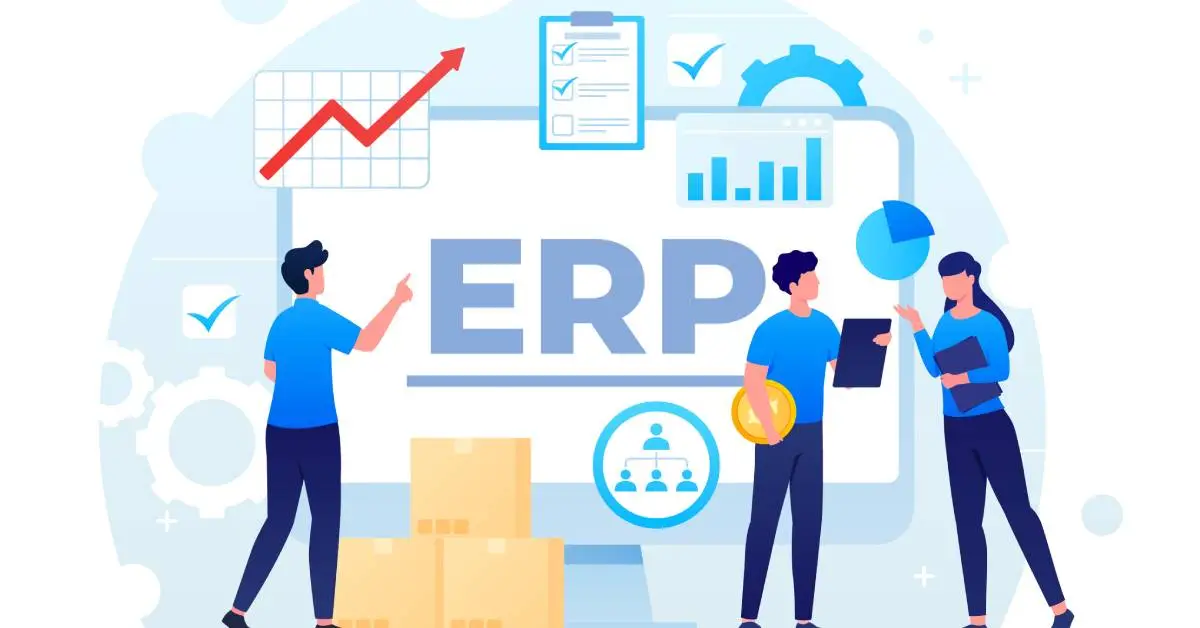
ERP, or Enterprise Resource Planning, is a centralized software system that helps organizations manage and automate their core business operations. It integrates different departments such as finance, accounting, inventory, procurement, sales, manufacturing, supply chain, customer relationship management (CRM), and human resources into a single platform.
Instead of using separate software for each department, ERP systems allow businesses to access real-time information from one unified database. This improves data accuracy, communication, and operational efficiency across the organization.
Modern ERP systems are available in different deployment models, including:
- Cloud-based ERP
- On-premise ERP
- Hybrid ERP
- Industry-specific ERP solutions
Today’s ERP platforms also include advanced technologies such as:
- Artificial Intelligence (AI)
- Machine Learning
- Predictive Analytics
- Automation Tools
- Mobile Accessibility
- Real-time Dashboards
These features help businesses improve productivity, reduce manual work, and make faster data-driven decisions. In recent years, cloud ERP and composable ERP architectures have become increasingly popular because they offer greater flexibility, scalability, and easier integration with other business applications.
ERP systems are widely used across industries such as manufacturing, retail, healthcare, logistics, construction, education, finance, and eCommerce.
Importance of ERP in Modern Businesses
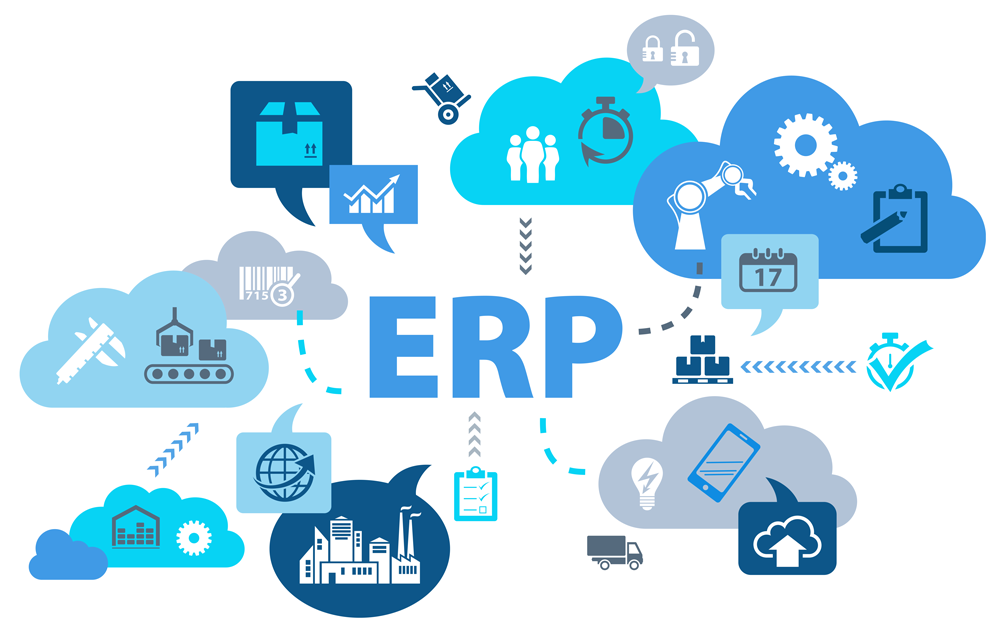
As businesses grow, managing operations manually or through disconnected software becomes increasingly difficult. ERP systems solve this problem by creating a centralized and automated environment where all departments can work together efficiently. In today’s competitive digital landscape, ERP has become essential for improving operational performance, business visibility, and long-term growth.
1. Simplified Operations
One of the biggest advantages of ERP systems is operational simplification. ERP software automates repetitive business tasks such as invoicing, inventory tracking, payroll processing, procurement, and reporting.
Instead of handling operations through spreadsheets or multiple disconnected systems, businesses can manage everything from one platform. This reduces duplication of work, minimizes human errors, and improves workflow efficiency.
Modern ERP solutions also support workflow automation and AI-driven process management, helping businesses reduce manual intervention and improve productivity.
2. More Accurate and Accessible Data
ERP systems provide a centralized database that stores business information in real time. This allows employees and management teams to access accurate and updated data whenever needed.
With real-time dashboards and analytics tools, decision-makers can monitor:
- Financial performance
- Inventory levels
- Sales trends
- Employee productivity
- Customer activities
- Supply chain operations
Accurate data improves strategic planning and reduces the risk of poor decision-making caused by outdated or inconsistent information.
3. Improved Support
ERP systems improve customer and internal support by giving employees quick access to important business information. Customer service teams can instantly check order history, inventory availability, shipment tracking, and billing details.
Similarly, managers and employees receive better operational support because all departments share the same system and data environment.
Modern ERP systems increasingly use AI-driven support tools, automated reporting, and intelligent forecasting to help businesses respond faster to operational challenges.
4. Scalability and Adaptability
As companies expand, their operational requirements become more complex. ERP systems are designed to scale alongside business growth.
Modern cloud ERP solutions allow organizations to:
- Add new users
- Expand business locations
- Integrate additional modules
- Support international operations
- Manage increasing transaction volumes
Composable ERP and modular ERP approaches are also becoming more popular because businesses can customize and adapt systems according to changing operational needs.
This flexibility makes ERP systems suitable for both small businesses and large enterprises.
5. Regulations and Risk Management
Businesses today must comply with various financial, security, and industry regulations. ERP systems help organizations maintain compliance through automated reporting, audit trails, access controls, and data governance tools.
Many ERP platforms now include:
- Compliance monitoring tools
- Cybersecurity features
- Automated audit support
- Risk analysis dashboards
- Data privacy management
With rising cybersecurity threats and stricter data protection regulations, ERP security and compliance have become major priorities for organizations worldwide.
6. Cost-efficiency
Although ERP implementation may require significant initial investment, it helps businesses reduce long-term operational costs.
ERP systems improve cost-efficiency by:
- Reducing manual labor
- Eliminating duplicate systems
- Improving inventory control
- Reducing operational delays
- Minimizing data errors
- Increasing resource utilization
Automation and AI-driven workflows are also helping organizations shorten ERP implementation timelines and reduce operational inefficiencies.
7. Improved Communication and Collaboration
ERP systems create a connected work environment where departments can collaborate more effectively. Since all teams work from the same data source, communication gaps and information silos are significantly reduced.
For example:
- Sales teams can coordinate with inventory departments
- Finance teams can monitor procurement expenses
- HR departments can manage workforce data centrally
- Management can access organization-wide reports instantly
This centralized communication structure improves teamwork, transparency, and overall business coordination.
What Is an ERP Implementation?
ERP implementation is the process of planning, configuring, deploying, and integrating an Enterprise Resource Planning (ERP) system into an organization’s daily business operations. It involves replacing outdated systems, disconnected software, or manual processes with a centralized platform that connects multiple departments and business functions.
An ERP implementation is not simply a software installation project. It is a complete business transformation process that affects workflows, employees, data management, reporting systems, and organizational decision-making.
The implementation process typically includes:
- Business requirement analysis
- ERP software selection
- Infrastructure preparation
- System customization and configuration
- Data migration
- Integration with existing systems
- Employee training
- Testing and quality assurance
- Go-live deployment
- Ongoing maintenance and optimization
Modern ERP implementation strategies in 2026 increasingly focus on cloud-first deployment, AI-powered automation, low-code customization, and modular ERP architecture. Many organizations now adopt phased implementation approaches instead of full-scale deployments to reduce operational risks and improve user adoption.
Key Phases of ERP Implementation
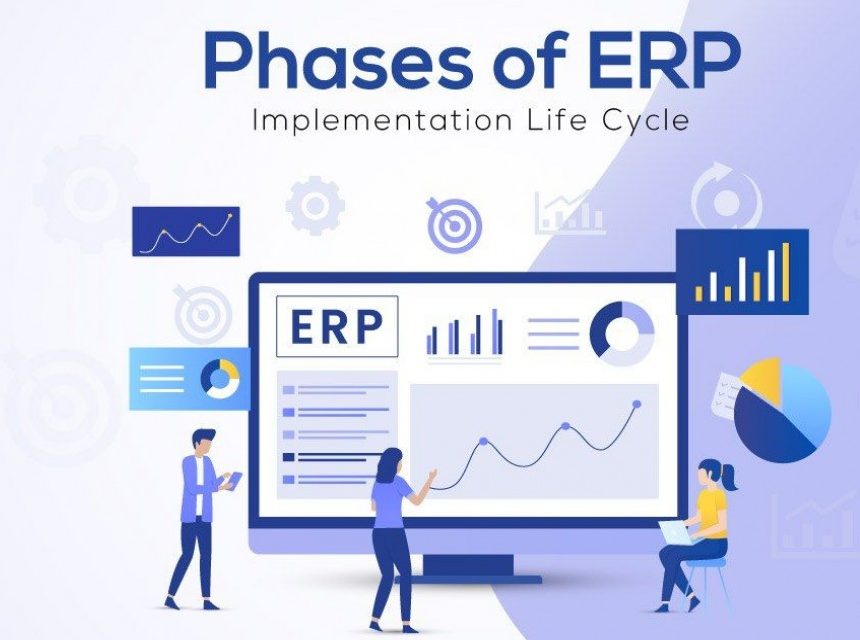
1. Planning and Requirement Analysis
This is the foundation stage where businesses identify operational problems, define project goals, estimate budgets, and determine business requirements.
Organizations typically evaluate:
- Current business workflows
- Existing software limitations
- Departmental needs
- Compliance requirements
- Integration requirements
- Future scalability needs
A strong implementation plan helps reduce project delays and unexpected costs later in the process.
2. ERP System Selection
Businesses choose an ERP platform based on their industry, company size, operational complexity, budget, and scalability requirements.
Some organizations prefer:
- Cloud ERP systems for flexibility and lower infrastructure costs
- On-premise ERP for greater control and customization
- Hybrid ERP models for balancing security and scalability
Today, AI integration, mobile accessibility, cybersecurity features, and third-party integration capabilities are major factors influencing ERP selection decisions.
3. System Design and Customization
Once the ERP platform is selected, the system is configured according to business needs.
This stage may include:
- Workflow configuration
- Dashboard setup
- User role management
- Report customization
- Automation rule creation
- Integration with CRM, HRM, accounting, or supply chain systems
However, excessive customization can increase implementation complexity and future maintenance costs. Modern ERP best practices encourage businesses to adapt processes to standard ERP workflows whenever possible.
4. Data Migration
Data migration is one of the most critical stages of ERP implementation. Existing business data from spreadsheets, legacy software, and databases must be cleaned, verified, and transferred into the new ERP system.
This may include:
- Customer records
- Financial data
- Inventory information
- Supplier details
- Employee data
- Historical transaction records
Poor-quality data migration can create major operational problems after deployment.
5. Testing and Quality Assurance
Before the ERP system goes live, organizations conduct multiple testing phases to identify technical issues, workflow problems, and integration errors.
Testing usually includes:
- Functional testing
- User acceptance testing (UAT)
- Security testing
- Performance testing
- Integration testing
This step ensures the ERP system works properly in real-world business environments.
6. Employee Training and Change Management
ERP implementation often changes how employees perform their daily tasks. Without proper training, user resistance and productivity issues can occur.
Successful organizations invest heavily in:
- Hands-on training
- User manuals
- Internal support teams
- Change management programs
- Continuous learning resources
In 2026, many companies are also using AI-based training assistants and interactive learning platforms to improve ERP adoption rates.
7. Go-live and Post-Implementation Support
After testing and training are completed, the ERP system officially becomes operational.
However, implementation does not end after deployment. Businesses still need:
- Technical monitoring
- Performance optimization
- Security updates
- User support
- System scalability planning
Continuous improvement is essential to maximize ERP return on investment (ROI).
Why ERP Implementation Is Important
A successful ERP implementation helps businesses:
- Improve operational efficiency
- Increase productivity
- Centralize business data
- Enhance reporting accuracy
- Improve decision-making
- Reduce operational costs
- Strengthen compliance and security
- Support business growth
Poor implementation planning can lead to delays, budget overruns, employee resistance, and operational disruptions. This is why ERP implementation strategy is considered just as important as the ERP software itself.
Examples of Popular ERP Systems
There are many ERP platforms available in the global market, each designed to serve different industries, business sizes, and operational requirements. Some ERP systems focus on large enterprises, while others are designed for small and medium-sized businesses (SMBs).
Below are some of the most widely used ERP systems in 2026.
SAP

SAP is one of the world’s largest and most recognized ERP providers. It is widely used by large enterprises and multinational organizations across industries such as manufacturing, retail, logistics, healthcare, and finance.
Its flagship ERP solution, SAP S/4HANA, uses an in-memory database system that enables real-time analytics, automation, and faster business processing.
Key features of SAP include:
- Advanced financial management
- Supply chain optimization
- Manufacturing management
- AI-powered analytics
- Cloud ERP solutions
- Enterprise scalability
- Strong compliance and security tools
SAP is particularly popular among large organizations with complex operational requirements and international business structures.
Oracle

Oracle offers powerful cloud-based ERP solutions designed for medium and large enterprises. Oracle ERP Cloud is known for its strong financial management, automation, AI capabilities, and enterprise performance tools.
Oracle’s ERP ecosystem supports industries such as:
- Healthcare
- Banking
- Telecommunications
- Construction
- Retail
- Manufacturing
Key capabilities include:
- AI-driven forecasting
- Risk management
- Procurement automation
- Real-time financial reporting
- Supply chain management
- Integrated business intelligence
In recent years, Oracle has focused heavily on AI integration, predictive analytics, and autonomous business operations within its ERP platforms.
Microsoft Dynamics 365

![]()
Microsoft Dynamics 365 is a cloud-based ERP and CRM platform that integrates seamlessly with the Microsoft ecosystem, including Office 365, Teams, Power BI, and Azure cloud services.
It is highly popular among small and medium-sized businesses because of its user-friendly interface and flexible modular structure.
Microsoft Dynamics 365 offers modules for:
- Finance
- Sales
- Customer service
- Human resources
- Supply chain management
- Project operations
- Business analytics
The platform also includes AI-powered business insights, automation tools, and low-code customization capabilities.
Its strong integration with familiar Microsoft applications makes adoption easier for many organizations.
Infor

Infor is an industry-focused ERP provider that offers cloud-based ERP solutions tailored to specific sectors such as manufacturing, healthcare, hospitality, distribution, and fashion.
Unlike generic ERP platforms, Infor emphasizes industry-specific functionality and workflow optimization.
Key strengths of Infor ERP include:
- Industry-focused solutions
- Cloud-native infrastructure
- AI-powered analytics
- Supply chain visibility
- Workforce management
- Manufacturing optimization
Infor also uses advanced technologies such as machine learning and robotic process automation (RPA) to improve operational efficiency.
Odoo

Odoo is a popular open-source ERP platform widely used by startups, small businesses, and growing enterprises.
One of Odoo’s biggest advantages is its modular structure. Businesses can start with basic modules and add additional features as they grow.
Odoo offers applications for:
- Accounting
- Inventory management
- CRM
- eCommerce
- Human resources
- Manufacturing
- Project management
- Point of Sale (POS)
Because it is open-source, Odoo provides high customization flexibility and lower implementation costs compared to many enterprise-level ERP systems.
In recent years, Odoo has gained significant popularity due to its affordability, cloud support, modern interface, and active developer community.

Top 8 Common Challenges in ERP Implementation

ERP implementation can transform business operations, but the process is often complex and demanding. Many organizations fail to achieve expected results because they underestimate the technical, financial, and organizational challenges involved.
In 2026, ERP projects have become even more sophisticated due to the rise of cloud computing, AI integration, cybersecurity requirements, hybrid work environments, and digital transformation initiatives. Businesses must now manage not only software deployment but also organizational change, data governance, and long-term scalability.
Below are the most common ERP implementation challenges organizations face today.
1. Cultural Resistance
Cultural resistance is one of the biggest reasons ERP implementation projects struggle or fail. Employees often become uncomfortable when organizations introduce new technologies that change existing workflows, responsibilities, and daily routines.
Many staff members fear:
- Job displacement due to automation
- Increased monitoring and transparency
- Learning difficulties
- Reduced control over familiar processes
- Temporary productivity decline during transition
Departments that previously operated independently may also resist centralized ERP systems because they must adapt to standardized workflows and shared data environments.
This challenge becomes even greater in organizations with deeply rooted traditional work cultures or limited digital adoption experience.
In modern ERP projects, resistance often appears in forms such as:
- Refusal to use the new system
- Poor data entry practices
- Low employee participation in training
- Preference for old software or spreadsheets
- Delayed adoption across departments
Without proper communication and leadership support, employee resistance can significantly delay ERP implementation and reduce system effectiveness.
2. Cost Restrictions
ERP implementation requires substantial financial investment, which can become a major challenge for many businesses, especially small and medium-sized enterprises (SMEs).
The total ERP cost is not limited to software licensing. Organizations must also consider:
- Infrastructure upgrades
- Cloud subscription fees
- Data migration expenses
- Customization costs
- Employee training
- Cybersecurity investments
- Third-party integrations
- Ongoing maintenance and support
Unexpected costs are very common during implementation projects. Poor planning, scope changes, or excessive customization can quickly push the project beyond the original budget.
In recent years, AI-powered ERP systems and advanced analytics features have increased implementation complexity and associated costs for many organizations.
Cloud ERP solutions have helped reduce hardware expenses, but businesses still face recurring subscription and integration costs over time.
Budget limitations often force companies to:
- Reduce training programs
- Delay important features
- Skip testing phases
- Limit customization
- Use insufficient technical support
These shortcuts can negatively affect the long-term success of the ERP system.
3. Infrastructure Limitations
ERP systems require strong technological infrastructure to operate efficiently. Many organizations, particularly those using outdated legacy systems, struggle with infrastructure readiness during implementation.
Common infrastructure limitations include:
- Slow network performance
- Outdated hardware
- Incompatible legacy software
- Limited cloud readiness
- Weak cybersecurity systems
- Insufficient data storage
- Poor internet connectivity
Modern ERP platforms often depend heavily on:
- Cloud computing
- Real-time analytics
- Mobile accessibility
- AI processing
- API integrations
- Remote collaboration tools
Organizations with weak IT environments may experience:
- System downtime
- Slow processing speeds
- Integration failures
- Security vulnerabilities
- Poor user experience
Infrastructure limitations are especially challenging for businesses operating across multiple locations or in regions with inconsistent network reliability.
Today, businesses must also prepare for growing cybersecurity risks, increased remote work access, and large-scale data processing requirements when implementing ERP systems.
4. Complexities of Modification
Every business has unique workflows and operational requirements. As a result, many organizations attempt to customize ERP systems extensively during implementation.
While customization can improve business alignment, excessive modification creates major challenges such as:
- Increased implementation time
- Higher development costs
- Software compatibility issues
- Upgrade difficulties
- Increased maintenance requirements
- Greater technical complexity
Modern ERP platforms are designed around standardized best-practice workflows. However, some companies try to force the system to match every existing process instead of adapting internal operations to modern ERP standards.
This creates long-term complications because customized systems often become harder to maintain and upgrade.
In cloud ERP environments, excessive customization may also reduce the benefits of automatic updates and vendor-managed improvements.
Businesses today are increasingly encouraged to use:
- Low-code customization tools
- Modular ERP design
- API-based integrations
- Configurable workflows
instead of deep software-level modifications.
Finding the right balance between customization and standardization remains one of the most difficult ERP implementation decisions.
5. Data Security Issues
Data security has become a critical concern in ERP implementation projects. ERP systems store highly sensitive business information, including:
- Financial records
- Customer data
- Employee information
- Payroll data
- Supply chain records
- Business strategies
- Operational analytics
As ERP systems become more cloud-connected and accessible from multiple devices, cybersecurity risks continue to increase.
Organizations implementing ERP systems often face challenges related to:
- Unauthorized access
- Data breaches
- Weak user authentication
- Insecure integrations
- Compliance violations
- Ransomware attacks
- Poor access control management
In 2026, cybersecurity regulations and data protection requirements have become stricter in many industries. Businesses must now ensure ERP compliance with:
- Data privacy laws
- Financial regulations
- Industry-specific security standards
- International data governance policies
Improper security configuration during ERP implementation can expose businesses to major financial and reputational risks.
This is why modern ERP projects now prioritize:
- Multi-factor authentication (MFA)
- Role-based access control
- Encryption technologies
- Cloud security monitoring
- AI-driven threat detection
- Regular security audits
throughout the implementation process.
6. Lack of Skill
ERP implementation requires specialized technical knowledge and operational expertise. Many organizations struggle because employees and internal IT teams lack sufficient ERP experience.
Skill shortages commonly affect areas such as:
- ERP configuration
- Data migration
- Business process mapping
- System integration
- User training
- Cybersecurity management
- Cloud infrastructure management
Employees may also feel overwhelmed when learning entirely new workflows and software interfaces.
This challenge becomes even greater when organizations implement advanced ERP technologies involving:
- AI automation
- Predictive analytics
- Machine learning tools
- Advanced reporting systems
- Industry-specific ERP modules
Without proper expertise, businesses may experience:
- Incorrect system setup
- Poor data quality
- Workflow disruptions
- User frustration
- Low adoption rates
- Increased dependency on external consultants
The global shortage of experienced ERP professionals has also made recruitment and training more difficult for many organizations.
Continuous learning and skill development have therefore become essential parts of successful ERP implementation strategies.
7. Vendor Selection Dilemma
Choosing the right ERP vendor is one of the most important and challenging decisions during implementation.
The ERP market offers hundreds of solutions with different:
- Features
- Pricing models
- Deployment options
- Industry specializations
- Customization capabilities
- Support services
Organizations often struggle to determine which ERP platform best fits their business goals and operational needs.
Common vendor selection mistakes include:
- Choosing based only on price
- Ignoring future scalability
- Overlooking integration requirements
- Focusing only on popular brands
- Underestimating support quality
- Selecting overly complex systems
An ERP system that works well for one industry may not be suitable for another.
For example:
- Manufacturing companies require strong production and inventory management tools
- Retail businesses prioritize POS and customer analytics
- Healthcare organizations need compliance-focused systems
- Construction firms require project-based ERP functionality
In 2026, businesses must also evaluate vendors based on:
- AI capabilities
- Cloud reliability
- Cybersecurity standards
- API integration support
- Mobile accessibility
- Automation features
- Long-term innovation roadmap
A poor vendor choice can lead to expensive implementation failures and operational inefficiencies for years.
8. Shift Management
Shift management, also known as change management, refers to how organizations handle the transition from old systems and processes to the new ERP environment.
Many businesses focus heavily on technical deployment but underestimate the human side of ERP transformation.
ERP implementation often changes:
- Employee responsibilities
- Department workflows
- Approval structures
- Reporting methods
- Communication patterns
- Organizational hierarchy
Without effective shift management, employees may feel confused, stressed, or disconnected from the new system.
Common problems during transition include:
- Lack of communication
- Unclear project goals
- Poor leadership involvement
- Inadequate training
- Unrealistic expectations
- Low employee engagement
Hybrid work environments and remote teams have made organizational change management even more challenging in recent years.
Successful ERP implementation now requires businesses to create structured change management programs that include:
- Regular communication
- Leadership participation
- User feedback systems
- Step-by-step onboarding
- Continuous support
- Performance monitoring
Organizations that actively manage employee transition are far more likely to achieve successful ERP adoption and long-term operational improvements.
How to Overcome the Challenges

ERP implementation challenges can be complex, but they are not impossible to solve. Organizations that approach ERP projects with clear strategies, realistic expectations, and strong leadership are far more likely to achieve successful outcomes.
In 2026, successful ERP implementation is no longer only about installing software. It requires proper planning, employee engagement, cybersecurity awareness, scalable infrastructure, and continuous optimization.
Below are some of the most effective ways businesses can overcome ERP implementation challenges.
Planning in Depth
Thorough planning is the foundation of every successful ERP implementation project. Many ERP failures occur because organizations rush into deployment without clearly defining their goals, timelines, budgets, and operational requirements.
A detailed ERP implementation plan should include:
- Business objectives
- Project scope
- Budget estimation
- Risk assessment
- Timeline planning
- Departmental responsibilities
- Data migration strategy
- Infrastructure requirements
- Security and compliance planning
Organizations should also identify potential risks early in the process, including:
- Budget overruns
- Employee resistance
- Integration failures
- Data migration issues
- Vendor dependency
- Cybersecurity threats
Modern ERP projects increasingly use phased implementation approaches instead of deploying the entire system at once. This method reduces operational disruption and allows businesses to identify issues gradually before full-scale deployment.
Companies should also establish Key Performance Indicators (KPIs) to measure ERP success after implementation, such as:
- Productivity improvement
- Cost reduction
- System adoption rates
- Reporting accuracy
- Process automation efficiency
A well-structured implementation roadmap helps businesses maintain project control and minimize unexpected problems.
Engage Stakeholders
Stakeholder engagement is critical for successful ERP implementation. ERP systems affect multiple departments, including finance, operations, human resources, sales, procurement, and IT.
If employees and department leaders are excluded from decision-making, resistance and communication gaps often develop.
Businesses should involve stakeholders from the beginning by:
- Gathering departmental feedback
- Discussing workflow requirements
- Identifying operational challenges
- Setting realistic expectations
- Encouraging participation during testing
Executive leadership involvement is equally important. Strong leadership support helps create organizational confidence and ensures departments cooperate throughout the implementation process.
Modern organizations are also increasingly using cross-functional ERP teams that include:
- Business managers
- IT specialists
- Department representatives
- Security professionals
- External consultants
This collaborative approach improves communication and reduces misunderstandings between technical and operational teams.
Transparent communication throughout the project helps employees understand:
- Why the ERP system is being implemented
- How it will improve business operations
- What changes they should expect
- How their daily work may evolve
When stakeholders feel involved, ERP adoption becomes much smoother.
Put Training First
Employee training is one of the most important factors in ERP implementation success. Even the most advanced ERP system can fail if users do not understand how to use it properly.
Many organizations underestimate training requirements and provide only basic instruction before deployment. This often results in:
- User frustration
- Low productivity
- Data entry errors
- Workflow disruptions
- Poor system adoption
Businesses should prioritize role-based training programs tailored to different departments and job responsibilities.
Effective ERP training should include:
- Hands-on system practice
- Interactive workshops
- Video tutorials
- User manuals
- Simulation exercises
- Continuous learning support
In 2026, many companies are adopting AI-powered learning systems and digital training platforms that provide personalized onboarding experiences and real-time user assistance.
Training should also continue after the ERP system goes live. Employees often require additional support once they begin using the system in real business scenarios.
Organizations that invest heavily in user education typically experience:
- Faster adoption rates
- Better productivity
- Higher employee confidence
- Fewer operational errors
- Improved return on investment (ROI)
A well-trained workforce significantly reduces implementation risks.
Adapt to Local Context
Businesses operating across different regions or industries must ensure that their ERP implementation aligns with local operational requirements, regulations, and cultural factors.
A one-size-fits-all ERP strategy rarely works effectively in modern global business environments.
Organizations should adapt ERP systems according to:
- Local tax regulations
- Financial compliance rules
- Language requirements
- Currency management
- Industry-specific workflows
- Regional business practices
- Data protection laws
For example, businesses operating internationally may need ERP support for:
- Multi-currency transactions
- Local accounting standards
- Country-specific reporting
- Regional supply chain operations
Cultural adaptation is equally important. Employee expectations, communication styles, and work habits may vary significantly across locations.
Cloud ERP systems and modular ERP architecture now allow businesses to customize regional features more efficiently while maintaining centralized operational control.
Companies that adapt ERP implementation to local business realities typically achieve better user adoption and operational performance.
Seek Professional Assistance
ERP implementation is highly technical and often requires expertise that many organizations do not possess internally.
Working with experienced ERP consultants, implementation partners, or managed service providers can help businesses avoid costly mistakes.
Professional ERP experts can assist with:
- System selection
- Business process analysis
- Infrastructure planning
- Customization strategy
- Data migration
- Security configuration
- User training
- Change management
- Post-implementation support
Experienced consultants also help organizations identify hidden risks and improve implementation efficiency.
In 2026, many ERP implementation providers now offer specialized services related to:
- Cloud migration
- AI integration
- Cybersecurity compliance
- API-based system integration
- Automation strategy
- Industry-specific ERP optimization
However, businesses should carefully evaluate consulting partners before hiring them.
Important selection factors include:
- Industry experience
- Technical certifications
- Vendor partnerships
- Support quality
- Security expertise
- Implementation methodology
- Client references
Choosing the right implementation partner can significantly increase the chances of ERP project success.
FAQ
Why Is ERP Implementation a Challenging Task?
ERP implementation is challenging because it affects almost every part of an organization, including operations, employees, workflows, data management, and business processes.
Unlike regular software installation, ERP implementation requires:
- Business process restructuring
- Data migration
- Employee training
- System integration
- Infrastructure upgrades
- Organizational change management
Modern ERP systems also involve advanced technologies such as cloud computing, AI automation, analytics, and cybersecurity frameworks, which increase implementation complexity.
Common challenges include:
- Employee resistance
- Budget overruns
- Technical integration issues
- Poor planning
- Skill shortages
- Data security concerns
Successful ERP implementation requires both technical expertise and strong organizational leadership.
How Long Does ERP Integration Typically Take?
The timeline for ERP integration depends on several factors, including:
- Business size
- Number of users
- Industry complexity
- Customization requirements
- Data migration volume
- Integration needs
- Deployment method
Small businesses may complete ERP implementation within 3 to 6 months, while medium-sized organizations often require 6 to 18 months.
Large enterprises with multiple departments, international operations, and complex workflows may require several years for full ERP deployment.
Cloud-based ERP systems generally have faster implementation timelines compared to traditional on-premise ERP systems because they require less hardware setup and infrastructure management.
Modern phased implementation strategies also help organizations deploy ERP systems gradually instead of all at once, reducing operational risks and project delays.
Can Open Source ERP Platforms Like Moqui and Apache OFBiz Handle Complex Integrations?
Yes, open-source ERP platforms like Moqui and Apache OFBiz are capable of handling complex integrations when implemented properly.
These platforms offer high flexibility and customization capabilities, making them suitable for organizations with specialized operational requirements.
Open-source ERP systems can integrate with:
- CRM platforms
- Accounting systems
- eCommerce applications
- Supply chain tools
- Payment gateways
- Third-party APIs
- Cloud services
Modern open-source ERP frameworks increasingly support:
- REST APIs
- Microservices architecture
- Cloud deployment
- Workflow automation
- Real-time analytics
However, successful integration often requires experienced developers and strong technical expertise because open-source ERP systems may involve more manual configuration compared to commercial ERP platforms.
Organizations choosing open-source ERP solutions should carefully evaluate:
- Technical support availability
- Community activity
- Security management
- Scalability requirements
- Long-term maintenance needs
When properly managed, open-source ERP platforms can provide powerful, scalable, and cost-effective enterprise solutions for modern businesses.
Read More: How Much Does ERP Cost in 2026? Complete Pricing Guide