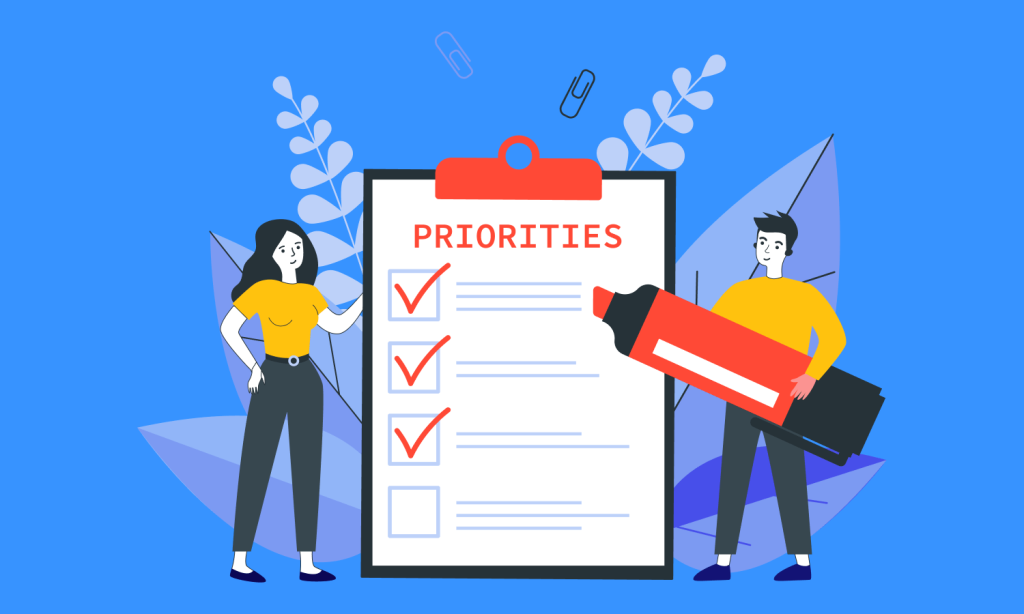
In today’s work environment, teams are constantly juggling multiple tasks, deadlines, and shifting expectations. Without a clear system to decide what matters most, work quickly becomes reactive—driven by urgency rather than impact. This often leads to missed deadlines, scattered focus, and the frustrating feeling of being busy but not productive.
This is where priority management becomes essential.
Priority management is not just about getting more work done—it’s about getting the right work done. It helps individuals and teams focus their time, energy, and resources on tasks that directly contribute to meaningful outcomes and long-term goals. Instead of treating every task as equally important, priority management introduces structure, clarity, and intentional decision-making.
Modern organizations increasingly rely on structured priority systems to align daily work with strategic objectives. When implemented effectively, it creates a shared understanding of what matters most, reduces confusion, and ensures that teams move in the same direction.
Priority management transforms chaos into clarity—helping you work smarter, not just harder.
What is Priority Management?
Priority management is the process of identifying, organizing, and focusing on tasks based on their importance and impact. It ensures that time, effort, and resources are directed toward high-value activities that contribute to key goals.
At its core, priority management answers one critical question:
“What should I work on first—and why?”
It goes beyond simple task organization. Instead of just listing tasks, priority management involves evaluating them based on factors like:
- Importance to business or personal goals
- Urgency and deadlines
- Potential impact or return on effort
- Available resources and dependencies
By doing this, individuals and teams can distinguish between:
- High-impact work that drives progress
- Low-value tasks that can be delayed, delegated, or eliminated
Priority management is closely linked to both time management and project management. While time management focuses on when tasks are completed, priority management focuses on what deserves attention first.
In modern workflows, priority management is also dynamic. Priorities shift as new information, deadlines, or business needs emerge. This makes it an ongoing process rather than a one-time setup.
Ultimately, effective priority management ensures that efforts are aligned with strategic goals, not just daily activity.
Why is Priority Management Important?
Priority management plays a critical role in improving productivity, alignment, and overall performance—both for individuals and teams.
Keeps Work Focused on What Matters Most
Without clear priorities, it’s easy to spend time on tasks that feel urgent but deliver little value. Priority management ensures that high-impact work gets the attention it deserves, helping teams focus on outcomes rather than just activity.
Improves Productivity and Efficiency
When you know exactly what to work on next, you reduce decision fatigue and wasted time. Instead of constantly switching between tasks, you can focus deeply on the most important work, leading to better results in less time.
Aligns Teams with Business Goals
Priority management creates alignment between daily tasks and larger organizational objectives. When everyone understands what matters most, teams can work cohesively toward shared goals instead of pulling in different directions.
Prevents Overwhelm and “Firefighting”
Without priorities, teams often operate in reactive mode—constantly responding to the latest request. Priority management introduces structure, helping teams avoid chaos and focus on planned, meaningful work rather than constant urgency.
Keeps Projects on Track
Clear prioritization ensures that critical tasks are completed on time, reducing delays and bottlenecks. It also makes it easier to allocate resources effectively and maintain progress toward deadlines.
Supports Better Decision-Making
Priority management provides a framework for making informed decisions about what to do, delay, delegate, or drop. This clarity helps individuals and leaders make choices that support long-term success rather than short-term pressure.
Enhances Work-Life Balance
When priorities are clear, work becomes more structured and predictable. This reduces stress, prevents overwork, and helps individuals maintain a healthier balance between professional and personal life.
How to Implement a Priority Management System for Your Team
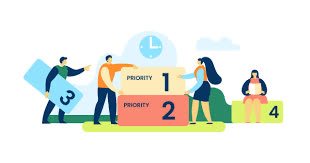
Building an effective priority management system is not just about organizing tasks—it’s about creating a repeatable framework that helps your team consistently focus on high-impact work. Without a system, priorities become subjective, constantly shifting, and often driven by urgency rather than importance.
A structured approach ensures clarity, alignment, and accountability across the entire team.
Start With Clear Goals and Outcomes
Every priority system begins with clarity on what actually matters. Before assigning importance to tasks, teams need a shared understanding of:
- Strategic objectives
- Key deliverables
- Short-term and long-term goals
When goals are clearly defined, it becomes easier to evaluate tasks based on their contribution to those outcomes. Without this alignment, teams often prioritize based on noise—emails, meetings, or ad hoc requests—rather than meaningful progress.
A strong system connects daily tasks → team objectives → business outcomes.
Capture Everything in a Centralized Master List
One of the biggest causes of poor prioritization is fragmented work. Tasks are scattered across emails, chats, documents, and personal notes.
To fix this, create a single source of truth—a master list that includes:
- All tasks (big and small)
- Ongoing projects
- Requests from stakeholders
- Backlog items
This step is critical because you cannot prioritize what you cannot see. A centralized list provides full visibility and prevents important work from being overlooked.
Evaluate Tasks Based on Impact and Urgency
Once all tasks are visible, the next step is evaluation. Not all tasks are equal, and treating them that way leads to inefficiency.
Teams should assess tasks using criteria such as:
- Impact on business or team goals
- Urgency and deadlines
- Effort required
- Dependencies or blockers
This evaluation helps distinguish between:
- High-impact work that drives results
- Routine or low-value tasks that can be delayed or delegated
Effective prioritization ensures that important work is not constantly overshadowed by urgent distractions.
Assign Clear Priority Levels
After evaluating tasks, assign structured priority levels. This creates a shared language across the team and removes ambiguity.
Common ways to assign priority include:
- High, medium, low
- Numeric ranking (P1, P2, P3)
- Categorization frameworks like ABCDE
The key is consistency. Everyone on the team should understand what each level means and how it affects execution.
For example:
- High priority = must be completed immediately due to impact or deadlines
- Medium priority = important but not urgent
- Low priority = minimal impact or flexible timeline
Break Down Work Into Actionable Tasks
Large projects often feel overwhelming and are difficult to prioritize. Breaking them into smaller, actionable tasks helps teams:
- Understand what needs to be done
- Estimate effort more accurately
- Prioritize at a granular level
Instead of “Launch campaign,” break it into:
- Create content
- Design visuals
- Schedule posts
- Review analytics
This makes prioritization more precise and execution more manageable.
Align Priorities Across the Team
Priority management is not an individual activity—it’s a team effort. Misalignment often leads to:
- Conflicting priorities
- Duplicate work
- Bottlenecks
Regular alignment ensures that everyone is working toward the same goals. This can be done through:
- Weekly planning meetings
- Daily check-ins
- Shared dashboards
When priorities are visible and communicated, teams can collaborate more effectively and avoid confusion.
Review and Adjust Regularly
Priorities are not static. They change based on:
- New business needs
- Deadlines
- Feedback
- Unexpected challenges
A good system includes regular reviews to:
- Reassess task importance
- Adjust timelines
- Remove outdated or irrelevant tasks
Without regular updates, even the best priority system becomes outdated and ineffective.
Encourage Focus and Limit Work in Progress
One common mistake teams make is trying to do too much at once. This leads to:
- Context switching
- Reduced quality
- Delays
Priority management works best when teams focus on a limited number of high-value tasks at a time. By reducing work in progress, teams can:
- Improve efficiency
- Complete tasks faster
- Maintain higher quality
Track Progress and Outcomes
A priority system should not end with planning—it must include execution tracking.
Teams should monitor:
- Task completion status
- Progress toward goals
- Bottlenecks and delays
Tracking ensures accountability and helps teams continuously improve their prioritization process.
A well-implemented priority management system creates structure, clarity, and focus. It transforms how teams operate—moving them from reactive task handling to intentional, outcome-driven work.
Priority Management Techniques & Best Practices

Once a system is in place, the next step is applying proven techniques that help individuals and teams prioritize effectively. These methods provide practical frameworks to make better decisions about what to do first, what to delay, and what to eliminate.
Master List
The master list is the foundation of all prioritization techniques. It is a comprehensive list of every task, idea, and responsibility that needs attention.
Instead of relying on memory or scattered notes, everything is captured in one place. This includes:
- Immediate tasks
- Long-term projects
- Backlog items
- Personal and team responsibilities
The purpose of a master list is clarity. When all tasks are visible, it becomes easier to:
- Evaluate importance
- Identify overlaps or redundancies
- Decide what truly matters
Without a master list, prioritization becomes guesswork.
Most Important Tasks (MIT) List
The Most Important Tasks (MIT) method focuses on identifying a small number of critical tasks to complete each day.
Instead of trying to do everything, you select:
- 1–3 high-impact tasks that must be completed
These tasks are directly tied to meaningful outcomes. By focusing on a limited number of priorities, teams can:
- Avoid overwhelm
- Maintain focus
- Ensure progress on important work
The MIT approach is especially effective because it forces decision-making. It eliminates the illusion of productivity that comes from completing many low-value tasks.
ABCDE Method
The ABCDE method is a structured prioritization technique that categorizes tasks into five levels based on importance and urgency.
Here’s how it works:
- A tasks: Must-do tasks with serious consequences if not completed
- B tasks: Important tasks with moderate consequences
- C tasks: Low-value tasks with minimal impact
- D tasks: Tasks that can be delegated
- E tasks: Tasks that can be eliminated entirely
This method helps teams quickly identify what deserves immediate attention and what doesn’t. By explicitly identifying tasks to delegate or eliminate, it reduces clutter and improves focus on high-value work.
One of the biggest advantages of the ABCDE method is its simplicity. It provides a clear, actionable structure that can be applied daily without complex tools or processes.
Eat the Frog
The “Eat the Frog” technique is based on a simple principle:
Start your day with the most difficult and important task.
The “frog” represents the task that:
- Has the highest impact
- Requires the most effort
- Is most likely to be procrastinated
By completing this task first, you:
- Build momentum
- Reduce stress
- Ensure that critical work gets done
This method is particularly effective in environments where high-value tasks are often delayed due to their complexity.
1-3-5 Rule
The 1-3-5 rule provides a balanced approach to daily workload management.
It suggests completing:
- 1 big task
- 3 medium tasks
- 5 small tasks
This framework helps teams:
- Structure their day realistically
- Avoid overcommitment
- Maintain a balance between high-impact and routine work
Unlike rigid prioritization systems, the 1-3-5 rule acknowledges that not all tasks are equal and helps distribute effort accordingly.
The Warren Buffett Method
The Warren Buffett method (also known as the 25-5 rule) is a powerful prioritization strategy focused on elimination.
Here’s how it works:
- List your top 25 goals
- Select the top 5 most important
- Avoid the remaining 20
The key insight is that the “avoid list” is just as important as the priority list. By eliminating distractions and non-essential goals, you can focus entirely on what truly matters.
This method is especially useful for:
- Long-term planning
- Strategic decision-making
- Reducing overwhelm
Effective priority management is a combination of structured systems and practical techniques. By combining both, teams can move beyond reactive work and consistently focus on what drives real results.
How to Use Tools to Create a Priority Management System
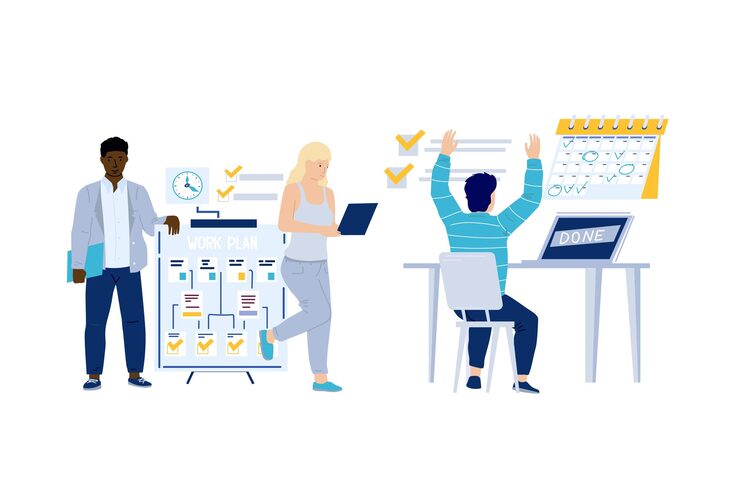
Modern teams don’t just rely on manual lists or intuition to manage priorities—they use digital tools to create structured, transparent, and scalable systems. The right tools don’t replace prioritization thinking; they amplify it by making priorities visible, trackable, and adaptable in real time.
A well-designed tool-based system ensures that everyone knows what to work on, why it matters, and how it connects to larger goals. Below is a step-by-step framework to build a priority management system using tools effectively.
1. Set and Visualize High-Level Goals
Every effective priority system starts with clarity at the top. Before diving into tasks, teams must define and visualize their high-level goals.
Using tools, you can:
- Create goal hierarchies (company → team → individual)
- Define measurable outcomes (OKRs, KPIs, milestones)
- Map tasks directly to goals
Visualization is key. Instead of keeping goals in static documents, modern tools allow you to:
- Display goals on dashboards
- Track progress in real time
- Connect goals with ongoing work
This creates a clear line of sight between daily tasks and strategic objectives.
For example, if a team’s goal is to increase customer retention, tasks like improving onboarding flows or analyzing churn data become high priority. Without this visibility, teams may spend time on work that doesn’t move the needle.
The biggest advantage of visualizing goals is alignment. Everyone understands:
- What success looks like
- What matters most
- How their work contributes
2. Create a Master List of All Tasks
Once goals are clear, the next step is capturing all work in a centralized system. This is where tools play a crucial role in eliminating fragmentation.
Instead of scattered tasks across emails, spreadsheets, and chats, teams can:
- Create a unified task database
- Organize tasks by project, priority, or owner
- Maintain a backlog of future work
A well-structured master list should include:
- Task name and description
- Owner or responsible person
- Deadline or timeline
- Priority level
- Related goal or project
Tools also allow teams to:
- Convert discussions into tasks
- Attach files and context
- Break large projects into subtasks
This step ensures that nothing falls through the cracks. It also provides a single source of truth, which is essential for effective prioritization.
When all tasks are visible in one place, teams can:
- Identify overload
- Spot redundant work
- Make informed prioritization decisions
3. Evaluate and Assign Tasks
With all tasks captured, the next step is evaluation—deciding what deserves attention first. Tools simplify this process by allowing teams to apply structured prioritization frameworks directly within their workflows.
Using tools, teams can:
- Assign priority levels (high, medium, low)
- Use tags, labels, or scoring systems
- Sort and filter tasks based on importance, urgency, or impact
More advanced systems allow for:
- Custom priority fields
- Weighted scoring models (impact vs effort)
- Automated prioritization rules
For example:
- Tasks tied to critical goals can be automatically marked as high priority
- Urgent deadlines can trigger alerts or visual indicators
Assignment is equally important. Every task should have:
- A clear owner
- Defined expectations
- A timeline for completion
This removes ambiguity and ensures accountability.
Another key benefit of tools is visibility. Managers and team members can:
- See who is working on what
- Balance workloads
- Avoid duplication
By combining evaluation and assignment, teams create a structured workflow where priorities are not just defined—but actionable.
4. Track Progress and Collaborate
A priority management system is only effective if it continues through execution. Tools enable teams to track progress and collaborate seamlessly, ensuring that priorities are followed through to completion.
Key capabilities include:
Real-Time Progress Tracking
Teams can monitor:
- Task status (to-do, in progress, completed)
- Project milestones
- Goal progress
This helps identify delays early and take corrective action before they impact outcomes.
Collaboration and Communication
Instead of switching between multiple platforms, tools centralize communication within tasks. Teams can:
- Leave comments
- Share updates
- Tag team members
- Attach relevant files
This keeps all context in one place, reducing confusion and miscommunication.
Workflow Automation
Modern tools also support automation, such as:
- Automatically updating task statuses
- Sending reminders for deadlines
- Triggering actions based on progress
Automation reduces manual work and ensures consistency in how priorities are managed.
Reporting and Insights
Analytics and reporting features provide insights into:
- Team productivity
- Task completion rates
- Bottlenecks
These insights help teams refine their priority management system over time.
Bringing It All Together
When used effectively, tools transform priority management from a manual, inconsistent process into a structured, scalable system.
The workflow becomes:
- Define goals
- Capture all tasks
- Evaluate and prioritize
- Assign ownership
- Track and optimize
This creates a continuous loop where priorities are constantly aligned with goals and adjusted based on real-time progress.
Unlock Your Priorities Management With Corexta
Creating a priority management system is only effective when you have the right infrastructure to support it. This is where Corexta becomes a powerful solution—helping teams move from scattered task handling to a fully structured, goal-driven workflow.
Corexta is designed as an all-in-one business and work management platform that centralizes everything your team needs—from task management and project planning to collaboration and performance tracking. Instead of juggling multiple disconnected tools, you can manage priorities within a single, unified workspace.
At the core of effective priority management is visibility, and Corexta delivers exactly that. With features like task tracking, project roadmaps, and Kanban-style boards, teams can easily visualize what needs to be done, what’s in progress, and what requires immediate attention. This makes it significantly easier to identify high-priority work and ensure that critical tasks are not overlooked.
Corexta also enhances prioritization through structured task assignment and real-time tracking. You can create tasks, assign them to team members, set deadlines, and define priority levels—all within a single system. This ensures accountability and eliminates confusion around ownership, which is essential for maintaining a clear priority hierarchy.
Collaboration is another key strength. With built-in communication tools, real-time notifications, and integrations, teams stay aligned without switching between platforms. Everyone has access to the same information, which reduces misalignment and keeps priorities consistent across the organization.
Beyond task management, Corexta provides deeper operational support through features like time tracking, reporting, and workflow automation. These capabilities help teams analyze productivity, identify bottlenecks, and continuously refine their priority management system for better results.
If you’re serious about building a scalable and efficient priority management system, relying on manual processes is not enough. You need a platform that brings clarity, structure, and real-time insights into your workflow.
Start simplifying your priorities, aligning your team, and driving real results—explore Corexta today and experience how a centralized system can transform the way you manage work. 🚀
Priority Management FAQs
What’s the Difference Between Priority Management and Time Management?
Priority management and time management are closely related, but they serve different purposes.
Priority management focuses on deciding what to work on.
It answers questions like:
- Which tasks matter most?
- What should be done first?
- What can be delayed, delegated, or removed?
Time management, on the other hand, focuses on when and how work gets done.
It involves:
- Scheduling tasks
- Allocating time blocks
- Managing deadlines
In simple terms:
- Priority management determines importance
- Time management determines execution timing
Without priority management, time management becomes ineffective. You may efficiently complete tasks—but not the right ones.
For example:
- Completing low-value tasks on time does not drive meaningful progress
- Spending hours on urgent but unimportant work leads to burnout without results
Priority management ensures that your time is spent on high-impact activities. Once priorities are clear, time management techniques can be applied more effectively.
The most productive individuals and teams use both together:
- First, identify the most important work
- Then, allocate time to complete it
What Are Some Common Priority Management Challenges, and How Can I Overcome Them?
Even with the right systems and tools, teams often face challenges when managing priorities. Understanding these challenges—and how to address them—is key to building a sustainable system.
Constantly Changing Priorities
Challenge:
In dynamic environments, priorities shift frequently due to new requests, changing goals, or unexpected issues. This can create confusion and disrupt workflows.
Solution:
- Schedule regular priority reviews (daily or weekly)
- Use flexible tools that allow easy reordering and updating
- Clearly communicate changes to the team
The goal is not to eliminate change, but to manage it in a structured way.
Lack of Clear Goals
Challenge:
Without well-defined goals, teams struggle to determine what is truly important.
Solution:
- Establish clear, measurable objectives
- Align tasks with these objectives
- Regularly revisit and refine goals
Clarity at the top makes prioritization easier at every level.
Overloading Teams With Too Many Tasks
Challenge:
Trying to do too much at once leads to burnout, missed deadlines, and reduced quality.
Solution:
- Limit the number of active priorities
- Use frameworks like MIT or 1-3-5
- Focus on completing tasks before starting new ones
Less is often more when it comes to productivity.
Confusion Around Task Importance
Challenge:
When everything feels urgent, teams struggle to differentiate between high-impact and low-value work.
Solution:
- Use structured prioritization frameworks (ABCDE, scoring models)
- Define clear criteria for priority levels
- Encourage outcome-based thinking
This helps teams focus on work that truly matters.
Poor Communication and Misalignment
Challenge:
Different team members may have different interpretations of priorities, leading to misalignment.
Solution:
- Use shared tools and dashboards
- Hold regular alignment meetings
- Make priorities visible to everyone
Transparency is essential for team-wide prioritization.
Difficulty Saying No
Challenge:
Teams often take on too many tasks due to external pressure or fear of missing opportunities.
Solution:
- Evaluate requests against current priorities
- Use data and goals to justify decisions
- Maintain a backlog for future consideration
Saying no to low-value work protects focus on high-impact tasks.
Lack of Follow-Through
Challenge:
Even well-prioritized tasks may not get completed due to poor tracking or accountability.
Solution:
- Assign clear ownership
- Track progress regularly
- Use reminders and automation
Execution is just as important as prioritization.
Read More: How to Build AI Agents for Marketing Teams