Modern product management is no longer just about managing features or overseeing development cycles. Today’s product managers are expected to align business goals, customer needs, technical execution, and market strategy while keeping multiple teams moving in the same direction. That level of coordination is only possible with strong documentation.
Product management documents act as a shared source of truth across the organization. They help teams clarify priorities, reduce misunderstandings, improve collaboration, and make faster decisions. From early-stage product discovery to post-launch analysis, every successful product relies on a set of structured documents that guide the entire lifecycle.
Well-prepared documentation also creates transparency between stakeholders, engineering teams, designers, marketers, executives, and customers. Without clear documentation, teams often face scope creep, missed deadlines, conflicting priorities, and unclear product direction. Modern Agile and SaaS teams especially depend on living documents that evolve as customer feedback and market conditions change.
The best product managers do not create documents simply for recordkeeping. They create them to communicate strategy, organize execution, validate ideas, and ensure that everyone understands both the “what” and the “why” behind the product.
The 10 Most Important Documents Every Product Manager Needs
1. Product Requirements Document (PRD)
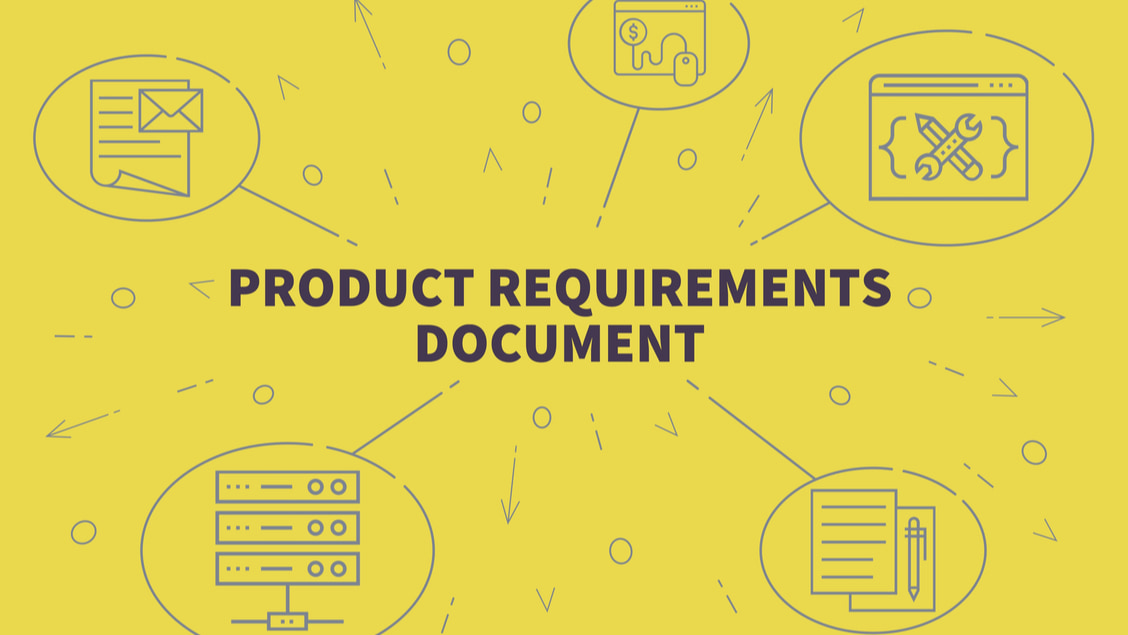
A Product Requirements Document (PRD) is one of the most important documents in product management. It explains what the product or feature should do, why it matters, who it serves, and how success will be measured. A strong PRD helps engineering, design, QA, marketing, and leadership teams stay aligned throughout the development process.
A modern PRD usually includes:
- Product overview
- Problem statement
- Goals and objectives
- Target users
- Functional requirements
- User stories
- Acceptance criteria
- Technical considerations
- Success metrics
- Timeline and dependencies
The primary purpose of a PRD is to remove ambiguity. Developers need detailed requirements to build features correctly, while stakeholders need clarity on business objectives and expected outcomes. Without a PRD, teams often interpret requirements differently, which can lead to delays, rework, and product inconsistencies.
Modern PRDs are also becoming more collaborative and flexible. Instead of static documents that are written once and forgotten, many product teams now treat PRDs as living documents that evolve during discovery, development, testing, and launch phases. Agile teams frequently update requirements based on user feedback, analytics, and changing priorities.
One major trend in 2025 product management is outcome-focused PRDs. Rather than listing features alone, modern PRDs emphasize customer problems, measurable business impact, and success metrics. This helps teams focus on delivering value instead of simply shipping functionality.
A good PRD should also avoid unnecessary complexity. The best documents are detailed enough to guide execution while remaining simple enough for cross-functional teams to understand quickly.
2. Product Roadmap
A product roadmap is a high-level strategic document that outlines the vision, direction, priorities, and planned evolution of a product over time. It helps organizations understand where the product is going and how current initiatives support long-term business goals.
Unlike a detailed project plan, a roadmap focuses on strategic priorities rather than task-level execution. It communicates what the team plans to achieve, why those initiatives matter, and how they align with customer and business needs.
A product roadmap commonly includes:
- Product vision
- Strategic goals
- Key initiatives
- Priority themes
- Release timelines
- Major milestones
- Dependencies
- Success objectives
Modern product roadmaps have evolved significantly. Traditional roadmaps often focused heavily on feature delivery and fixed deadlines. Today, many successful companies use outcome-driven roadmaps that prioritize customer value, business impact, and flexibility. Theme-based roadmaps such as “Improve onboarding experience” or “Expand enterprise capabilities” are increasingly replacing rigid feature lists.
An effective roadmap serves multiple audiences:
- Executives use it to evaluate strategic direction
- Engineering teams use it to understand priorities
- Marketing and sales teams use it to prepare go-to-market plans
- Stakeholders use it to track progress and alignment
One common mistake product managers make is treating the roadmap as a fixed commitment. In reality, a roadmap should remain adaptable. Customer behavior, market conditions, competitor actions, and business priorities can change quickly. Strong product managers continuously refine the roadmap based on data and learning.
Clear roadmaps also improve stakeholder communication. When teams understand why certain initiatives are prioritized, collaboration becomes smoother and decision-making becomes faster.
3. Business Case Document
A business case document explains why a product, feature, or initiative deserves investment. It helps stakeholders evaluate whether the proposed idea is financially, strategically, and operationally worthwhile before resources are committed.
This document is especially important when launching a new product, entering a new market, introducing a major feature, or requesting additional budget and team support. Leadership teams rely on business case documents to make informed investment decisions.
A strong business case document typically includes:
- Executive summary
- Business problem or opportunity
- Market analysis
- Customer pain points
- Proposed solution
- Expected business impact
- Revenue potential
- Cost estimates
- Risk assessment
- Competitive analysis
- Resource requirements
- Success metrics
The main goal of a business case is to justify investment using data and strategic reasoning. Product managers often combine customer research, financial projections, industry trends, and operational insights to demonstrate why the initiative matters.
Modern business cases are increasingly data-driven. Companies now rely heavily on customer analytics, behavioral insights, competitive intelligence, and market validation before approving product initiatives. This reduces the likelihood of building products based purely on assumptions.
A well-written business case also improves stakeholder alignment. Executives, finance teams, engineering leaders, and marketing departments all gain a shared understanding of expected outcomes, priorities, and risks.
In SaaS and technology companies, business case documents are often connected directly to measurable KPIs such as:
- Customer acquisition cost (CAC)
- Monthly recurring revenue (MRR)
- Customer retention
- Feature adoption rates
- Lifetime value (LTV)
- Operational efficiency
- Churn reduction
The strongest business cases focus not only on potential revenue but also on customer value and long-term strategic growth. Product managers who can clearly connect customer problems with business outcomes are far more likely to gain organizational support for their initiatives.
4. User Personas Document
A user personas document helps product managers understand who their users are, what they need, what problems they face, and how they interact with the product. It transforms raw customer data into realistic customer profiles that guide product decisions, feature prioritization, design improvements, and marketing strategies.
Without clearly defined personas, product teams often build features based on assumptions instead of real customer behavior. A well-developed persona document keeps the entire organization focused on solving genuine user problems.
A modern user persona document typically includes:
- Demographic information
- Job role and responsibilities
- Goals and motivations
- Pain points and frustrations
- Behavioral patterns
- Preferred communication channels
- Buying behaviors
- Product usage habits
- Technical proficiency
- Common objections or concerns
In B2B SaaS environments, personas often go beyond individual users and include multiple stakeholder types such as:
- Decision-makers
- End users
- IT administrators
- Finance teams
- Procurement managers
This is important because different stakeholders may have different goals and expectations from the same product.
Modern product teams now rely heavily on data-driven personas instead of fictional profiles. Product managers use customer interviews, CRM data, support tickets, product analytics, survey responses, social listening, and behavioral tracking to build accurate personas. AI-powered analytics tools also help teams identify emerging customer patterns faster than before. (uxpressia.com)
A good persona document helps teams answer critical questions such as:
- Who is the product really for?
- What problem matters most to users?
- Which features provide the highest value?
- What user experience challenges exist?
- How should messaging and onboarding be structured?
Personas also improve collaboration between departments. Designers create more user-friendly interfaces, marketers produce more targeted campaigns, and developers better understand the real-world context behind product decisions.
One common mistake is creating personas once and never updating them. Customer expectations, behaviors, and market trends change constantly. High-performing product teams regularly revisit persona documents to reflect new customer insights and usage patterns.
5. Market Research Document
A market research document provides a detailed understanding of the industry, target audience, competitors, customer demand, and market opportunities surrounding a product. It helps product managers make informed decisions based on evidence rather than assumptions. (survicate.com)
This document plays a critical role during product discovery, product positioning, expansion planning, pricing strategy development, and feature prioritization.
A comprehensive market research document usually contains:
- Industry overview
- Market size and growth trends
- Competitor analysis
- Customer segmentation
- Customer pain points
- Buyer behavior analysis
- Pricing insights
- SWOT analysis
- Emerging market trends
- Regulatory or compliance considerations
- Opportunity assessment
Modern product management relies heavily on continuous market research rather than one-time reports. Markets evolve rapidly, especially in SaaS, AI, fintech, healthcare, and eCommerce industries. Product managers need ongoing insights into customer expectations and competitor activity to remain competitive.
Today’s market research process often combines both qualitative and quantitative research methods, including:
- Customer interviews
- Surveys and polls
- Product usage analytics
- Online reviews analysis
- Competitive benchmarking
- Social media monitoring
- Search trend analysis
- Industry reports
- Community feedback
AI and automation tools are also changing how product managers conduct market research. Teams can now analyze large volumes of customer feedback, identify sentiment trends, and monitor competitor updates much faster than traditional manual research methods. (qualtrics.com)
A strong market research document helps product managers:
- Validate product ideas
- Identify underserved customer needs
- Reduce product risk
- Understand competitive advantages
- Improve product positioning
- Support pricing decisions
- Discover expansion opportunities
One of the biggest benefits of market research is preventing teams from building products customers do not actually want. Many failed products are the result of poor market validation rather than poor execution.
Successful product managers treat market research as an ongoing strategic process that continuously informs roadmap decisions, feature planning, and long-term product growth.
6. Backlog Document

A backlog document is a prioritized collection of tasks, features, bug fixes, improvements, technical work, and product ideas that the development team may work on in the future. It acts as a central planning system for Agile product development.
The backlog helps product managers organize work, align development priorities, and ensure teams focus on delivering the highest-value items first.
A typical product backlog may include:
- New feature requests
- User stories
- Technical debt tasks
- Security updates
- Performance improvements
- UX enhancements
- Bug fixes
- Research tasks
- Integration requirements
- Compliance-related updates
Each backlog item usually contains:
- Task description
- Business value
- Priority level
- Acceptance criteria
- Estimated effort
- Dependencies
- Assigned owner or team
Modern Agile teams use dynamic backlogs that evolve continuously based on customer feedback, analytics, sprint reviews, and business priorities. The backlog is not meant to be static. Product managers regularly refine, reorder, split, merge, or remove backlog items as conditions change.
Backlog prioritization is one of the most important responsibilities of a product manager. Teams commonly use frameworks such as:
- RICE scoring
- MoSCoW prioritization
- Value vs effort analysis
- Kano model
- WSJF (Weighted Shortest Job First)
A well-maintained backlog improves:
- Sprint planning
- Team productivity
- Stakeholder transparency
- Development efficiency
- Release predictability
One common issue in product teams is “backlog overload,” where hundreds of outdated tasks accumulate over time. Effective product managers regularly clean and refine the backlog to ensure it stays actionable and relevant.
Modern backlogs also increasingly connect with customer insights and analytics platforms. This allows teams to prioritize work based on real usage data, feature adoption rates, and measurable business outcomes rather than assumptions alone.
7. User Stories Document
A user stories document describes product functionality from the user’s perspective. Instead of focusing only on technical specifications, user stories explain what the user wants to accomplish and why it matters. This helps development teams build features that solve real customer problems.
User stories are especially important in Agile and Scrum environments because they encourage collaboration, flexibility, and customer-centered development.
The most common user story format is:
“As a [user type], I want [goal] so that [benefit].”
For example:
“As a project manager, I want automated progress reporting so that I can save time on manual updates.”
A user stories document often includes:
- User story descriptions
- Acceptance criteria
- Priority level
- Related dependencies
- Story points or effort estimates
- Business value
- Edge cases or special conditions
Good user stories focus on outcomes rather than implementation details. They help teams understand user intent while giving developers flexibility in how solutions are built.
Modern product teams frequently combine user stories with:
- UX wireframes
- Workflow diagrams
- Prototype links
- Customer feedback
- Analytics data
- AI-generated usage insights
This creates stronger alignment between business objectives, customer expectations, and development execution.
Well-written user stories offer several advantages:
- Improve collaboration between technical and non-technical teams
- Simplify sprint planning
- Encourage customer-focused thinking
- Reduce misunderstandings
- Make features easier to test and validate
One of the most important parts of a user story is the acceptance criteria. Acceptance criteria define the conditions that must be met for the feature to be considered complete. Clear acceptance criteria reduce confusion during development and testing.
Modern Agile teams also increasingly use story mapping techniques to organize user stories around complete customer journeys instead of isolated features. This helps product managers prioritize experiences that deliver meaningful customer value.
Strong user stories ultimately help teams move away from feature-driven development and toward solving real customer problems in a structured and measurable way.
8. Release Plan Document
A release plan document outlines how and when a product, feature, update, or improvement will be delivered to users. It helps product managers coordinate development, testing, deployment, marketing, customer support, and stakeholder expectations around a product launch.
While a product roadmap focuses on long-term strategic direction, a release plan is more execution-focused. It explains the specific deliverables, timelines, responsibilities, and launch activities required for a successful release.
A typical release plan document includes:
- Release objectives
- Scope of the release
- Features included
- Release timeline
- Milestones and deadlines
- Sprint schedules
- Resource allocation
- Risk assessment
- QA and testing plans
- Deployment strategy
- Rollback procedures
- Communication plans
- Success metrics
Modern release planning has evolved significantly with Agile, DevOps, and continuous delivery practices. Instead of infrequent large-scale launches, many SaaS companies now use iterative release cycles with smaller, more frequent updates. This approach reduces deployment risk and allows teams to respond to customer feedback faster. (launchdarkly.com)
Release plans today often include advanced deployment strategies such as:
- Feature flags
- Canary releases
- Phased rollouts
- Beta testing programs
- A/B testing deployments
- Continuous integration and delivery (CI/CD)
These methods help teams validate updates gradually before rolling them out to all users.
A strong release plan document improves cross-functional coordination between:
- Engineering teams
- Product managers
- QA specialists
- Customer support
- Sales teams
- Marketing departments
- Executive stakeholders
It also helps reduce launch-related risks such as unexpected downtime, customer confusion, incomplete documentation, or support overload.
One important trend in modern product management is release planning based on customer impact rather than internal deadlines alone. Product teams increasingly use customer usage data, onboarding metrics, and behavioral insights to determine optimal release timing.
An effective release plan ensures that product launches are not only technically successful but also operationally and commercially prepared.
9. Stakeholder Communication Document

A stakeholder communication document defines how product-related information will be shared with stakeholders throughout the product lifecycle. It ensures transparency, alignment, and consistent communication between teams, leadership, investors, clients, and other decision-makers.
Product managers work with multiple stakeholders who often have different priorities, expectations, and levels of technical understanding. Without structured communication, misunderstandings can quickly lead to delays, conflicts, and misaligned product decisions.
A stakeholder communication document commonly includes:
- Stakeholder identification
- Roles and responsibilities
- Communication goals
- Reporting schedules
- Meeting cadence
- Preferred communication channels
- Escalation processes
- Status update formats
- Decision-making workflows
- Risk communication plans
Modern product organizations place a strong emphasis on proactive communication. Stakeholders today expect regular visibility into product progress, risks, changing priorities, and performance metrics.
Product managers often communicate with:
- Executive leadership
- Engineering teams
- Design teams
- Marketing departments
- Sales teams
- Customer success teams
- External clients or partners
- Investors or board members
Each group may require different communication styles and levels of detail. For example:
- Executives may focus on business outcomes and KPIs
- Developers may need technical clarity and dependency updates
- Sales teams may require release timelines and feature positioning
- Customer support teams may need rollout preparation and issue tracking
Modern stakeholder communication increasingly relies on centralized collaboration platforms, real-time dashboards, automated reporting systems, and asynchronous updates. This improves transparency and reduces information silos across distributed teams. (mural.co)
An effective stakeholder communication document helps product managers:
- Build stakeholder trust
- Reduce misalignment
- Improve decision-making speed
- Manage expectations effectively
- Minimize communication gaps
- Strengthen cross-functional collaboration
One major challenge product managers face is balancing transparency with information overload. Strong communication plans focus on delivering relevant, timely, and actionable updates instead of excessive reporting.
Consistent communication also becomes especially critical during periods of change such as product pivots, delays, major releases, or incident management situations.
10. Post-Launch Analysis Document
A post-launch analysis document evaluates how a product, feature, or release performed after launch. It helps product managers measure success, identify problems, gather customer feedback, and improve future product decisions. (amplitude.com)
Launching a product is not the end of the product management process. In many cases, the most valuable insights emerge after real users begin interacting with the product in live environments.
A post-launch analysis document typically includes:
- Launch objectives
- Performance metrics
- User adoption data
- Customer feedback
- Revenue impact
- Retention metrics
- Feature engagement statistics
- Support ticket analysis
- Technical performance issues
- Lessons learned
- Improvement recommendations
- Next-step action plans
Modern product teams rely heavily on analytics-driven post-launch evaluations. Product managers use tools such as behavioral analytics platforms, heatmaps, session recordings, customer surveys, and AI-powered sentiment analysis to understand how users interact with new features. (mixpanel.com)
Common metrics analyzed after launch include:
- Feature adoption rate
- Daily active users (DAU)
- Customer retention
- Churn rate
- Conversion rate
- Net promoter score (NPS)
- Customer satisfaction (CSAT)
- Revenue growth
- Bug frequency
- Time-to-value
A strong post-launch analysis helps teams answer important questions such as:
- Did the product solve the intended problem?
- Did users adopt the feature as expected?
- What obstacles or friction points appeared?
- Were business goals achieved?
- What improvements should be prioritized next?
Modern SaaS companies increasingly treat launches as continuous optimization cycles rather than one-time events. Teams gather feedback rapidly, release iterative improvements, and refine experiences based on actual user behavior.
Post-launch analysis documents also improve organizational learning. Teams can document what worked well, what failed, and which processes need improvement for future releases.
One of the biggest mistakes organizations make is focusing only on launch execution while ignoring post-launch measurement. Even technically successful launches can fail commercially if customer adoption and user satisfaction remain low.
The most effective product managers use post-launch analysis to create a continuous feedback loop that drives smarter roadmap decisions, better customer experiences, and stronger long-term product growth.
How Corexta Helps Product Managers Prepare These Documents

Managing product documentation becomes challenging when information is spread across spreadsheets, chats, disconnected project boards, and multiple software tools. Product managers often struggle to keep requirements updated, align stakeholders, track progress, and maintain visibility across teams. This is where Corexta helps simplify the entire process.
Corexta provides an all-in-one business and project management workspace where product managers can organize planning, documentation, collaboration, execution, and reporting from a single platform. Instead of switching between multiple tools for roadmaps, tasks, communication, timelines, and reporting, teams can manage everything in one connected environment.
Product managers can use Corexta’s project management system to structure product initiatives, create task workflows, assign responsibilities, monitor deadlines, and track overall progress in real time. Its visual management capabilities such as Kanban boards, project timelines, dashboards, and Gantt charts make it easier to organize backlog items, monitor sprint activities, and maintain roadmap visibility across teams.
For Product Requirements Documents (PRDs), release plans, and stakeholder communication records, Corexta helps teams centralize information so everyone works from the same source of truth. Product managers can connect documentation directly with tasks, milestones, project updates, and team activities, reducing confusion and eliminating scattered communication. This improves alignment between product, engineering, design, marketing, and leadership teams.
Corexta also supports real-time collaboration, allowing teams to discuss tasks, share files, provide updates, and track progress without relying on disconnected email threads or external communication systems. Integrated notifications, task comments, and collaborative workflows help product managers keep stakeholders informed throughout the product lifecycle.
When managing backlog documents and user stories, Corexta’s task management tools allow product managers to prioritize work, organize development workflows, and monitor task progress visually. Teams can assign priorities, track dependencies, attach files, set deadlines, and manage sprint execution more efficiently. This creates better transparency and accountability across Agile teams.
Corexta also helps product managers with reporting and performance tracking through dashboards and analytics features. Teams can monitor project health, workload distribution, timelines, expenses, productivity, and operational progress from centralized dashboards. This makes post-launch analysis and stakeholder reporting significantly easier.
One major advantage of Corexta is that it combines project management, collaboration, communication, finance management, client management, HR management, and operational workflows inside one scalable platform. For growing SaaS companies, agencies, startups, and cross-functional product teams, this reduces tool fragmentation and improves operational efficiency.
Whether product managers are preparing a PRD, updating a roadmap, organizing market research, managing sprint backlogs, coordinating releases, or analyzing launch performance, Corexta helps turn scattered product operations into a streamlined and collaborative workflow.
Frequently Asked Questions
What documents should every product manager prepare?
Every product manager should prepare core documents that support planning, execution, communication, and product improvement. The most important documents usually include:
- Product Requirements Document (PRD)
- Product roadmap
- Business case document
- User personas
- Market research document
- Product backlog
- User stories
- Release plan
- Stakeholder communication plan
- Post-launch analysis report
These documents help teams stay aligned, reduce confusion, improve prioritization, and ensure products are built around both customer needs and business goals.
What are the product management documents for B2B SaaS products?
B2B SaaS product management typically requires more detailed operational and customer-focused documentation because products often involve multiple stakeholders, integrations, subscription models, onboarding processes, and long-term customer retention strategies.
Common B2B SaaS product management documents include:
- PRDs
- SaaS product roadmaps
- Customer journey maps
- User personas
- Competitive analysis reports
- Feature prioritization frameworks
- API documentation
- Release plans
- Customer onboarding workflows
- KPI and retention analysis reports
- Product adoption reports
- Security and compliance documentation
B2B SaaS teams also frequently maintain customer feedback databases and churn analysis reports to improve retention and product-market fit.
How to write a product requirements document (PRD)?
To write an effective PRD, product managers should clearly define the problem, explain the proposed solution, and outline the product requirements in a structured way.
A modern PRD generally includes:
- Product overview
- Problem statement
- Goals and objectives
- Target audience
- User stories
- Functional requirements
- Non-functional requirements
- Acceptance criteria
- Technical considerations
- Success metrics
- Dependencies and timelines
Strong PRDs focus on customer problems, measurable outcomes, and cross-functional clarity rather than overly technical descriptions alone. Product managers should also keep PRDs updated throughout the development cycle as requirements evolve.
Product roadmap vs release plan: What’s the difference?
A product roadmap is a high-level strategic document that outlines the long-term vision, priorities, and direction of a product over time. It focuses on broader goals, initiatives, and product strategy.
A release plan, on the other hand, is more execution-focused. It explains how and when specific features or updates will be delivered, including timelines, milestones, testing activities, deployment plans, and launch coordination.
In simple terms:
- Product roadmap = strategic direction
- Release plan = operational execution
Both documents work together but serve different purposes within product management.
How do product managers keep documentation updated?
Modern product managers keep documentation updated by treating documents as living resources rather than static files. Teams continuously revise documentation based on:
- Customer feedback
- Product analytics
- Sprint reviews
- Market changes
- Feature updates
- Stakeholder input
- Development progress
Many teams now use collaborative project management platforms that connect documentation with tasks, workflows, and reporting systems. This helps ensure documents stay aligned with real-time product activity and reduces outdated information.
Regular documentation reviews during sprint planning, retrospectives, roadmap discussions, and release cycles also help maintain accuracy.
What tools help create product management documents?
Product managers use a combination of documentation, collaboration, and project management tools to create and maintain product documents effectively.
Popular categories of tools include:
- Project management platforms
- Documentation and wiki tools
- Product roadmap software
- Collaboration tools
- Analytics platforms
- Wireframing and prototyping software
- Customer feedback systems
Corexta help product managers centralize tasks, workflows, roadmaps, communication, reporting, and collaboration inside one workspace. This makes it easier to manage product documentation alongside day-to-day execution and team coordination. Try Corexta free today!
Read More: How Agencies Can Track Project Budgets Accurately