Marketing teams today are under constant pressure to deliver more—more personalization, more campaigns, more insights—while working with limited time and resources. Traditional tools and manual workflows simply can’t keep up with the speed and complexity of modern customer journeys. This is where AI agents are changing the game.
Unlike basic automation or standalone AI tools, AI agents operate as intelligent, goal-driven systems that can plan, execute, and optimize marketing tasks with minimal human intervention. They don’t just follow instructions—they interpret objectives, adapt to new data, and continuously improve their performance over time.
Think about the typical responsibilities of a marketing team: analyzing campaign performance, writing content, managing leads, monitoring brand sentiment, and optimizing ad spend. These tasks are often repetitive, data-heavy, and time-consuming. AI agents can take over much of this workload, allowing marketers to focus on strategy, creativity, and decision-making.
What makes AI agents particularly powerful is their ability to connect different systems and data sources. Instead of working in silos, they can pull insights from CRM platforms, analytics tools, customer interactions, and campaign history—then act on that information in real time. This leads to faster execution, better personalization, and smarter marketing outcomes.
As businesses increasingly adopt AI-driven workflows, understanding how to build and implement AI agents is becoming a critical skill for modern marketing teams. In this guide, you’ll learn what AI agents are, how they work, the technologies behind them, and why they are quickly becoming essential for scalable, high-performance marketing.
What Are AI Agents in Marketing?
AI agents in marketing are autonomous or semi-autonomous systems designed to perform marketing tasks by understanding goals, analyzing data, making decisions, and executing actions. Unlike traditional tools that require constant human input, AI agents can operate independently within defined parameters.
At their core, AI agents combine intelligence, memory, and action. They don’t just generate outputs—they follow workflows, interact with tools, and adapt based on results. For example, an AI marketing agent could monitor campaign performance, identify underperforming ads, adjust targeting or budgets, and report the changes—all without manual intervention.
These agents are typically built to handle multi-step processes. Instead of completing a single task, they can break down complex objectives into smaller actions and execute them sequentially. This makes them especially valuable for marketing operations, where tasks are often interconnected.
A key characteristic of AI agents is context awareness. They can retain information about past interactions, brand guidelines, audience behavior, and campaign history. This allows them to make more informed decisions and deliver outputs that align with your overall marketing strategy.
For instance, instead of generating generic content, an AI agent can create messaging tailored to a specific audience segment, aligned with your brand voice, and optimized for a particular campaign goal. Over time, it learns from feedback and performance data, becoming more effective and accurate.
In practical terms, AI agents can be used across various marketing functions, including:
- Campaign planning and optimization
- Content creation and SEO
- Lead qualification and nurturing
- Customer engagement and support
- Social media monitoring and response
They act as digital teammates that extend your team’s capabilities, reduce manual workload, and enable faster execution at scale.
Key technologies used to build AI agents
AI agents rely on a combination of advanced technologies working together. Each component plays a specific role in enabling the agent to understand, decide, and act effectively.
Machine Learning (ML) Models
Machine learning models are the foundation of predictive capabilities in AI agents. These models analyze large volumes of data to identify patterns and trends that humans might miss.
In marketing, ML models can predict customer behavior, identify high-quality leads, and forecast campaign performance. For example, an AI agent can use ML to determine which leads are most likely to convert and prioritize them for follow-up. It can also analyze historical campaign data to recommend optimal ad budgets or targeting strategies.
This predictive intelligence allows marketing teams to move from reactive decision-making to proactive optimization.
Natural Language Processing (NLP)
Natural Language Processing enables AI agents to understand and interpret human language. This includes not just words, but also context, sentiment, tone, and intent.
With NLP, AI agents can analyze customer emails, chat messages, reviews, and social media comments. They can detect whether a customer is satisfied, frustrated, or interested—and respond accordingly.
For marketing teams, this means better audience insights and more personalized communication. An AI agent can tailor responses, adjust messaging, and even generate content that resonates with specific audience segments.
Retrieval-Augmented Generation (RAG)
Retrieval-Augmented Generation enhances the accuracy and relevance of AI outputs by combining external data retrieval with language generation.
Instead of relying solely on pre-trained knowledge, a RAG-based AI agent can pull real-time information from internal databases, documents, or tools. This might include customer data, brand guidelines, campaign reports, or product information.
By grounding responses in actual data, the agent can provide more accurate recommendations and generate content that aligns with your business context. This is especially important for maintaining consistency and reliability in marketing communications.
Large Language Models (LLMs)
Large Language Models are responsible for generating text, understanding instructions, and reasoning through complex tasks.
These models allow AI agents to create high-quality marketing content, such as blog posts, ad copy, email campaigns, and social media updates. They can also interpret campaign goals and translate them into actionable steps.
What makes LLMs powerful is their ability to handle multi-step workflows. For example, an AI agent can take a campaign brief, break it down into tasks, generate content, and schedule distribution—all within a single workflow.
APIs and Tool Integration
APIs enable AI agents to connect with external tools and platforms, making them capable of taking real-world actions.
Through integrations, an AI agent can update CRM records, send emails, post on social media, manage ad campaigns, or pull analytics data. This transforms the agent from a passive assistant into an active operator.
For example, an AI agent could automatically adjust ad spend based on performance metrics or update lead information in your CRM after analyzing customer interactions.
Together, these technologies create a system that can think, learn, and act—making AI agents far more powerful than traditional automation tools.
AI agents vs. AI assistants vs. AI chatbots
While these terms are often used interchangeably, they represent different levels of capability and functionality.
AI chatbots are the most basic form. They are typically rule-based or limited in scope, designed to handle simple interactions such as answering FAQs or guiding users through predefined flows. They lack deep context awareness and cannot perform complex tasks.
AI assistants are more advanced. They use language models to understand queries and generate responses. They can help with tasks like drafting content, summarizing information, or answering questions. However, they are still largely reactive—they respond to prompts but do not independently take action.
AI agents go a step further. They are proactive, goal-oriented, and capable of executing multi-step workflows. Instead of waiting for instructions, they can analyze a situation, decide what needs to be done, and carry out tasks across multiple systems.
For example:
- A chatbot might answer a customer’s question about a product.
- An AI assistant might help you write a product description.
- An AI agent could analyze customer data, generate personalized product recommendations, send targeted emails, and track the results automatically.
This distinction is important because it highlights the shift from simple automation to intelligent systems that can drive real business outcomes.
AI agents vs traditional marketing automation
Traditional marketing automation tools are designed to execute predefined workflows based on specific triggers. For example, when a user signs up for a newsletter, they receive a sequence of automated emails.
While effective, these systems are limited by their rules. They cannot adapt beyond what has been programmed, and they require manual setup and ongoing maintenance.
AI agents, on the other hand, introduce intelligence and adaptability. Instead of following fixed rules, they can make decisions based on data and context. They can modify workflows, adjust strategies, and optimize performance in real time.
For instance, a traditional automation tool might send the same email sequence to all users in a segment. An AI agent could personalize each message based on user behavior, preferences, and engagement history.
Another key difference is flexibility. Traditional automation struggles with complex, multi-step processes that require judgment and iteration. AI agents excel in these scenarios, as they can break down tasks, evaluate outcomes, and refine their approach.
Traditional automation is about efficiency, while AI agents are about intelligence and continuous improvement.
Benefits of AI Agents for Marketing Teams
The adoption of AI agents brings a wide range of benefits that go beyond simple time savings. These systems fundamentally change how marketing teams operate, enabling them to scale faster, work smarter, and deliver better results.
One of the most significant advantages is increased efficiency. AI agents can handle repetitive and time-consuming tasks such as data analysis, reporting, content generation, and campaign management. This frees up marketers to focus on strategy, creativity, and high-impact activities.
Another key benefit is improved personalization. By analyzing customer data in real time, AI agents can deliver highly targeted messages and experiences. This leads to better engagement, higher conversion rates, and stronger customer relationships.
AI agents also enable faster decision-making. With access to real-time data and predictive insights, they can identify opportunities and issues take action without delays. This is especially valuable in dynamic environments like digital advertising, where timing can significantly impact performance.
Scalability is another major advantage. As your business grows, managing campaigns, leads, and customer interactions becomes increasingly complex. AI agents can scale effortlessly, handling large volumes of data and tasks without compromising quality.
AI agents contribute to better consistency and accuracy. By following defined guidelines and learning from past data, they reduce the risk of human error and ensure that messaging remains aligned with your brand.
AI agents provide continuous optimization. They don’t just execute tasks—they learn from results and improve over time. This means your marketing efforts become more effective with each iteration, leading to sustained growth and better ROI.
AI agents represent a shift from manual, reactive marketing to intelligent, proactive systems that drive measurable results.
Step-by-Step Guide: How to Build AI Agents for Marketing
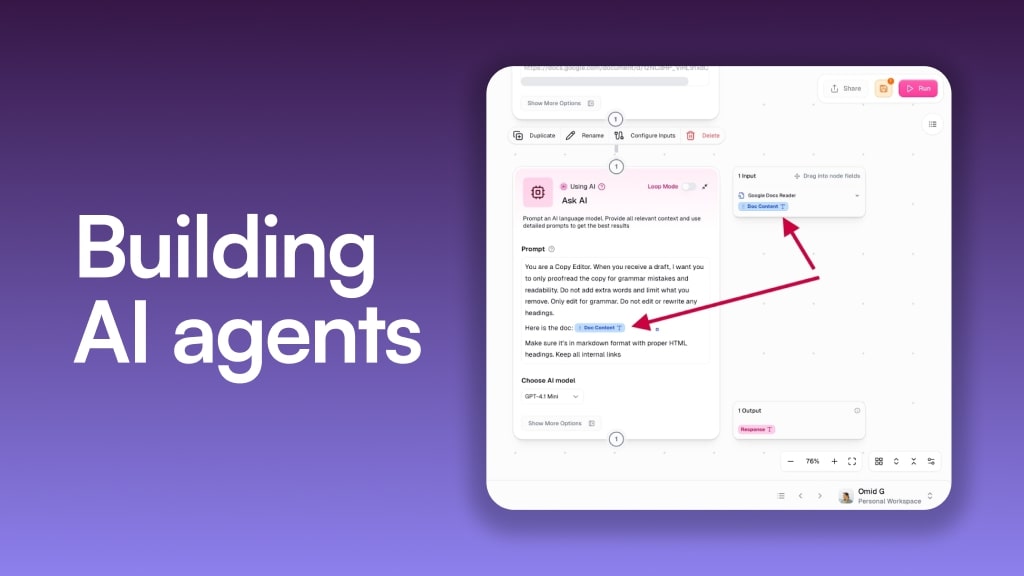
Building AI agents for marketing isn’t just about plugging in a tool and expecting results. It’s a structured process that involves identifying the right opportunities, defining clear objectives, connecting relevant data, and continuously improving performance. When done correctly, AI agents can become powerful extensions of your marketing team—handling complex workflows with speed and precision.
Let’s break down the process step by step.
Step 1: Identify repetitive marketing tasks
The first and most critical step is identifying which marketing tasks are suitable for AI automation. Not every task should be handed over to an AI agent—your focus should be on repetitive, time-consuming, and data-heavy activities that follow predictable patterns.
Start by auditing your current workflows. Look for bottlenecks where your team spends excessive time on manual work, such as:
- Analyzing campaign performance reports
- Writing similar types of content repeatedly
- Segmenting and scoring leads
- Monitoring social media mentions
- Sending follow-up emails
These tasks are ideal candidates because they require consistency, speed, and data processing—areas where AI agents excel.
It’s also important to prioritize tasks that have a measurable impact on performance. For example, optimizing ad campaigns or improving lead conversion rates will deliver more value than automating low-impact activities.
By clearly identifying these opportunities, you create a strong foundation for building AI agents that deliver real business outcomes rather than just incremental efficiency.
Step 2: Define agent goals
Once you’ve identified the tasks, the next step is to define what your AI agent is supposed to achieve. This goes beyond assigning a function—you need to establish clear, outcome-driven goals.
For example, instead of saying “manage email campaigns,” define a goal like:
- Increase email open rates by 20%
- Improve lead-to-customer conversion rates
- Reduce cost per acquisition in paid campaigns
Well-defined goals help the AI agent make better decisions. Since these systems operate based on objectives, clarity is essential for guiding their behavior and evaluating their success.
You should also define:
- Scope: What tasks the agent can and cannot perform
- Constraints: Budget limits, brand guidelines, compliance rules
- Success metrics: KPIs such as CTR, ROI, engagement rate, or lead quality
This step essentially gives your AI agent a “mission.” Without it, even the most advanced system will struggle to deliver meaningful results.
Step 3: Connect data sources
AI agents are only as effective as the data they can access. To function properly, they need a unified view of your marketing ecosystem.
This means integrating all relevant data sources, such as:
- CRM platforms (customer data, lead history)
- Analytics tools (website traffic, campaign performance)
- Email marketing platforms
- Social media accounts
- Ad platforms (Google Ads, Meta Ads, etc.)
- Internal documents (brand guidelines, past campaign reports)
By connecting these systems, you enable your AI agent to make informed decisions based on real-time and historical data.
A key concept here is context awareness. When an AI agent has access to multiple data points, it can understand the bigger picture. For instance, it can analyze how a user interacted with your website, emails, and ads before deciding how to engage them next.
Modern AI systems often use advanced retrieval methods to pull relevant information dynamically. This ensures that the agent’s outputs are accurate, up-to-date, and aligned with your business context.
Without proper data integration, your AI agent will operate in isolation—limiting its effectiveness and reducing the quality of its decisions.
Step 4: Design prompts and actions
This is where the intelligence of your AI agent truly takes shape. Designing prompts and actions involves defining how the agent thinks, responds, and interacts with systems.
Prompts act as instructions that guide the agent’s behavior. They help the system understand:
- Your brand voice and tone
- Campaign objectives
- Target audience characteristics
- Content requirements
For example, a prompt might instruct the agent to:
- Write a blog post in a professional but conversational tone
- Generate ad copy targeting a specific audience segment
- Analyze campaign data and suggest improvements
Well-crafted prompts ensure consistency and quality in outputs.
Actions, on the other hand, define what the agent can do. These include:
- Sending emails
- Updating CRM records
- Posting on social media
- Adjusting ad budgets
- Generating reports
The combination of prompts and actions allows the AI agent to move from thinking to doing.
It’s also important to design workflows that connect multiple steps. For example, an AI agent might:
- Analyze campaign performance
- Identify underperforming segments
- Generate new ad copy
- Update the campaign automatically
This multi-step execution is what differentiates AI agents from basic tools.
Step 5: Test and iterate
No AI agent is perfect from the start. Testing and iteration are essential to ensure accuracy, reliability, and performance.
Begin by running your AI agent in a controlled environment. Monitor how it performs on specific tasks and evaluate the results against your defined goals.
Key areas to test include:
- Output quality (e.g., content relevance, accuracy)
- Decision-making (e.g., campaign adjustments)
- Integration performance (e.g., data syncing, tool actions)
- Consistency with brand guidelines
Collect feedback from your team and analyze performance metrics. Identify areas where the agent falls short and refine its prompts, data inputs, or workflows accordingly.
Iteration is a continuous process. As your marketing strategies evolve and new data becomes available, your AI agent should adapt and improve.
Over time, this cycle of testing and optimization transforms your AI agent into a highly efficient and reliable system.
Step 6: Deploy across teams
Once your AI agent is performing effectively, the next step is scaling its use across your marketing team.
Deployment involves integrating the agent into daily workflows and ensuring that team members understand how to use it effectively.
Start by:
- Introducing the agent to specific teams (e.g., content, performance marketing, CRM)
- Defining clear use cases for each team
- Providing training and documentation
It’s important to position the AI agent as a support system, not a replacement. When teams understand how the agent enhances their work, adoption becomes much smoother.
You should also establish governance and oversight. Even though AI agents operate autonomously, human supervision is still necessary to ensure alignment with business goals and brand standards.
As adoption grows, you can expand the agent’s capabilities and integrate it into more workflows. This creates a unified, AI-powered marketing ecosystem where tasks are executed faster, insights are generated continuously, and performance improves at scale.
Key Use Cases of AI Agents for Marketing Teams
AI agents can be applied across nearly every aspect of marketing. Their ability to analyze data, generate content, and execute workflows makes them incredibly versatile. Below are some of the most impactful use cases.
1. Campaign optimization
Campaign optimization is one of the most powerful applications of AI agents. Instead of manually analyzing performance and making adjustments, AI agents can monitor campaigns in real time and optimize them continuously.
They can:
- Analyze performance metrics such as CTR, conversion rate, and ROI
- Identify underperforming ads or audiences
- Adjust budgets and bidding strategies
- Recommend or implement changes to targeting
For example, an AI agent can detect that a specific audience segment is generating higher conversions and automatically allocate more budget to that segment.
This level of automation ensures that campaigns are always performing at their best, without requiring constant manual intervention.
2. Content creation and SEO
Content creation is another area where AI agents deliver significant value. They can generate high-quality content at scale while maintaining consistency with your brand voice.
AI agents can:
- Write blog posts, landing pages, and ad copy
- Generate SEO-optimized content based on keywords
- Create content briefs and outlines
- Update existing content for better performance
Beyond creation, they can also analyze search trends, competitor content, and user intent to optimize your content strategy.
For example, an AI agent can identify high-performing keywords, generate a blog post around them, and optimize it for search engines—all within a single workflow.
This not only saves time but also improves the effectiveness of your content marketing efforts.
3. Lead management
Managing leads effectively is crucial for driving revenue, and AI agents can significantly enhance this process.
They can:
- Score leads based on behavior and engagement
- Segment leads into different categories
- Trigger personalized follow-ups
- Update CRM records automatically
For instance, an AI agent can analyze a lead’s interactions with your website, emails, and ads to determine their likelihood of conversion. High-priority leads can then be routed to sales teams, while others are nurtured through automated campaigns.
This ensures that no opportunity is missed and that leads are handled efficiently at every stage of the funnel.
4. Brand + social media monitoring
Monitoring brand perception across digital channels is essential, but it can be overwhelming due to the sheer volume of data.
AI agents can continuously track:
- Social media mentions
- Customer reviews
- Comments and messages
- Online discussions about your brand
Using advanced language understanding, they can analyze sentiment and identify trends. For example, they can detect a spike in negative feedback and alert your team immediately.
They can also respond to comments, engage with users, and maintain an active brand presence on social media platforms.
This real-time monitoring and engagement help protect your brand reputation and improve customer relationships.
5. Hyperpersonalized customer experiences
Modern customers expect personalized experiences, and AI agents make this possible at scale.
By analyzing customer data, behavior, and preferences, AI agents can deliver tailored experiences across multiple touchpoints.
They can:
- Recommend products or services based on user behavior
- Personalize email campaigns and website content
- Adjust messaging based on customer journey stage
- Deliver dynamic experiences in real time
For example, an AI agent can send a personalized email with product recommendations based on a user’s browsing history and past purchases.
This level of personalization increases engagement, builds stronger relationships, and drives higher conversions.
Examples of AI Agents for Marketing
Understanding AI agents conceptually is important—but seeing how they function in real-world marketing scenarios makes their value much clearer. Below are two practical examples of AI agents that marketing teams can implement to streamline operations, improve engagement, and drive better results.
1. Email management agent
Email marketing remains one of the highest ROI channels, but managing it effectively requires constant effort—segmenting audiences, writing emails, scheduling campaigns, analyzing performance, and optimizing strategies. An email management AI agent can handle most of these tasks autonomously.
At its core, this agent is designed to manage the entire lifecycle of email campaigns. It doesn’t just send emails—it plans, personalizes, executes, and improves them continuously.
Here’s how it typically works:
Audience segmentation and targeting
The agent analyzes customer data from your CRM, website interactions, and previous campaigns to segment users based on behavior, preferences, and engagement levels. Instead of static lists, it creates dynamic segments that evolve over time.
For example, it can identify:
- Highly engaged subscribers
- Dormant users who haven’t opened emails recently
- Users who abandoned carts or browsed specific products
This ensures that each email is sent to the right audience.
Personalized content generation
Using advanced language models, the agent generates email subject lines, body copy, and CTAs tailored to each segment. It can adapt tone, messaging, and offers based on user behavior and preferences.
For instance, a returning customer might receive loyalty-focused messaging, while a new subscriber gets onboarding content.
Campaign scheduling and execution
The agent determines the best time to send emails based on historical engagement data. It can automatically schedule campaigns for maximum open and click-through rates.
In more advanced setups, it can trigger emails in real time—for example:
- Sending a follow-up email after a user visits a pricing page
- Delivering a discount offer after cart abandonment
Performance monitoring and optimization
After sending emails, the agent continuously tracks performance metrics such as open rates, click-through rates, and conversions.
If a campaign underperforms, the agent can:
- A/B test subject lines or content variations
- Adjust segmentation criteria
- Recommend or implement changes for future campaigns
Over time, this creates a feedback loop where every campaign becomes smarter and more effective.
Automated workflows
Beyond individual campaigns, the agent can manage entire email workflows, such as:
- Welcome sequences
- Lead nurturing campaigns
- Re-engagement campaigns
This reduces manual effort while ensuring consistent communication with your audience.
An email management agent transforms email marketing from a manual, repetitive process into a fully optimized, data-driven system.
2. Community engagement manager
In today’s digital landscape, brands are expected to be active and responsive across multiple platforms—social media, forums, review sites, and messaging channels. Managing this level of engagement manually can be overwhelming. A community engagement AI agent solves this by acting as a real-time brand representative.
This agent focuses on monitoring, interacting, and maintaining relationships with your audience across various channels.
Real-time monitoring
The agent continuously scans platforms such as social media, comment sections, and online communities for mentions of your brand, products, or relevant topics.
It doesn’t just track keywords—it understands context. This allows it to identify:
- Positive feedback and brand advocates
- Customer complaints or negative sentiment
- Questions or inquiries that require responses
- Emerging trends or conversations
Sentiment analysis and prioritization
Using natural language understanding, the agent evaluates the tone and intent behind each interaction. It can prioritize responses based on urgency.
For example:
- Negative comments may be flagged for immediate response
- High-value customer inquiries may be escalated
- General mentions may be acknowledged automatically
This ensures that critical interactions are never missed.
Automated and assisted responses
The agent can respond to common questions, comments, or messages instantly, maintaining a consistent brand voice.
For more complex interactions, it can:
- Suggest response drafts for human review
- Provide context and recommended actions to team members
This hybrid approach balances efficiency with human oversight.
Engagement and relationship building
Beyond reactive responses, the agent can proactively engage with your audience. It can:
- Like, comment, or reply to posts
- Thank users for positive feedback
- Participate in relevant conversations
This helps build a stronger brand presence and fosters community loyalty.
Insights and reporting
The agent also provides valuable insights into audience behavior and sentiment trends. It can identify:
- Common customer pain points
- Frequently asked questions
- Trending topics مرتبط with your brand
These insights can inform your broader marketing strategy, content creation, and product improvements.
A community engagement manager AI agent essentially ensures that your brand remains active, responsive, and connected—without requiring constant manual effort.
Common Mistakes When Building Marketing AI Agents
While AI agents offer significant advantages, many teams struggle to implement them effectively. Avoiding common mistakes is crucial to ensuring success.
1. Lack of clear objectives
One of the biggest mistakes is building AI agents without defining clear goals. Without specific outcomes, the agent lacks direction and cannot deliver meaningful results.
Always start with measurable objectives, such as improving conversion rates, reducing response times, or increasing engagement.
2. Over-automation without strategy
Automating everything without a clear strategy can lead to poor outcomes. Not all tasks should be handled by AI, especially those requiring creativity, empathy, or complex decision-making.
AI agents should complement human efforts, not replace them entirely.
3. Poor data quality and integration
AI agents rely heavily on data. If your data is incomplete, outdated, or poorly integrated, the agent’s performance will suffer.
Ensure that your data sources are accurate, connected, and regularly updated. Without this foundation, even the most advanced AI system will produce subpar results.
4. Weak prompt and workflow design
The effectiveness of an AI agent depends on how well it is instructed. Poorly designed prompts can lead to inconsistent or irrelevant outputs.
Similarly, unclear workflows can limit the agent’s ability to execute tasks efficiently. Invest time in designing structured, well-defined prompts and workflows.
5. Ignoring testing and iteration
Some teams deploy AI agents and expect immediate perfection. In reality, these systems require continuous testing and refinement.
Skipping this step can result in errors, inefficiencies, and missed opportunities for improvement.
6. Lack of human oversight
AI agents are powerful, but they are not infallible. Relying on them without proper monitoring can lead to mistakes, especially in sensitive areas مثل customer communication.
Maintain a balance between automation and human supervision to ensure quality and alignment with your brand.
7. Unrealistic expectations
Expecting AI agents to solve all marketing challenges instantly is unrealistic. They are tools that improve over time, not magic solutions.
Set realistic expectations and focus on gradual improvement.
Limitations of Marketing AI Agents
Despite their capabilities, AI agents are not without limitations. Understanding these constraints helps you use them more effectively and avoid potential pitfalls.
1. Dependence on data
AI agents require large amounts of high-quality data to function effectively. If data is limited or biased, the agent’s outputs may be inaccurate or misleading.
This makes data management a critical aspect of AI implementation.
2. Limited creativity and originality
While AI can generate content, it often relies on patterns and existing data. It may struggle with highly creative or unconventional ideas that require human intuition.
For brand storytelling and innovative campaigns, human input is still essential.
3. Context limitations in complex scenarios
Although AI agents are context-aware, they may still struggle with highly nuanced or complex situations—especially those involving cultural sensitivity, emotional intelligence, or ambiguous intent.
This is why human oversight remains important.
4. Risk of errors and inaccuracies
AI-generated outputs are not always perfect. Errors in content, analysis, or decision-making can occur, particularly if the system lacks sufficient data or context.
Regular monitoring and validation are necessary to minimize these risks.
5. Integration challenges
Connecting AI agents with multiple tools and systems can be technically complex. Poor integration can limit functionality and create inefficiencies.
Proper planning and infrastructure are required to ensure seamless operation.
6. Ethical and compliance concerns
Using AI in marketing raises questions حول data privacy, transparency, and ethical use. Misuse of customer data or lack of transparency can damage trust and lead to regulatory issues.
Organizations must ensure that their AI systems comply with relevant laws and ethical standards.
7. Initial setup and learning curve
Building and implementing AI agents requires time, effort, and expertise. Teams may face a learning curve when adopting these systems.
However, once properly set up, the long-term benefits often outweigh the initial investment.
Tools to Build and Manage AI Agents for Marketing
To successfully build and scale AI agents, marketing teams need the right tools—not just for creating agents, but also for managing workflows, integrating data, and ensuring collaboration across teams. Below are some of the most effective platforms that support AI-driven marketing operations.
1. Corexta
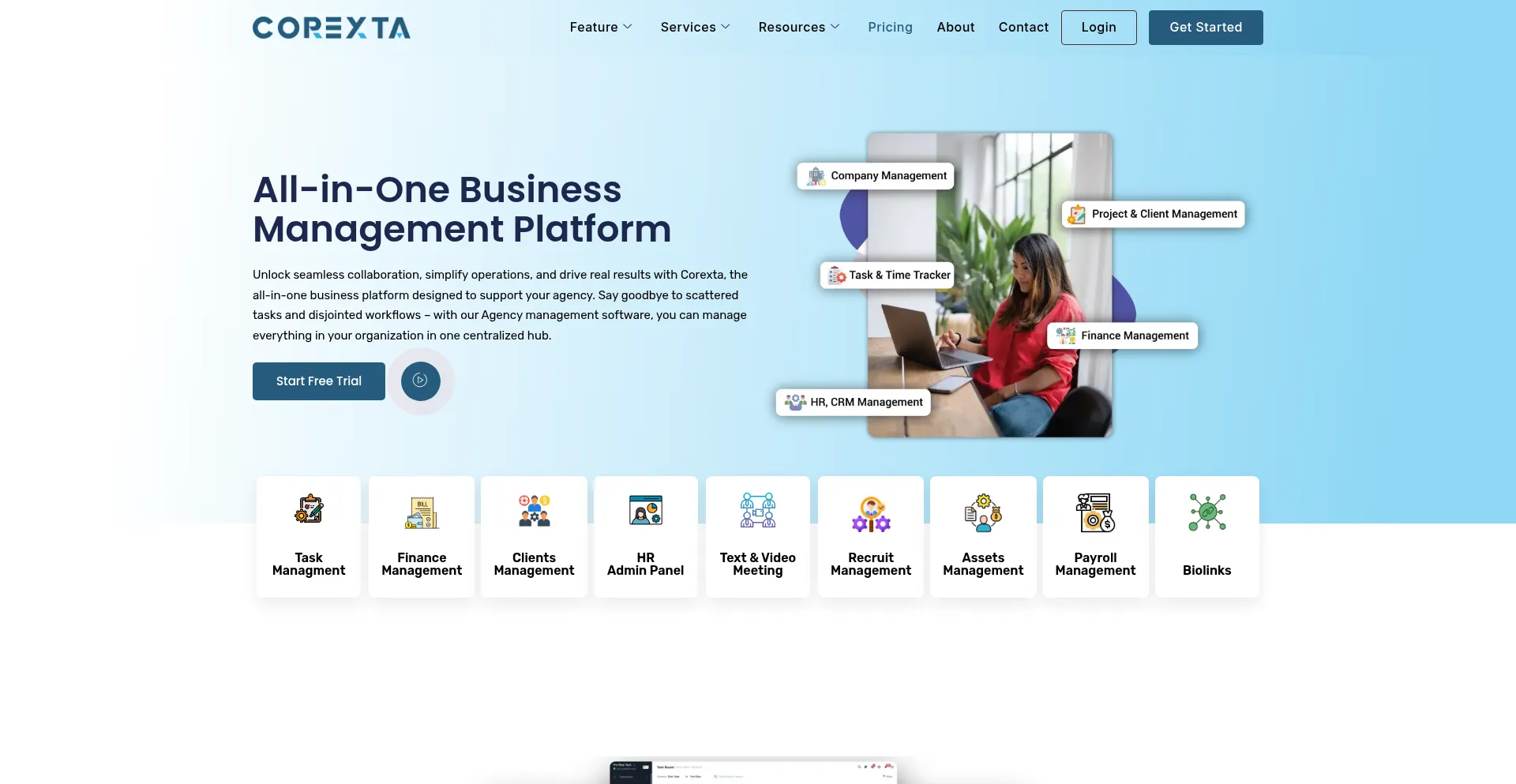
Corexta stands out as a powerful, all-in-one platform designed to manage AI-driven marketing workflows, team collaboration, and business operations from a single centralized environment.
Context-awareness + memory
One of Corexta’s biggest strengths is its ability to act as a centralized data and workflow hub, which is essential for building context-aware AI agents.
Because it combines CRM, project management, client data, financial tracking, and communication tools into one platform, it allows AI systems to operate with a full understanding of your business context.
This means:
- AI agents can access client history, campaign data, and task progress in one place
- Teams don’t need to switch between disconnected tools
- Decisions are made based on real-time, unified data rather than fragmented inputs
For marketing teams, this translates into better personalization, more accurate campaign decisions, and improved workflow efficiency.
Additionally, Corexta supports structured data organization—projects, tasks, clients, and communications are all tracked—making it easier for AI agents to “remember” past actions and improve future outcomes.
AI Agents and automations
Corexta is not just a management tool—it enables workflow automation and intelligent task execution, which are critical for AI agent deployment.
It provides:
- Automated task management and tracking
- Real-time project monitoring and updates
- Workflow automation across departments (marketing, finance, HR, CRM)
- Collaboration tools like internal chat and notifications
From a marketing perspective, this allows you to:
- Automate campaign planning and execution
- Assign and track tasks across teams
- Manage leads and client interactions without manual updates
- Monitor campaign progress and performance in real time
Corexta’s unified system also reduces tool fragmentation. Instead of using separate platforms for CRM, project management, and communication, everything is handled within one ecosystem—making it easier to deploy and manage AI agents at scale.
Another major advantage is scalability. Whether you’re a small team or a growing agency, Corexta adapts to increasing workloads, users, and workflows without breaking your system structure.
Corexta acts as the operational backbone for AI-powered marketing—where agents can plan, execute, and optimize tasks within a structured environment.
2. ClickUp Brain
ClickUp Brain is an AI-powered productivity layer built into ClickUp, designed to enhance task management, documentation, and workflow automation.
It is particularly useful for marketing teams that want to combine AI assistance with structured project management.
Key capabilities include:
- AI-powered content generation (campaign briefs, emails, docs)
- Smart task summaries and updates
- Automated workflow suggestions
- Knowledge retrieval from internal documents
For AI agents, ClickUp Brain provides a strong foundation for:
- Creating structured workflows
- Managing campaign timelines
- Centralizing knowledge for AI-driven decision-making
However, it functions more as an AI assistant layer rather than a fully autonomous agent system. It enhances productivity but typically requires human direction for execution.
3. n8n
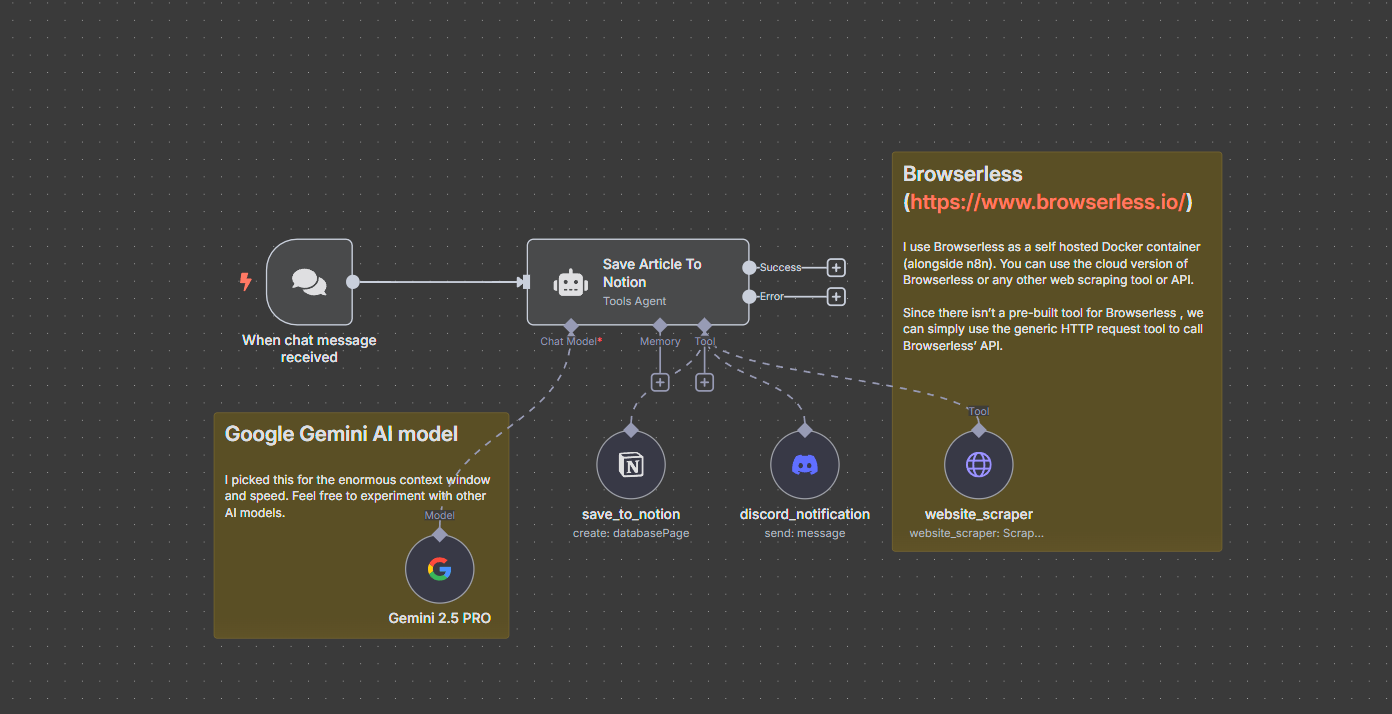
n8n is a powerful open-source workflow automation platform that enables teams to build custom AI agent workflows through integrations and logic-based automation.
It is ideal for teams that want flexibility and control.
Key features include:
- Visual workflow builder
- API integrations with hundreds of tools
- Custom logic and conditional workflows
- Self-hosting for full data control
With n8n, you can:
- Connect AI models to marketing tools
- Automate multi-step processes (e.g., lead capture → CRM update → email sequence)
- Build highly customized AI agents tailored to your workflows
Because of its flexibility, n8n is especially useful for technical teams or organizations with specific automation needs.
4. Zapier
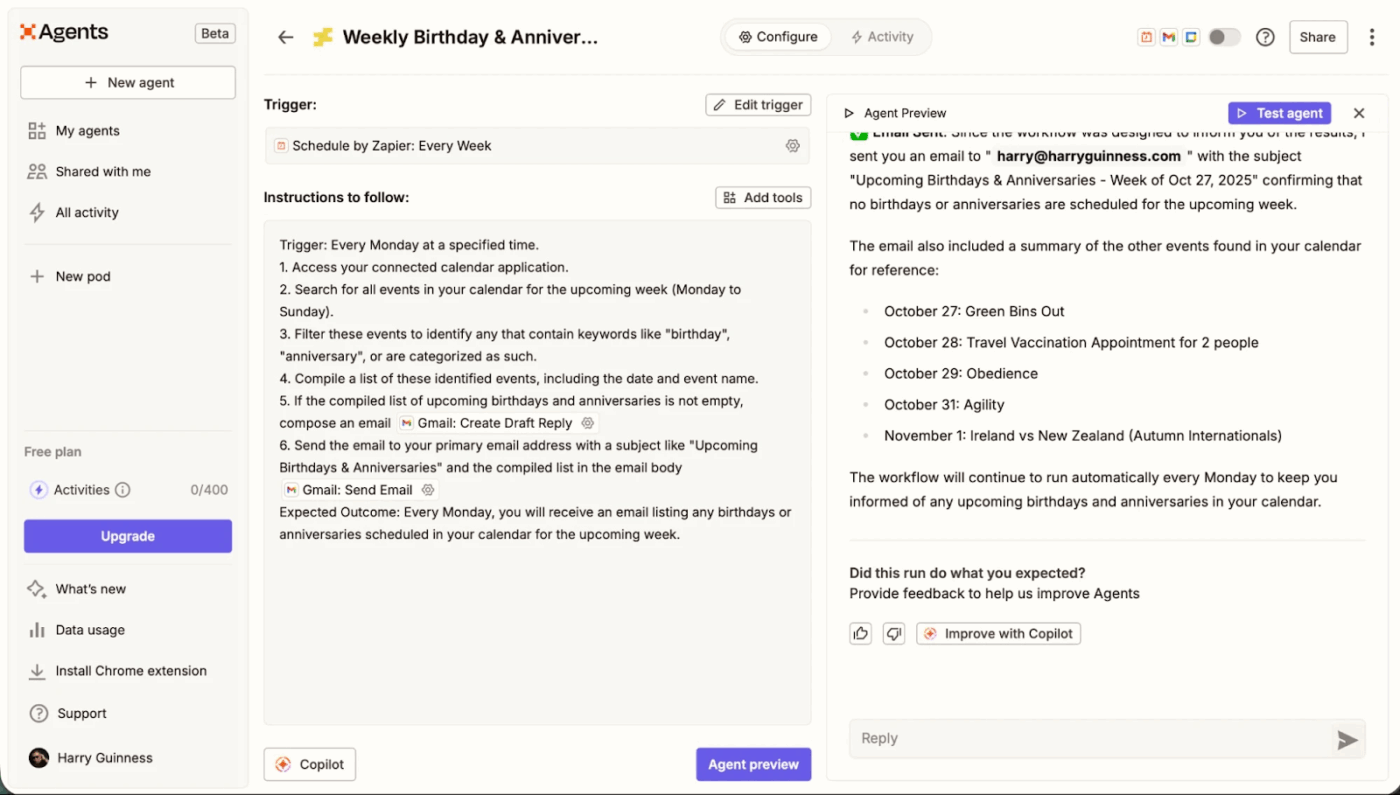
Zapier is one of the most populer no-code automation tools, widely used for connecting apps and automating workflows.
It is particularly valuable for marketing teams looking for quick, no-code AI integrations.
Key capabilities:
- Connects thousands of apps (CRM, email, ads, social media)
- Trigger-based automation (“Zaps”)
- Integration with AI tools and APIs
- Easy setup with minimal technical knowledge
For AI agents, Zapier enables:
- Fast deployment of automated workflows
- Integration between AI tools and marketing platforms
- Execution of actions like sending emails, updating records, or posting content
While it may not offer deep customization like n8n, it excels in simplicity and speed—making it ideal for teams just starting with AI automation.
Build Advanced Marketing AI Agents with Corexta
AI agents are powerful—but their true potential is unlocked only when they operate within a structured, connected, and scalable system. This is where Corexta becomes a game-changer.
Modern marketing is no longer about isolated tools or disconnected workflows. It’s about building an ecosystem where data, teams, and automation work together seamlessly. Corexta provides exactly that—a centralized platform where your AI agents can operate efficiently and effectively.
With Corexta, you’re not just automating tasks—you’re building a fully integrated marketing engine.
You can:
- Plan and manage campaigns from a single dashboard
- Connect teams, clients, and workflows in real time
- Track progress, performance, and outcomes without switching tools
- Enable AI agents to operate with full context and structured data
This unified approach eliminates chaos and creates clarity—allowing your AI agents to deliver better results.
As your marketing efforts grow, Corexta scales with you. Whether you’re managing multiple campaigns, expanding your team, or increasing your use of AI, the platform adapts to your needs without adding complexity.
More importantly, it helps you move from fragmented automation to intelligent systems—where every action is connected, measurable, and optimized.
Building AI agents for marketing is no longer optional—it’s becoming essential for teams that want to stay competitive in a fast-moving digital landscape.
But success doesn’t come from using AI alone. It comes from combining:
- The right strategy
- The right workflows
- And the right platform
Corexta brings all of these elements together, giving you the foundation to build, manage, and scale advanced AI agents without losing control or visibility.
If you’re serious about transforming your marketing operations, now is the time to move beyond basic automation and start building intelligent systems that work for you.
Start leveraging AI agents with a structured approach. Explore Corexta, streamline your workflows, and turn your marketing into a scalable, high-performance machine. 🚀
Read More: How to Successfully Implement a CRM System