As businesses grow, managing operations through disconnected software, spreadsheets, and manual workflows becomes increasingly difficult. Teams often struggle with inconsistent data, delayed reporting, poor communication between departments, and limited visibility into overall business performance. This is where Enterprise Resource Planning (ERP) systems become essential.
Modern ERP systems help organizations centralize and automate critical business functions such as finance, inventory, sales, procurement, human resources, customer management, and supply chain operations. In recent years, cloud-based ERP solutions have become the preferred choice for growing businesses because they offer flexibility, scalability, real-time access to information, and lower infrastructure costs compared to traditional systems.
The rapid shift toward digital transformation, remote work, AI-powered automation, and data-driven decision-making has accelerated the adoption of cloud ERP platforms across industries. Businesses are now looking for systems that not only manage day-to-day operations but also support long-term growth, operational efficiency, and strategic planning.
For small and mid-sized companies, cloud ERP has become especially valuable because it removes many of the traditional barriers associated with ERP adoption, such as expensive hardware, long implementation timelines, and complex maintenance requirements. Today’s cloud ERP platforms are designed to be more accessible, user-friendly, and adaptable for businesses at every stage of growth.
What is an ERP System?
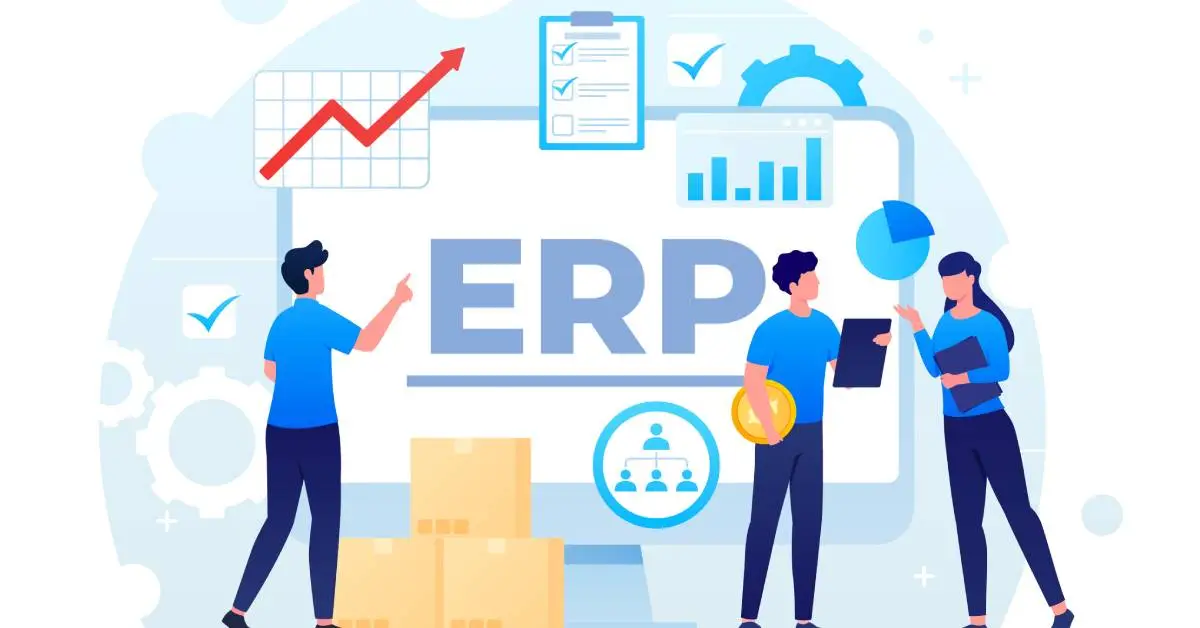
An ERP (Enterprise Resource Planning) system is a centralized software platform that helps businesses manage and integrate their core operational processes within a single system. Instead of using separate tools for accounting, inventory management, human resources, procurement, sales, customer service, and reporting, ERP software combines these functions into one connected environment.
The primary purpose of an ERP system is to improve efficiency, eliminate data silos, automate repetitive tasks, and provide accurate real-time information across departments. By consolidating business data into a unified platform, ERP systems enable organizations to make faster and more informed decisions.
For example, when a sales order is created in an ERP system, it can automatically update inventory levels, trigger procurement workflows, notify the finance department, and generate reports in real time. This level of integration improves coordination across teams and reduces the risk of manual errors.
Modern ERP systems typically include modules for:
- Financial management and accounting
- Inventory and warehouse management
- Supply chain management
- Procurement and purchasing
- Human resources and payroll
- Customer relationship management (CRM)
- Manufacturing and production planning
- Project management and reporting
- Analytics and business intelligence
Today’s ERP platforms are also increasingly powered by advanced technologies such as artificial intelligence (AI), machine learning, predictive analytics, automation, and cloud computing. These capabilities help businesses forecast demand, automate workflows, improve reporting accuracy, and gain deeper operational insights.
ERP systems are no longer limited to large enterprises. Cloud technology and subscription-based pricing models have made ERP software more affordable and accessible for startups, small businesses, and mid-sized organizations. Businesses can now implement ERP systems gradually, scale features as they grow, and access their systems from virtually anywhere with an internet connection.
As competition becomes more data-driven and customer expectations continue to rise, ERP systems have evolved from optional business tools into critical platforms for operational success and long-term scalability.
Types of ERP Systems
Businesses can choose from several types of ERP systems depending on their size, industry, budget, operational complexity, and long-term goals. Each ERP model offers unique advantages and limitations, making it important for organizations to select a solution that aligns with their business needs.
On-Premise ERP:
On-premise ERP systems are installed and managed on a company’s own servers and infrastructure. The organization is responsible for hardware, software maintenance, security, backups, upgrades, and IT management.
Traditionally, on-premise ERP was the standard deployment model for large enterprises because it offered greater control over data, customization, and infrastructure. Companies with strict compliance requirements or highly specialized operational processes often preferred this approach.
Key characteristics of on-premise ERP include:
- Full control over system infrastructure
- High customization capabilities
- Internal data hosting and management
- Larger upfront investment in hardware and licenses
- Dedicated IT teams for maintenance and support
While on-premise ERP can provide greater control and customization, it often requires significant capital investment and longer implementation timelines. Businesses also need to manage ongoing maintenance, security updates, and infrastructure upgrades internally.
As cloud technology continues to mature, many businesses are gradually moving away from traditional on-premise ERP systems in favor of more flexible cloud-based solutions.
Cloud-Based ERP:
Cloud-based ERP systems are hosted on remote servers and delivered through the internet as a Software-as-a-Service (SaaS) solution. Users can access the platform through a web browser or mobile application without maintaining physical infrastructure on-site.
Cloud ERP has become the dominant ERP deployment model for growing businesses because it offers lower upfront costs, faster implementation, automatic updates, remote accessibility, and easier scalability.
Key features of cloud ERP include:
- Subscription-based pricing
- Access from anywhere with internet connectivity
- Automatic software updates and maintenance
- Real-time data synchronization
- Improved scalability for growing businesses
- Reduced hardware and IT infrastructure costs
Cloud ERP systems also support remote work, mobile accessibility, AI-powered analytics, and faster collaboration across departments and locations. Modern cloud platforms are designed to adapt quickly to changing business environments, making them highly suitable for dynamic and expanding organizations.
Today, many ERP vendors offer industry-specific cloud solutions tailored for manufacturing, retail, healthcare, construction, logistics, professional services, and eCommerce businesses.
Industry-Specific ERP:
Industry-specific ERP systems are designed to meet the unique operational needs, compliance requirements, and workflows of specific industries. Instead of offering only general business functionality, these ERP solutions include specialized features built for particular sectors.
Examples include:
- Manufacturing ERP with production planning and shop floor management
- Healthcare ERP with patient management and compliance tracking
- Retail ERP with POS integration and inventory optimization
- Construction ERP with project costing and resource scheduling
- Distribution ERP with logistics and warehouse management
- Hospitality ERP with reservation and guest management systems
Industry-specific ERP solutions help businesses reduce customization needs and accelerate implementation because many essential workflows are already built into the system.
These systems also improve operational efficiency by supporting industry regulations, reporting standards, and specialized business processes that generic ERP systems may not handle effectively.
Small Business ERP:
Small business ERP systems are designed specifically for startups and smaller organizations that need affordable and simplified business management solutions.
Unlike enterprise-level ERP platforms that may contain highly complex features, small business ERP focuses on core operational needs such as:
- Accounting and invoicing
- Inventory management
- Sales tracking
- Customer management
- Payroll and HR
- Purchasing and reporting
Modern small business ERP solutions are typically cloud-based and modular, allowing companies to start with essential functions and add more features as they grow. This flexibility makes ERP adoption more accessible for businesses with limited budgets and smaller teams.
Many small business ERP systems also emphasize user-friendly interfaces, faster deployment, automation, and integration with commonly used business tools such as payment gateways, eCommerce platforms, and CRM software.
Open Source ERP:
Open source ERP systems provide businesses with access to the software’s source code, allowing organizations to customize, modify, and extend the platform according to their specific needs.
Unlike proprietary ERP software, open source ERP solutions offer greater flexibility and customization freedom. Businesses can adapt workflows, create custom modules, and integrate third-party tools more extensively.
Common advantages of open source ERP include:
- Lower licensing costs
- Greater customization flexibility
- Community-driven development
- Freedom from vendor lock-in
- Custom integrations and extensions
However, open source ERP systems may also require experienced developers and IT resources to manage implementation, customization, security, and ongoing maintenance effectively.
Open source ERP is often preferred by organizations with strong technical capabilities or businesses that require highly specialized workflows that commercial ERP platforms may not fully support.
9 Reasons of moving to a Cloud ERP system
1. Cloud systems usually require less initial capital.
One of the biggest reasons growing businesses choose cloud ERP systems is the significantly lower upfront investment compared to traditional on-premise ERP software. Conventional ERP implementations often require businesses to purchase expensive servers, networking hardware, database licenses, and IT infrastructure before the system can even go live. In addition, companies must pay for installation, maintenance, upgrades, security management, and dedicated IT staff.
Cloud ERP systems operate using a Software-as-a-Service (SaaS) model, which changes ERP from a large capital expenditure into a manageable operational expense. Instead of investing heavily in physical infrastructure, businesses typically pay monthly or annual subscription fees based on users, features, or storage requirements. This makes ERP adoption much more affordable for startups, small businesses, and mid-sized companies that need enterprise-level capabilities without major financial risk.
Lower initial costs also allow businesses to allocate resources toward other growth initiatives such as hiring, marketing, expansion, or product development. Since the cloud provider manages hosting, infrastructure, updates, and technical maintenance, companies can reduce internal IT expenses while gaining access to modern ERP functionality.
Another major financial advantage is predictable budgeting. Cloud ERP subscription pricing helps businesses forecast operational costs more accurately instead of dealing with unexpected hardware failures, upgrade expenses, or infrastructure replacements commonly associated with legacy systems.
For growing businesses, reducing the barrier to ERP adoption can be transformational. Many companies that previously relied on spreadsheets and disconnected systems can now access advanced automation, analytics, inventory management, and financial reporting tools without massive upfront investment. Modern cloud ERP platforms have made enterprise technology accessible to organizations of almost every size.
2. Cloud systems can streamline deployment strategies and avoid the pitfalls of ERP implementation.
ERP implementation has historically been associated with long deployment timelines, operational disruptions, budget overruns, and failed digital transformation projects. Traditional on-premise ERP systems often require months or even years of infrastructure preparation, software configuration, testing, and employee training before businesses can fully transition to the new platform.
Cloud ERP systems simplify and accelerate this process significantly. Because the software is already hosted and maintained by the provider, businesses do not need to spend time setting up physical servers, configuring large internal networks, or managing complex hardware installations. This allows organizations to focus more on business process optimization and user adoption instead of infrastructure management.
Modern cloud ERP platforms are specifically designed to support faster and more flexible implementation strategies. Many providers now offer modular deployment options, allowing businesses to implement essential functions first — such as finance or inventory management — and gradually expand the system over time. This phased approach reduces operational disruption and lowers implementation risk.
Compared to traditional ERP deployments that may take 12 months or longer, cloud ERP implementations can often be completed in a matter of weeks or a few months depending on the complexity of the organization. Faster deployment enables businesses to begin realizing value sooner through improved reporting, automation, and operational visibility.
Cloud ERP systems also reduce many of the common implementation pitfalls that affect legacy ERP projects, including:
- Infrastructure delays
- Hardware compatibility issues
- Complex software patching
- Version inconsistencies
- Limited remote accessibility
- High IT dependency
- Difficult scalability planning
Because cloud platforms are continuously updated and centrally managed, businesses can maintain a more consistent and standardized deployment environment across departments and locations.
Cloud ERP allows organizations to modernize operations more efficiently while reducing the technical burdens that traditionally slowed ERP adoption.
3. Cloud ERP systems provide increased visibility and collaboration opportunities across levels and departments.
One of the most valuable advantages of cloud ERP systems is their ability to unify business data and improve collaboration across departments. In many organizations, teams operate using disconnected software platforms, spreadsheets, and manual reporting processes. This often creates data silos, communication gaps, duplicated work, and inconsistent decision-making.
Cloud ERP solves these issues by centralizing business information into a single real-time platform accessible across the organization. Departments such as finance, sales, procurement, operations, inventory management, customer service, and human resources can all work from the same up-to-date data environment.
This centralized visibility helps businesses improve operational transparency and make faster, more informed decisions. Executives can access real-time dashboards, financial reports, inventory updates, sales forecasts, and operational performance metrics without waiting for manual reporting cycles.
Modern cloud ERP platforms also support collaboration through:
- Shared project management tools
- Automated workflows and approvals
- Real-time reporting dashboards
- Cross-department communication features
- Integrated customer and vendor data
- Remote access for distributed teams
- Mobile-enabled productivity tools
These features help teams coordinate more efficiently while reducing delays caused by disconnected systems or outdated information.
For example, when sales teams update customer orders in a cloud ERP system, inventory managers can instantly view stock changes, procurement teams can adjust purchasing plans, and finance departments can monitor revenue impacts in real time. This level of integration significantly improves operational agility and responsiveness.
Cloud ERP systems are also highly beneficial for businesses with remote employees, multiple branches, or global operations. Since data is accessible securely through the internet, employees and decision-makers can collaborate from virtually anywhere while maintaining access to consistent information.
Modern ERP platforms increasingly incorporate AI-powered analytics and business intelligence tools that help organizations identify inefficiencies, forecast trends, and optimize resource allocation. Real-time visibility combined with predictive insights gives growing businesses a stronger foundation for strategic planning and long-term scalability.
4. A cloud ERP system is a safer and more secure place for corporate data.
Data security remains one of the most important considerations for businesses adopting modern ERP systems. Many organizations once believed that keeping systems on-premise provided better protection, but advancements in cloud infrastructure and cybersecurity technologies have significantly changed this perception.
Today’s leading cloud ERP providers invest heavily in enterprise-grade security systems, advanced encryption technologies, automated backups, threat monitoring, and disaster recovery solutions that many businesses would struggle to maintain internally.
Modern cloud ERP systems commonly include:
- End-to-end data encryption
- Multi-factor authentication (MFA)
- Role-based access controls
- Automated security updates
- Continuous system monitoring
- Disaster recovery and backup systems
- Redundant data centers
- Compliance support for industry regulations
One of the biggest advantages of cloud ERP security is centralized and automatic updating. Traditional on-premise systems often remain vulnerable because organizations delay installing security patches or software upgrades due to operational disruptions or limited IT resources. Cloud ERP providers can deploy security fixes across the entire platform automatically and much faster, helping businesses stay protected against emerging threats.
Cloud providers also maintain teams of dedicated cybersecurity professionals who continuously monitor systems for vulnerabilities, suspicious activity, and potential attacks. This level of specialized security expertise is difficult and expensive for many small and mid-sized businesses to replicate internally.
Another important advantage is data backup and disaster recovery. Cloud ERP systems typically store data across multiple secure locations, reducing the risk of permanent data loss caused by hardware failure, cyberattacks, power outages, or natural disasters. Automated backups and redundancy systems help businesses recover more quickly and maintain operational continuity.
However, businesses still play an important role in maintaining ERP security. Since cloud systems allow remote access from multiple devices and locations, organizations must implement strong internal security practices such as employee cybersecurity training, password policies, secure Wi-Fi usage, and access management controls.
As cyber threats continue to evolve, modern cloud ERP systems are increasingly viewed as not only convenient and scalable but also highly secure environments for managing critical business data and operations.
5. Updates are a considerably faster and easier process in cloud-based software.
One of the most practical advantages of cloud ERP systems is how efficiently software updates and system improvements are managed. In traditional on-premise ERP environments, updates often require extensive planning, internal IT support, hardware compatibility checks, and temporary system downtime. Businesses may delay upgrades for months or even years because of the cost, complexity, and risk of disrupting daily operations.
Cloud-based ERP platforms simplify this process dramatically. Since the software is hosted and maintained by the provider, updates can be delivered automatically across the system without requiring major manual intervention from the business. This means organizations always have access to the latest features, security patches, performance improvements, and compliance updates without managing complicated upgrade projects internally.
Faster updates are especially important in today’s rapidly evolving business environment. ERP vendors continuously improve their platforms with new automation tools, AI-powered analytics, cybersecurity enhancements, reporting capabilities, and workflow optimizations. Cloud ERP users can adopt these innovations much more quickly compared to businesses running outdated on-premise systems.
Another major benefit is reduced operational disruption. Modern cloud ERP providers typically roll out updates gradually and during scheduled maintenance windows, minimizing downtime and ensuring business continuity. Many cloud systems also allow administrators to test new features before full deployment, helping organizations prepare employees for interface or workflow changes.
Automatic updating also strengthens security and compliance management. Cybersecurity threats evolve constantly, and delayed patching remains one of the biggest vulnerabilities in traditional software environments. Cloud ERP vendors can deploy security fixes immediately across all customers, helping businesses remain protected against emerging risks without depending entirely on internal IT teams.
Businesses using cloud ERP systems avoid the costly and time-consuming cycle of large-scale version migrations that are common with legacy ERP software. Instead of performing major upgrades every few years, organizations benefit from continuous innovation and incremental improvements that keep the platform modern and competitive.
As ERP technology continues integrating AI, machine learning, automation, and predictive analytics, fast and seamless updates have become essential for businesses that want to remain agile and technologically competitive.
6. Businesses can scale and expand more quickly and more smoothly with cloud ERP software.
Scalability is one of the defining advantages of cloud ERP systems, especially for growing businesses that expect operational changes, workforce expansion, or market growth over time. Traditional ERP systems often struggle to adapt quickly because scaling typically requires additional servers, infrastructure upgrades, software licenses, and complex IT planning. These limitations can slow down growth and increase operational costs.
Cloud ERP platforms are built with scalability in mind. Businesses can easily increase users, storage capacity, modules, or processing power as operational demands grow. This flexibility allows organizations to expand without needing major infrastructure investments or disruptive system replacements.
For example, a company opening new branches, hiring remote employees, launching eCommerce operations, or entering international markets can scale its ERP environment much faster through cloud deployment. New users and departments can often be added within hours instead of weeks or months.
Cloud ERP systems also support business growth through modular functionality. Organizations can begin with essential tools such as accounting or inventory management and later expand into advanced capabilities like supply chain optimization, AI-driven analytics, manufacturing management, CRM integration, or multi-location reporting. This phased growth model helps businesses control costs while adapting the ERP platform to changing operational needs.
Another important factor is global accessibility. Since cloud ERP systems operate through internet-based infrastructure, businesses can support distributed teams, remote workforces, international offices, and mobile operations much more efficiently. Employees across different locations can access the same centralized data environment in real time, improving consistency and operational coordination.
Modern cloud ERP solutions also integrate more easily with third-party applications, eCommerce platforms, payment systems, logistics software, and business intelligence tools. This integration flexibility becomes increasingly important as companies grow and adopt more specialized technologies.
Scalable ERP infrastructure is particularly valuable during periods of rapid growth or seasonal demand fluctuations. Cloud platforms can adjust computing resources dynamically, helping businesses maintain performance even during spikes in transaction volume, inventory movement, or customer activity.
As competition becomes more dynamic and customer expectations continue evolving, businesses need systems capable of supporting continuous change. Cloud ERP provides the flexibility, speed, and scalability necessary for sustainable long-term growth.
7. Cloud ERP systems help unlock the power of mobile devices.
The modern workforce is no longer confined to traditional office environments. Employees, managers, sales teams, warehouse staff, and executives increasingly rely on smartphones, tablets, and mobile devices to access information and perform business tasks from virtually anywhere. Cloud ERP systems play a critical role in enabling this level of mobility and operational flexibility.
Unlike many traditional on-premise ERP systems that require local network access or complex remote connections, cloud ERP platforms are designed for internet-based accessibility. Authorized users can securely log into the system through mobile apps or web browsers using phones, tablets, or laptops.
Mobile ERP access allows employees to:
- Review real-time business reports
- Approve workflows remotely
- Monitor inventory and supply chain activity
- Access customer information during meetings
- Track sales performance
- Manage projects and tasks
- Submit expenses and purchase requests
- Communicate across departments instantly
This level of accessibility improves responsiveness and decision-making speed across the organization. For example, sales representatives can update customer orders directly from the field, warehouse managers can track inventory in real time, and executives can review financial dashboards while traveling.
Cloud ERP mobility also supports the growing trend of remote and hybrid work. Businesses no longer need employees to be physically present in the office to maintain productivity and operational visibility. Teams across multiple locations can collaborate using the same centralized system without relying on outdated VPN configurations or locally installed software.
Modern cloud ERP platforms are increasingly optimized for mobile-first experiences with responsive dashboards, simplified interfaces, AI-driven notifications, and role-based access controls. Some systems also incorporate voice search, mobile analytics, and workflow automation features designed specifically for on-the-go business operations.
Mobile ERP access becomes especially valuable in industries such as logistics, construction, manufacturing, retail, healthcare, and field services, where employees frequently work outside traditional office environments.
As businesses continue prioritizing flexibility, speed, and digital collaboration, cloud ERP mobility has evolved from a convenience feature into a major operational advantage.
8. Migrating to the cloud can seriously reduce a business’s carbon footprint.
Sustainability and environmental responsibility have become increasingly important priorities for businesses worldwide. Companies are under growing pressure from customers, investors, regulators, and stakeholders to reduce energy consumption, improve operational efficiency, and minimize environmental impact. Cloud ERP adoption can support these sustainability goals in several important ways.
Traditional on-premise ERP systems often require businesses to operate energy-intensive data centers, physical servers, cooling systems, backup infrastructure, and networking equipment. Maintaining this infrastructure consumes significant electricity and contributes to higher carbon emissions.
Cloud ERP providers, on the other hand, typically operate highly optimized large-scale data centers that are designed for maximum energy efficiency. Many leading cloud providers invest heavily in renewable energy, advanced cooling technologies, server optimization, and sustainable infrastructure practices. Because computing resources are shared across multiple customers, cloud environments can operate more efficiently than isolated on-premise systems.
Migrating to cloud ERP can help businesses reduce:
- Energy consumption from physical servers
- Office hardware requirements
- Cooling and infrastructure demands
- Paper-based workflows
- Travel requirements through remote collaboration
- Electronic waste from outdated equipment
Cloud ERP systems also support sustainability through digital transformation and workflow automation. Electronic approvals, digital document management, real-time reporting, and automated business processes reduce reliance on paper-intensive operations and manual administrative work.
Remote accessibility further contributes to environmental benefits by supporting hybrid work models and reducing employee commuting needs. Businesses can collaborate across locations without requiring constant travel or centralized office infrastructure.
Many organizations now include sustainability metrics and ESG (Environmental, Social, and Governance) reporting within their ERP environments. Modern cloud ERP systems increasingly offer tools for tracking emissions, energy usage, supply chain sustainability, and environmental compliance initiatives.
While sustainability may not be the first reason companies adopt cloud ERP, the environmental advantages are becoming an increasingly valuable part of long-term digital transformation strategies.
9. Cloud-based ERP systems offer solutions to fit businesses at any level and in any industry.
One of the greatest strengths of modern cloud ERP systems is their flexibility and adaptability across different business sizes, industries, and operational models. In the past, ERP software was often viewed as a tool reserved primarily for large enterprises with substantial budgets and complex IT infrastructure. Today, cloud technology has made ERP solutions accessible to organizations of nearly every size.
Modern cloud ERP vendors now offer solutions tailored specifically for:
- Startups
- Small businesses
- Mid-sized organizations
- Large enterprises
- Multi-location companies
- Global operations
In addition, many ERP platforms provide industry-specific capabilities designed for sectors such as:
- Manufacturing
- Retail and eCommerce
- Healthcare
- Construction
- Logistics and distribution
- Professional services
- Hospitality
- Education
- Nonprofits
- Financial services
These specialized solutions include workflows, compliance tools, reporting structures, and operational features customized for the needs of each industry. Businesses can therefore implement systems that align more closely with their operational requirements without relying heavily on expensive custom development.
Cloud ERP flexibility also extends to pricing and deployment models. Organizations can choose modular solutions based on current business needs and gradually expand functionality over time. This allows companies to avoid paying for unnecessary features while still maintaining the ability to scale in the future.
Another major advantage is accessibility to innovation. Businesses of all sizes can now leverage advanced technologies such as AI-powered forecasting, automation, machine learning, predictive analytics, and real-time business intelligence through cloud ERP platforms — capabilities that were once available primarily to large enterprises.
Modern ERP vendors also continue improving user experience through low-code customization tools, easier integrations, mobile accessibility, and industry-focused templates that accelerate implementation and adoption.
As digital transformation becomes essential across industries, cloud ERP systems are evolving into highly flexible business platforms capable of supporting organizations at virtually every stage of growth and operational complexity.
Final Thought
Cloud ERP systems have transformed the way modern businesses manage operations, scale growth, and adapt to changing market demands. What was once considered a complex enterprise technology is now more accessible, flexible, and cost-effective for businesses of all sizes. From reducing upfront infrastructure costs to improving collaboration, security, mobility, scalability, and sustainability, cloud ERP platforms offer advantages that extend far beyond basic operational management.
As organizations continue embracing digital transformation, cloud ERP systems are becoming central to long-term business strategy. They help companies unify departments, automate workflows, improve decision-making, and gain real-time visibility into every aspect of operations. In addition, modern cloud ERP solutions now integrate advanced technologies such as AI-driven analytics, predictive forecasting, automation, and mobile accessibility, helping businesses remain competitive in increasingly fast-moving industries.
However, selecting the right ERP system requires careful planning. Businesses should evaluate their industry requirements, growth goals, scalability needs, integration capabilities, security expectations, and long-term operational strategy before choosing a platform.
For growing businesses looking to improve efficiency, increase agility, and build a stronger foundation for future expansion, cloud ERP has become more than just a software solution — it is a strategic investment in operational resilience and sustainable growth.