Long-term success doesn’t happen by accident—it’s built through intentional goal setting, structured planning, and consistent action. Whether you want to grow your career, improve your finances, build healthier habits, or shape your ideal lifestyle, setting one-year, five-year, and ten-year goals gives you a clear roadmap to follow.
These time-framed goals help you break down big ambitions into smaller, achievable steps. A one-year plan keeps you focused on immediate progress, a five-year plan pushes you toward meaningful transformation, and a ten-year plan helps you envision the long-term lifestyle you want to build.
In this guide, you’ll explore examples of practical and inspiring goals across different timelines, learn how to structure your plans, and use proven strategies to stay motivated along the way.
The Concept of Goal Setting
Goal setting is the process of defining what you want to achieve and creating a structured path toward accomplishing it. It works because it gives your efforts direction, purpose, and clarity. Instead of vague desires—like wanting to “be successful” or “get healthy”—goal setting turns those intentions into measurable, actionable objectives.
Here are the core principles behind effective goal setting:
1. Clarity Creates Focus
When your goals are specific, you know exactly what you’re working toward. Clear goals eliminate guesswork and help you prioritize tasks that actually move you forward.
2. Goals Provide Motivation
Written goals act as constant reminders of what you want. They fuel intrinsic motivation and reinforce your purpose, especially when progress feels slow.
3. Structure Helps You Take Action
Goals break down your ambitions into manageable steps. Instead of feeling overwhelmed by a big vision, you follow a structured plan that guides daily, weekly, and monthly actions.
4. Goals Enable Measurement
Tracking progress is easier when goals include measurable metrics. This helps you stay accountable, evaluate growth, and adjust your strategy when needed.
5. Goals Support Long-Term Vision
One-year, five-year, and ten-year goals work together like layers of a roadmap. Short-term goals lead into mid-term goals, and mid-term goals support long-term aspirations.
6. Goals Strengthen Decision-Making
When faced with choices—career moves, financial decisions, or personal habits—your goals act as a compass. They help you choose options aligned with your future plan.

Goal Categorization
Goals come in many forms, and understanding these categories helps you organize your priorities and create a balanced long-term plan. Categorizing goals ensures you’re not focusing only on one area of life—like career or fitness—while neglecting equally important aspects such as finances or personal growth. Below are the most common and impactful categories to consider.
Financial Goals
Financial goals focus on improving your monetary stability, increasing your income, and building long-term wealth. These goals help you create security, reduce debt, and gain the freedom to make life choices without financial stress.
Examples of financial goals:
Building an emergency fund
Paying off credit card debt
Increasing monthly income through a higher-paying job or side business
Saving for retirement
Investing in stocks, real estate, or mutual funds
Following a structured budgeting system
Reducing unnecessary expenses
Financial goals are essential because they influence nearly every decision you make—career choices, lifestyle changes, and even personal development opportunities.
Health and Fitness Goals
Health and fitness goals improve your physical strength, mental well-being, and overall quality of life. These goals help create sustainable habits that prevent burnout, illness, and fatigue.
Examples of health and fitness goals:
Exercising at least 3–5 times a week
Losing or gaining weight in a healthy manner
Eating a balanced diet and reducing processed foods
Improving sleep quality
Building muscle or improving flexibility
Reducing stress through yoga, meditation, or mindfulness
Completing a fitness challenge (e.g., running 5K, joining a marathon)
These goals matter because your health directly impacts your productivity, happiness, and ability to pursue long-term ambitions.
Personal Goals
Personal goals relate to self-improvement, hobbies, emotional well-being, and lifestyle choices. They focus on helping you become a better version of yourself—mentally, emotionally, and spiritually.
Examples of personal goals:
Developing a new hobby or skill
Improving emotional intelligence
Traveling to new destinations
Building stronger relationships
Reducing screen time
Practicing gratitude daily
Creating a more organized and peaceful home environment
These goals contribute to your long-term happiness and life satisfaction.
Career Goals
Career goals define professional growth, skill development, and long-term job satisfaction. They help you build a strong career foundation and prepare for future opportunities.
Examples of career goals:
Learning a new professional skill
Getting a promotion or leadership role
Switching to a new industry or career path
Increasing job performance metrics
Enhancing communication or management skills
Launching a business or freelancing career
Building a strong professional network
Career goals are vital because professional stability and growth offer financial security, confidence, and long-term stability.
Educational Goals
Educational goals support academic advancement and continuous learning. These goals can relate to formal education, certifications, or self-learning.
Examples of educational goals:
Completing a degree or online course
Earning a professional certification
Improving reading habits
Learning a new language
Enhancing digital skills (e.g., coding, analytics tools)
Attending workshops or seminars
Studying a subject that supports a future career
Educational goals help you stay competitive, aware, and capable of achieving bigger long-term aspirations.
Setting SMART Goals
Setting goals is powerful, but making them SMART ensures they are actionable and realistic. SMART is a framework used worldwide to improve clarity, accountability, and success rates.
1. Specific
A goal must be clear, focused, and unambiguous.
Example: Instead of saying “I want to save money,” say “I want to save $5,000 in an emergency fund.”
2. Measurable
Your goals should include criteria that track progress.
Example: “I will lose 10 pounds in 12 weeks by monitoring my weekly progress.”
3. Achievable
The goal should be challenging but realistic based on your resources, time, and capabilities.
Example: “Increase monthly income by $500 through online freelancing” is achievable if you have marketable skills.
4. Relevant
Goals must align with your long-term vision and values.
Example: If your long-term vision is financial independence, then saving, investing, and budgeting are relevant goals.
5. Time-Bound
Every goal needs a clear deadline or timeline to maintain urgency.
Example: “Complete a project management certification in 6 months.”
Putting SMART Into Practice
When you combine all SMART elements, your goal becomes a clear action plan.
Example of a SMART goal:
“I will save $5,000 within 12 months by reducing monthly expenses, using a budgeting app, and contributing $420 per month to my savings.”
This approach eliminates vagueness and accelerates your progress.
Crafting One, Five, and Ten-Year Goals
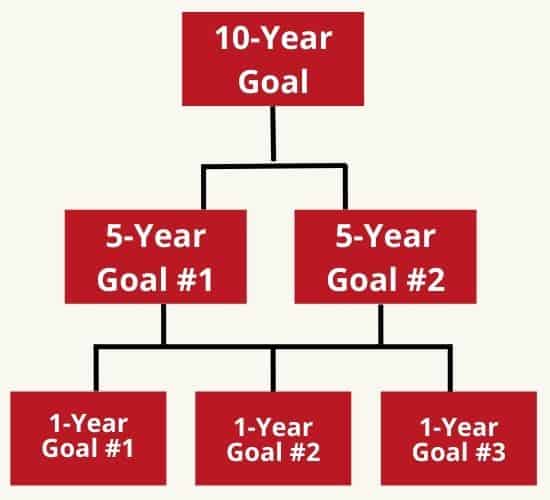
Long-term planning becomes easier when you divide your vision into meaningful timeframes. One-year, five-year, and ten-year goals serve as stepping stones—each stage building on the previous one. This layered approach ensures consistency, progress tracking, and a clear direction for your personal and professional life.
One-Year Goals
One-year goals are short-term targets that create immediate progress. They are practical, manageable, and actionable. These goals help you build foundational habits, gain clarity, and prepare for larger milestones.
Characteristics of one-year goals:
Highly actionable and specific
Focused on skill-building and measurable improvements
Serve as the first stage toward your five-year aspirations
Examples:
Financial: Save $5,000 by budgeting monthly income and cutting non-essential expenses.
Career: Complete a certification to become more qualified for a promotion.
Health: Establish a consistent workout routine (3–4 days a week).
Personal: Read 20 books to strengthen knowledge and cognitive skills.
Lifestyle: Build a morning routine that boosts productivity.
One-year goals help you gain momentum and confidence, making long-term planning less overwhelming.
Five-Year Goals
Five-year goals represent mid-term aspirations that require consistency, growth, and strategic planning. These goals often involve career advancement, financial stability, lifestyle upgrades, and significant personal development.
Characteristics of five-year goals:
Require sustained effort and long-term thinking
Include major transitions or upgrades
Often rooted in your personal and professional ambitions
Examples:
Financial: Save enough for a home down payment or build a $50,000 investment portfolio.
Career: Transition into a leadership position, such as manager or team lead.
Education: Earn a degree, certification, or advanced qualification.
Health: Achieve peak physical fitness or complete a high-endurance event (e.g., marathon).
Personal: Build meaningful relationships and expand social networks.
Five-year goals create direction, helping you turn annual progress into long-lasting achievements.
Ten-Year Goals
Ten-year goals define your long-term vision. These are transformative milestones that shape the lifestyle, career, and future you want to build. They represent who you aspire to become in a decade.
Characteristics of ten-year goals:
Vision-driven and deeply meaningful
Require long-term discipline and adaptability
Combine financial, professional, personal, and lifestyle aspirations
Examples:
Financial: Achieve financial independence or build a multi-stream income portfolio.
Career: Become a senior expert, executive, or successful entrepreneur.
Education: Master your field through continuous learning or advanced degrees.
Lifestyle: Live in your dream home, travel extensively, or maintain a balanced and fulfilling daily life.
Personal: Build a long-term legacy—family, business, or community impact.
These goals act as your ultimate destination, shaping all smaller decisions and annual plans.

Role of an Action Plan in Achieving Goals
An action plan is the backbone of goal achievement. Without a structured plan, even the most ambitious goals remain ideas rather than accomplishments. An action plan breaks down your goals into manageable steps and helps you maintain accountability.
1. Provides Clarity and Structure
An action plan transforms vague intentions into clear tasks. Instead of “Improve my career,” you create steps like:
Complete a certification
Apply for internal promotions
Improve leadership skills
This structure turns ambition into execution.
2. Helps You Prioritize Tasks
When goals are broken down into steps, it becomes easier to see which actions require immediate attention and which can wait. This prevents overwhelm and supports efficient time management.
3. Creates a Timeline for Accountability
A defined timeline ensures you stay on track. Whether it’s daily habits, weekly tasks, or monthly milestones, a timeline helps you measure progress.
Example:
Month 1–2: Budgeting and expense tracking
Month 3–6: Increase savings contributions
Month 7–12: Adjust investments and follow up
4. Increases Motivation and Consistency
Seeing progress—no matter how small—keeps you motivated. Action plans create a sense of accomplishment, reinforcing the belief that your goals are achievable.
5. Helps Identify Obstacles Early
With a plan, you can anticipate challenges and prepare solutions. For example, if time is a constraint, you can adjust your schedule or break tasks into smaller steps.
6. Makes Long-Term Goals Manageable
A ten-year vision may feel overwhelming, but when broken into yearly and monthly actions, it becomes achievable.
Example:
Ten-year goal → Five-year milestone → One-year target → Monthly actions → Weekly tasks
Tools and Resources for Goal Planning
When you set long-term goals — one-year, five-year, ten-year — using the right tools can make a big difference. Below are some of the best tools and resources that help you plan, track, and achieve your goals more effectively. I highlight one tool in particular, Corexta, and also mention a couple of alternatives for comparison.
✅ Recommended Tools
| Tool | What it helps with / Strength |
|---|---|
| Corexta | Project & task management, time tracking, planning, finance tracking, collaboration — good for goal planning and execution |
| Asana | Visual task/project tracking, easily divide large goals into tasks/milestones |
| Goalscape | Visual goal-planning with central goals and subgoals — great for personal or professional objectives |
🔎 Why Corexta Is Especially Useful
Corexta is more than just a to-do list or simple planner; it’s a full work — and goal — management platform.
Key features of Corexta that support goal planning:
Project & Task Management: You can break big goals (e.g. “learn new skill”, “build side business”, “get fit”) into smaller tasks or milestones, assign deadlines, and track progress.
Time Tracking & Productivity: It logs the time spent on each task — useful to monitor how much effort you are investing in different goal tasks.
Workflow Organization & Roadmap Visualization: With features like Gantt charts and project roadmaps, you can visually map out when to do what — helpful for long-term planning across months or years.
Finance / Budget & Resource Management (if your goals involve money or resources): Corexta includes finance modules — handy if your goals involve saving, investment, income tracking, budgeting, or business-related expenses.
Scalability & All-in-one Workspace: Whether you plan simple personal goals or complex career/business goals, Corexta can scale with your ambitions, avoiding the need to juggle multiple separate tools.
Why Corexta can be one of the best choices:
It allows integration of multiple aspects of goal planning — not only tasks but time, finances, resources, and collaboration.
It’s especially useful if you have complex or multi-dimensional goals (for example: combining career, financial, personal development goals).
It helps you turn long-term vision into actionable steps, making long-term goal planning more structured and less overwhelming.
🧰 Other Useful Tools & When to Use Them
Asana — Good when you mainly need to break down goals into tasks/milestones and track progress visually (especially for projects or multi-step plans).
Goalscape — Great for personal goals or mixed life-goals (financial, health, education, personal) where you want a clear visual roadmap and hierarchy of main goal + sub-goals.
🎯 How to Choose the Right Tool
Use Corexta if your goals are complex, involve multiple domains (work, finance, personal), and you want a single integrated workspace.
Use Asana or Goalscape if your goals are more straightforward, or you prefer simplicity and minimal setup.
If you have a mix — e.g. simple personal goals + complex work/business goals — you may even combine tools (e.g. Goalscape for big-picture life goals, and Corexta for detailed execution/tracking).

Emotional Aspects in Goal Setting
Goal setting is not just a strategic or logical process — it is deeply emotional. Your emotions influence how you choose goals, how you stay motivated, and how you react when things get difficult. Understanding the emotional side of goal setting helps you build stronger commitment and resilience.
1. Motivation and Purpose
Behind every goal lies a personal “why.”
Whether it’s financial security, confidence, better health, or career growth, the emotional reason behind a goal fuels your long-term persistence. When your goals align with your values and desires, you naturally stay more motivated.
2. Fear and Self-Doubt
Setting big goals can trigger fear:
“What if I fail?”
“Am I capable of this?”
“Is this too ambitious?”
These emotions are normal. Recognizing fear allows you to reframe it as an opportunity for growth. Instead of avoiding difficult goals, you learn to embrace challenges as part of the process.
3. Emotional Energy and Productivity
Your emotional state impacts your productivity. Feeling overwhelmed, stressed, or unmotivated can slow progress. Therefore, maintaining emotional balance — through rest, mindfulness, or self-care — enables better focus and performance.
4. Satisfaction and Confidence Boost
Achieving goals releases positive emotions like joy, pride, and confidence. These emotional rewards reinforce your belief in your abilities, making future goals feel easier and more achievable.
5. Handling Setbacks Emotionally
Setbacks can cause frustration, disappointment, or burnout. Understanding that emotional fluctuations are part of the journey helps you recover faster. Emotional awareness strengthens your resilience and keeps you committed even when the path gets tough.
Overcoming Obstacles in Goal Achievement
Every long-term goal faces obstacles — external and internal. What matters is how you respond to them. By anticipating challenges, you can prepare effective strategies to overcome them.
1. Lack of Clear Planning
Without a structured plan, progress becomes inconsistent.
Solution: Break your goals into small steps, create weekly/monthly milestones, and track progress.
2. Procrastination and Inconsistent Motivation
Procrastination often stems from fear, overwhelm, or lack of direction.
Solution:
Use the 2-minute rule (start small)
Set deadlines
Use tools like Corexta for habit tracking
Reward yourself for completing milestones
3. Limited Time or Resources
Time constraints or lack of resources can slow goal progress.
Solution: Prioritize high-impact tasks, delegate when possible, and adjust your schedule to align with your goals.
4. Fear of Failure
Fear can cause hesitation or self-sabotage.
Solution: Reframe failure as part of the process, not the end. Focus on learning rather than perfection.
5. Environmental and Social Distractions
Distractions from social media, people, or stressful environments can derail consistency.
Solution: Create a focused work environment, set boundaries, and limit digital distractions.
6. Lack of Accountability
It’s hard to stay committed when no one is watching.
Solution:
Share goals with a mentor or partner
Use planning tools to track progress
Join goal-focused communities
7. Emotional Burnout
Too many goals or high expectations can exhaust your energy.
Solution: Schedule rest days, practice mindfulness, and set realistic expectations.
The Benefits and Challenges of Goal Planning
Goal planning is one of the most effective ways to achieve long-term success, but it comes with both advantages and challenges. Understanding both helps you create balanced expectations and smoother progress.
Benefits of Goal Planning
1. Provides Clear Direction
Goal planning gives you a roadmap. You know where you’re heading and what steps are needed to get there.
2. Boosts Motivation and Focus
Goals help you prioritize what matters most and reduce unnecessary distractions.
3. Builds Self-Discipline
By working consistently toward goals, you strengthen habits, discipline, and long-term commitment.
4. Improves Time Management
With goals, you learn to allocate time efficiently — focusing on tasks that support your long-term vision.
5. Enables Measurable Progress
Tracking your milestones gives you a sense of accomplishment and shows how far you’ve come.
6. Enhances Personal and Professional Growth
Goal planning encourages learning new skills, trying new experiences, and expanding capabilities.
Challenges of Goal Planning
1. Overwhelm from Big Goals
Long-term goals can feel intimidating. Breaking them into smaller tasks is necessary to avoid feeling stuck.
2. Difficulty in Staying Consistent
Motivation fluctuates. Without discipline or structure, people often lose momentum.
3. Unexpected Life Changes
Circumstances like job changes, health issues, or family responsibilities can interrupt progress. Flexibility is key.
4. Setting Unrealistic Goals
A poorly defined or unrealistic goal leads to burnout and frustration. Using SMART principles helps avoid this.
5. Emotional Pressure
Comparing yourself to others or setting too many goals can create unnecessary stress.
6. Lack of Proper Tools
Without the right tools or support system, tracking and managing goals becomes difficult.

Setting Goals for Remote Work
Remote work has transformed how people manage their time, productivity, and personal lives. While it offers flexibility, it also requires strong discipline and intentional planning. Setting the right goals can help remote workers maintain balance, prevent burnout, and achieve long-term career success.
1. Establish a Structured Routine
Remote work often blurs the line between personal life and professional responsibilities.
Example goals:
Create a consistent daily work schedule and follow it for at least 90 days.
Implement a morning routine (exercise, planning, reading) to boost productivity.
2. Improve Productivity and Time Management
Without an office environment, distractions can easily slow progress.
Example goals:
Use Corexta, to track tasks and manage your time.
Follow time-blocking strategies to organize work hours.
Reduce social media distractions during work hours.
3. Enhance Communication Skills
Clear communication is essential in remote work due to limited face-to-face interaction.
Example goals:
Schedule regular check-ins with your manager or team.
Improve email writing and documentation skills.
Use professional communication tools (Slack, Zoom, Microsoft Teams).
4. Maintain Work-Life Balance
Working from home can lead to overworking or a lack of boundaries.
Example goals:
Set specific work hours and stick to them.
Take scheduled breaks and avoid working late without necessity.
Create a dedicated workspace at home.
5. Strengthen Career Growth and Skill Development
Remote work environments require continuous learning to stay competitive.
Example goals:
Learn a new tool, software, or job-related skill within 3–6 months.
Complete one professional certification each year.
Build an online portfolio or improve your LinkedIn profile.
6. Improve Collaboration and Team Engagement
Remote workers may feel disconnected from their team.
Example goals:
Attend team meetings actively and share updates regularly.
Participate in virtual team-building activities.
Contribute ideas or lead small projects to stay visible.
7. Maintain Physical and Mental Wellness
Long hours at a desk can affect overall health.
Example goals:
Add daily movement (stretching, walking, yoga) to your routine.
Practice mindfulness, meditation, or stress management techniques.
Maintain a healthy sleep schedule.
Remote work success relies heavily on personal responsibility, planning, and consistent improvement — all of which are greatly supported by structured goal-setting.
Common FAQs
1. What is an example of a 5-year goal plan?
A 5-year goal plan is a medium-term strategy that outlines what you want to achieve in the next five years and the steps required to get there. A well-structured 5-year goal plan may include goals across multiple areas of life.
Example of a complete 5-year goal plan:
Financial Goals:
Build a $30,000–$50,000 investment portfolio.
Pay off debts or save for a home down payment.
Career Goals:
Earn a leadership position (team lead, manager, or senior specialist).
Complete 2–3 major professional certifications.
Personal Goals:
Develop a healthy lifestyle with regular exercise.
Build meaningful relationships and grow your network.
Educational Goals:
Complete a degree or advanced course related to your field.
Action Steps included in a 5-year plan:
Yearly milestones
Monthly and weekly tasks
Performance tracking using tools like Corexta
A strong 5-year plan helps bridge the gap between your current situation and your long-term vision.
2. What is a 10-year goal?
A 10-year goal is a long-term vision describing where you want to be in a decade. These goals are transformational — they reflect who you want to become and the lifestyle you want to build. They typically combine career, financial, personal, and lifestyle ambitions.
Examples of 10-year goals:
Achieve financial independence or create multiple income streams.
Become a recognized expert or leader in your industry.
Purchase your dream home or build a family estate.
Maintain long-term physical fitness and emotional well-being.
Build a business or side venture with stable yearly revenue.
Travel the world or achieve major personal life goals.
10-year goals are powerful because they shape all your smaller decisions — your 1-year and 5-year goals become the stepping stones toward this bigger vision.