AI sentiment analysis is a technology that helps machines understand human feelings in written or spoken language. Instead of asking a person to read and judge thousands of texts, AI can process this data quickly and at scale. It reads text, detects tone, and decides whether the language shows positive feelings, negative feelings, or neutral emotions. This makes it useful for companies and organizations that want to know how people think and feel about their products, services, brand, or public issues.
AI sentiment analysis uses tools like natural language processing (NLP) and machine learning to do this work faster than humans ever could. It can handle huge amounts of data from places like social media, customer reviews, emails, surveys, and more. The insights from sentiment analysis help companies respond faster, improve products based on feedback, and track how people’s feelings change over time. By using AI, businesses can uncover patterns in customer sentiment that would be too difficult to spot manually.
What Is AI Sentiment Analysis?
AI sentiment analysis is a type of artificial intelligence that examines text to find its emotional tone. In simple terms, it takes human language and classifies it as positive, negative, or neutral. Some advanced systems even detect specific emotions like joy, anger, sadness, or excitement. The main goal is to understand what people think and feel without needing a person to read every message or review.
This process is widely used for customer feedback, social media monitoring, market research, and many other business tasks. Rather than just seeing how many times a word appears, AI models learn patterns and use context to make a judgment. These models are built using natural language processing (NLP) and machine learning techniques, which help computers interpret human language more accurately.
How AI Sentiment Analysis Works

AI sentiment analysis turns raw text into insights about emotion and opinion. It doesn’t happen all at once — it follows a clear workflow that prepares, analyzes, and interprets text so computers can understand human feelings. Here’s how that works step by step:
Phase 1: Data Collection
Before any analysis can begin, you must gather text data from the right places. This data might come from:
-
Social media posts like tweets or comments
-
Customer reviews and ratings on websites
-
Surveys, support tickets, and emails
-
Chat transcripts and call transcripts
The goal is to collect a large and relevant set of text that truly reflects the opinions or feelings you want to study. The more relevant and varied the data, the better the AI model can learn patterns in sentiment.
Phase 2: Data Preparation
Raw text is messy. It usually contains special characters, emojis, slang, typos, HTML tags, and more. Before analysis, the text has to be cleaned and structured so that a machine can interpret it correctly. Common data preparation steps include:
-
Cleaning – Remove noise such as URLs, hashtags, and irrelevant symbols.
-
Tokenization – Split text into smaller pieces like words or sentences.
-
Lowercasing – Convert all text to one case (usually lowercase) so the model treats words uniformly.
-
Removing stop words – Filter out common words like “the,” “and,” and “is” that don’t carry sentiment meaning.
-
Stemming or lemmatization – Reduce words to their base form (e.g., “running” → “run”).
These preprocessing steps help standardize the text so that sentiment patterns become easier to identify by AI models.
Phase 3: AI Algorithm Application
Once the text is cleaned and structured, it’s time for the AI to do its job. This phase has two key parts:
-
Feature Extraction and Vectorization – The text is converted into numerical form so machine learning models can process it. Techniques like TF‑IDF, word embeddings (Word2Vec, GloVe), or transformer embeddings are common.
-
Sentiment Classification – Machine learning or deep learning models (such as Naive Bayes, Support Vector Machines, LSTM, or transformer‑based models) learn from labeled examples (positive, negative, neutral) and then predict sentiment on new text.
Some systems also score sentiment on a numeric scale or handle more advanced tasks like detecting emotion or intent. The models learn patterns from data and apply them to classify or score new text accurately.
The 4 Types of Sentiment Analysis

AI sentiment analysis can be more than just saying “positive,” “negative,” or “neutral.” These are the four major types used today:
1. Fine‑Grained Sentiment Analysis
Fine‑grained analysis breaks sentiment into more detailed categories beyond basic polarity. Instead of just three classes (positive, neutral, negative), it often rates text on a scale such as:
-
Very positive
-
Positive
-
Neutral
-
Negative
-
Very negative
This helps show the intensity of emotions, not just direction, and is often useful when you want deeper insight from reviews or feedback.
2. Aspect‑Based Sentiment Analysis (ABSA)
Aspect‑based sentiment analysis looks at specific parts or features mentioned in text — not just the overall sentiment. For example, in a phone review, it might separately analyze:
-
Battery life
-
Camera quality
-
Screen display
This makes it possible to understand how customers feel about particular features instead of just the product overall.
3. Emotion Analysis
Emotion analysis detects specific emotions instead of broad sentiment polarity. It identifies emotional states like:
-
Happiness
-
Anger
-
Sadness
-
Fear
-
Excitement
This is useful when simple positive/negative labels aren’t enough and you need to understand deeper emotional responses.
4. Intent Analysis
Intent analysis goes a step further by trying to detect the purpose or goal behind the sentiment. It helps identify what the person might want to do, such as:
-
Asking a question
-
Expressing frustration
-
Indicating a desire to buy
-
Requesting support
This type of sentiment analysis is especially useful in customer service automation, where understanding intent can drive better responses and routing decisions.
Data Sources for Sentiment Analysis
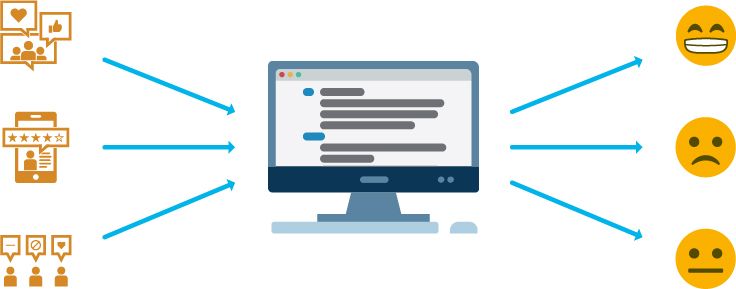
AI sentiment analysis relies on rich and diverse text data to provide accurate insights. Different sources offer different perspectives, and combining them can give a full picture of opinions and emotions. Here are the most common sources used today:
1. Social Media
Platforms like Twitter, Facebook, Instagram, LinkedIn, and TikTok are rich in user-generated content. People often express opinions, experiences, and reactions freely here. Social media data is highly dynamic and can show real-time sentiment trends, making it valuable for brand monitoring, marketing campaigns, and public relations. Hashtags, mentions, and comments are particularly useful for tracking sentiment around specific topics or events.
2. Product Reviews
E-commerce sites, apps, and marketplaces generate millions of product reviews and ratings. These reviews provide direct feedback from customers about products or services. Sentiment analysis of reviews can reveal overall satisfaction, identify common complaints, and highlight strengths. It also helps companies prioritize improvements or features that matter most to their audience.
3. Customer Support Chats
Live chat transcripts from support teams, chatbots, or messaging platforms provide insights into customer frustration, satisfaction, and service effectiveness. Analyzing chat sentiment helps detect recurring issues, measure support quality, and even predict when customers are likely to churn.
4. Emails, Tickets, and Surveys
Customer emails, support tickets, and survey responses are structured and semi-structured data sources that capture opinions, suggestions, or complaints in detail. AI sentiment analysis can categorize responses by emotion, urgency, and topic, helping organizations respond quickly and appropriately.
5. CRM Notes and Sales Calls
CRM systems often contain notes from sales calls, meetings, and follow-ups. These records hold valuable information about client sentiment and engagement. By analyzing them, companies can track satisfaction trends, uncover potential problems early, and optimize their sales strategies.
Benefits of Using AI for Sentiment Analysis

AI sentiment analysis offers businesses insights and advantages that go far beyond what humans can achieve manually. Some of the key benefits include:
1. Handle Feedback Volume Human Analysts Can’t
Companies receive thousands, sometimes millions, of messages across multiple channels daily. AI can process this volume of data quickly and consistently, analyzing far more content than human teams could manage. This means no feedback goes unnoticed, and companies can act faster.
2. Monitor Brand Health in Real Time
AI sentiment analysis provides live tracking of customer opinions and emotions. Businesses can detect sudden spikes in negative sentiment, monitor reactions to campaigns or product launches, and respond before issues escalate. Real-time monitoring keeps brands agile and responsive.
3. Multilingual Analysis at Scale
Global businesses often face the challenge of analyzing feedback in multiple languages. Advanced AI models can detect sentiment in dozens of languages, including nuances, slang, and cultural differences. This ensures accurate insights across markets without needing large multilingual teams.
4. Works Consistently Across All Channels
AI models apply the same analysis standards across social media, reviews, support chats, surveys, emails, and CRM data. This consistency ensures that sentiment scoring is comparable, reliable, and scalable, helping companies make data-driven decisions with confidence.
Challenges and Limitations of Using AI for Sentiment Analysis

AI sentiment analysis is a powerful tool, but it is not without its challenges. Understanding these limitations is essential for implementing it effectively and interpreting results accurately.
1. Data Privacy Concerns
Sentiment analysis often requires access to large volumes of personal or sensitive data, such as customer emails, support chats, social media messages, or CRM records. Handling this data incorrectly can violate privacy laws like GDPR or CCPA. Organizations must ensure that data is anonymized, secured, and stored responsibly. Using AI models responsibly also means obtaining consent where required and following regulations to protect user information.
2. Bias in Training Data
AI models learn from historical data, which means they can inherit the biases present in the data. For example, if a dataset mostly contains reviews from a specific demographic or region, the model may misinterpret sentiments from other groups. Bias can lead to inaccurate sentiment classification, overemphasizing certain emotions, or mislabeling text. Regular auditing of models and using diverse, representative datasets can help reduce these biases, but they cannot eliminate them entirely.
3. Context Loss
Human language is complex, full of sarcasm, slang, idioms, or subtle humor. AI models sometimes struggle to understand these nuances. For example, the sentence “Great, another delay” might be misclassified as positive because of the word “great,” even though it expresses frustration. Context loss is particularly challenging in short texts like tweets or in languages with flexible grammar. Advanced NLP models improve context understanding, but even the best models are not perfect in detecting nuanced sentiment.
Examples and Practical Use Cases of AI Sentiment Analysis
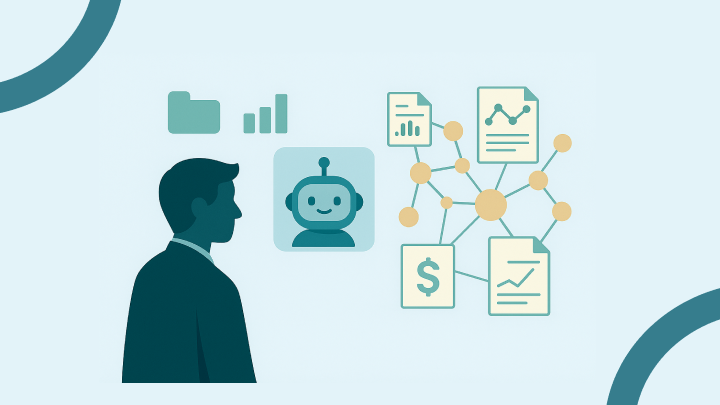
AI sentiment analysis is widely used across industries to derive insights that drive strategic decisions. Here are some key practical applications:
1. Managing Brand Reputation
Companies can track sentiment about their brand across social media, forums, and review sites. AI helps detect negative trends early, such as complaints about a product or service. By identifying issues quickly, businesses can respond promptly, prevent PR crises, and maintain a positive brand image.
2. Enhancing Support Experience
Support teams use sentiment analysis to prioritize tickets or chats based on urgency and emotion. For instance, highly frustrated customers can be routed to experienced agents for faster resolution. AI can also suggest responses that match the customer’s emotional tone, improving overall satisfaction and loyalty.
3. Checking Employee Satisfaction
Organizations can apply sentiment analysis internally to surveys, performance reviews, or chat messages. This helps identify team morale issues, engagement trends, or workplace conflicts before they escalate. By understanding employee sentiment, HR and management can take proactive steps to improve culture and retention.
4. Improving Product Development
Customer reviews, feedback forms, and social media mentions are rich sources of product insights. AI sentiment analysis can uncover patterns in what features customers like or dislike, helping teams prioritize improvements, innovate new products, and reduce negative experiences.
Best AI Sentiment Analysis Tools
Choosing the right AI sentiment analysis tool depends on your specific needs — whether it’s monitoring social buzz or analyzing customer calls. Below are two powerful tools widely used in 2026, each excelling in different areas of sentiment detection and analysis.
1. Brandwatch (Best for Social Media Monitoring)
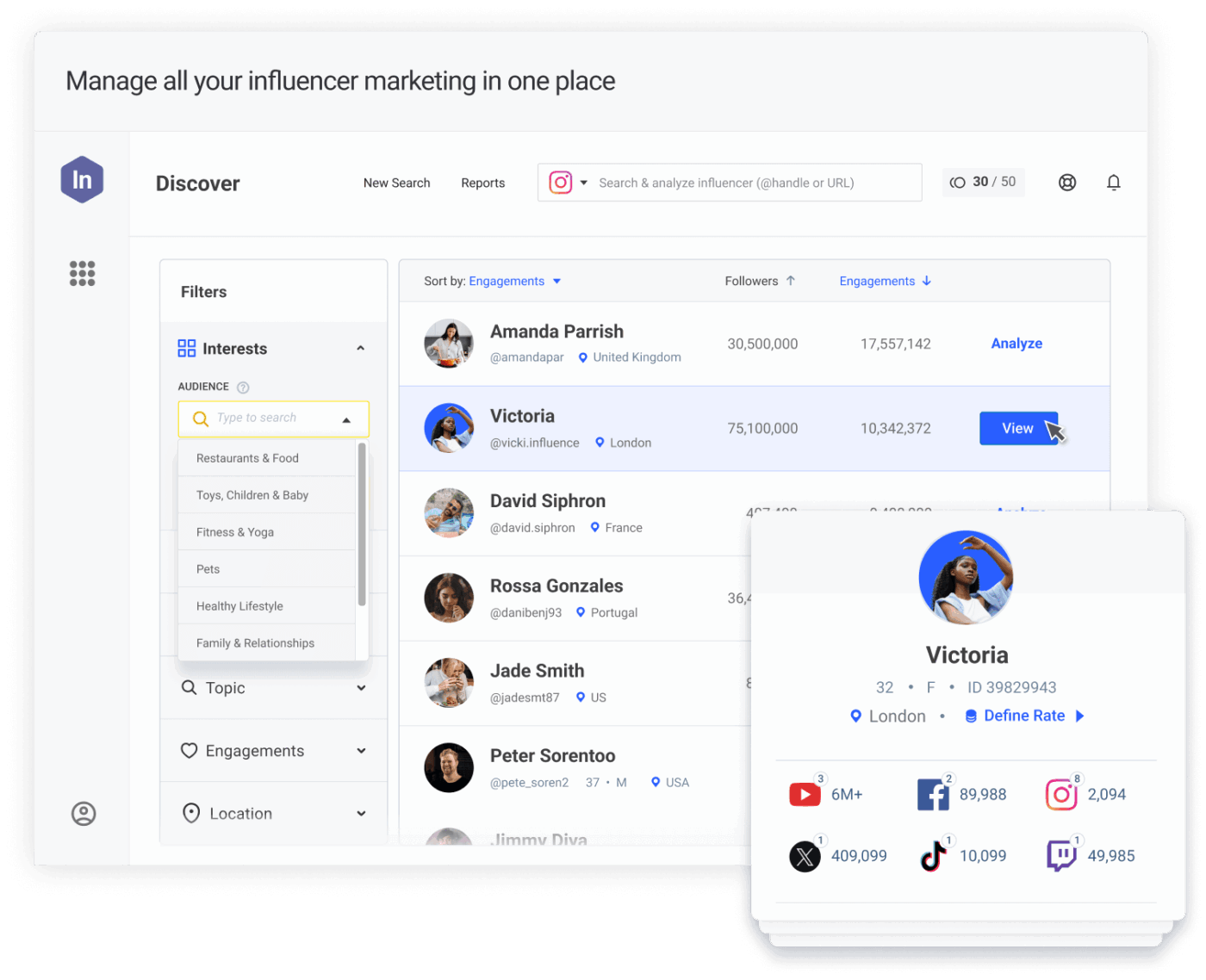
Brandwatch is a top‑tier AI‑powered social listening and sentiment analysis platform built for brands and marketing teams. It helps businesses understand how people feel about their products, services, or campaigns across millions of online conversations.
Key Strengths:
-
Deep social listening: Brandwatch collects and processes data from social platforms, blogs, forums, and news sites, giving a broad view of public sentiment and trends.
-
Emotion breakdown: Instead of simple positive/negative labels, it can break sentiment into detailed emotional categories like anger, joy, fear, and surprise, which helps uncover real audience feelings.
-
Real‑time insights: You can spot sudden spikes in negative sentiment, identify emerging issues, and react quickly before problems escalate.
-
Generative AI features: Modern versions include AI helpers that summarize insights, explain underlying patterns, and even assist with writing responses or captions.
-
Integrated analytics: Dashboards show sentiment trends over time, competitive benchmarks, and topic analysis that reveal what audiences are talking about most.
Use Cases:
-
Brand reputation management
-
Campaign performance tracking
-
Audience behavior analysis
-
Competitive intelligence
Brandwatch is ideal for marketing teams, PR professionals, and brands that need deep sentiment insights from social and online content.
2. CloudTalk (Best for Voice & Call‑Based Sentiment Analysis)
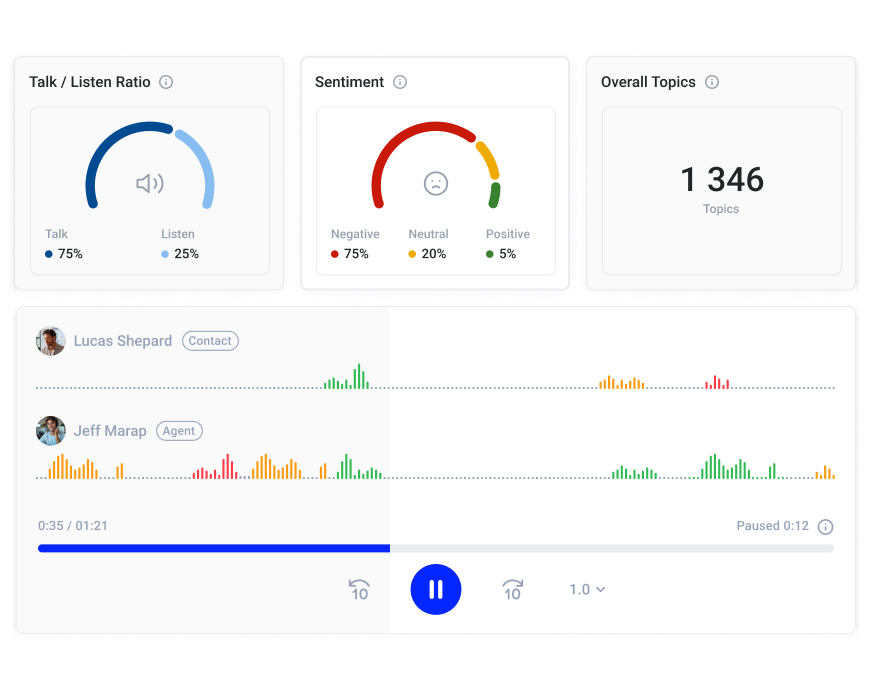
CloudTalk is a cloud‑based contact center and voice communication platform with built‑in AI sentiment analysis that focuses on spoken conversations rather than text posts or reviews.
Why It’s Valuable:
-
Voice sentiment detection: CloudTalk transcribes calls and uses AI to detect positive, neutral, or negative emotional tones during customer calls.
-
Segment‑level analysis: Conversations are broken into parts so you can see how sentiment shifts throughout the call — this helps managers coach agents and improve responses.
-
Performance insights: Beyond sentiment, the platform extracts topics discussed, generates smart summaries, and tracks call statistics like talk/listen ratios.
-
CRM integration: It syncs customer call data with CRM systems such as Salesforce, Zendesk, or HubSpot, giving teams a full picture of customer interactions.
-
Efficiency gains: By automating call analysis, CloudTalk saves time previously spent on manual review and helps teams act faster on customer emotions.
Use Cases:
-
Customer support quality monitoring
-
Sales call emotion tracking
-
Coaching and training teams based on emotional cues
-
Identifying dissatisfied or at‑risk customers early
CloudTalk is especially useful for support centers, sales teams, and customer experience groups that rely on voice communication and need real‑time emotional insights directly from customer calls.
Tool Comparison
| Tool | Best For | Strength | Typical Use Case |
|---|---|---|---|
| Brandwatch | Social media & online brand insight | Deep text sentiment + emotion analysis | Brand reputation & marketing |
| CloudTalk | Voice & call sentiment | Real‑time call emotion detection | Customer support & call centers |
Each tool applies AI to decode sentiment, but their focus differs — Brandwatch excels at collecting and analyzing public text data across platforms, while CloudTalk adds voice context and call intelligence to emotional insights.
How to Implement AI Sentiment Analysis in Your Workflow
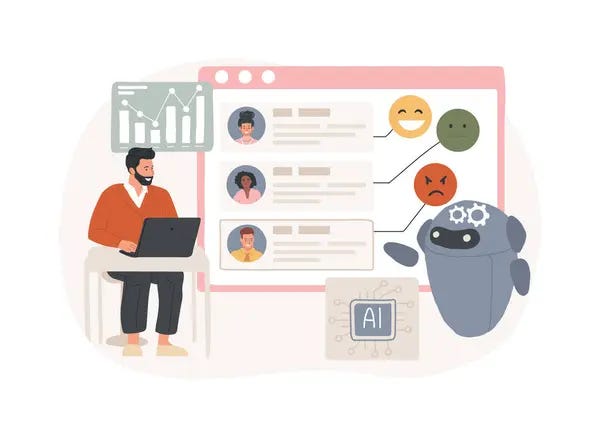
Implementing AI sentiment analysis effectively requires a structured approach. By following these steps, organizations can ensure they capture accurate insights, integrate them into operations, and continuously improve outcomes.
Step 1: Collect and Clean Text Data
The first step is gathering text data from all relevant sources. This may include:
-
Social media posts from platforms like Twitter, LinkedIn, Instagram, and Facebook
-
Customer feedback such as product reviews, emails, and survey responses
-
Support conversations including chat transcripts and call transcripts
-
CRM notes and sales records
Once collected, the data must be cleaned to remove noise and prepare it for analysis. Cleaning tasks include:
-
Removing irrelevant characters, HTML tags, and emojis (unless emotion analysis requires them)
-
Correcting spelling mistakes and standardizing terms
-
Tokenizing text into words or phrases
-
Removing stop words that do not contribute to sentiment
-
Normalizing text through lemmatization or stemming
High-quality, clean data ensures the AI model correctly interprets sentiment and reduces the risk of errors caused by ambiguous or messy text.
Step 2: Choose a Model or Tool
After data preparation, choose the AI model or platform that best fits your goals. Options include:
-
Pre-trained models like transformer-based NLP models (e.g., BERT, RoBERTa, GPT variants) for quick deployment
-
Commercial tools like Brandwatch for social media monitoring or CloudTalk for voice analysis
-
Custom models trained on your proprietary data for highly specific needs
Selection should consider factors like the type of data, language support, required sentiment granularity, integration capabilities, and budget. The right choice ensures the model aligns with workflow goals and delivers actionable insights.
Step 3: Train or Fine-Tune (If Needed)
Some workflows may require training or fine-tuning a model to improve accuracy for specific contexts. Fine-tuning involves:
-
Feeding the model labeled examples from your own dataset
-
Adjusting model parameters to understand domain-specific language, slang, or jargon
-
Testing with validation datasets to measure accuracy
For example, a model analyzing tech product reviews may need training on terms like “laggy interface” or “battery drain” to correctly interpret sentiment. Fine-tuning ensures the AI understands nuances that general models might miss.
Step 4: Integrate with Dashboards or CRM
Once the AI is ready, integrate it into your operational tools:
-
Connect sentiment outputs to CRM systems such as Salesforce, HubSpot, or Zendesk for real-time insights on customers
-
Build dashboards using tools like Tableau, Power BI, or Looker to visualize trends, highlight spikes in sentiment, and track KPIs over time
-
Automate alerts for high-priority issues, such as sudden negative sentiment in social media mentions or support chats
Integration ensures sentiment data flows directly into decision-making processes, allowing teams to respond faster and more strategically.
Step 5: Monitor Accuracy and Refine
AI models are not static. Continuous monitoring and refinement are critical:
-
Regularly validate sentiment predictions against human-labeled data to maintain accuracy
-
Update the model with new data to handle evolving language trends, new product terms, or emerging slang
-
Review misclassifications to identify recurring errors and retrain models as needed
-
Adjust workflows to incorporate insights, for example, rerouting highly negative tickets or refining marketing campaigns
Ongoing evaluation ensures the AI system remains reliable, adaptive, and relevant, providing consistently actionable insights across business operations.
Future of AI Sentiment Analysis

AI sentiment analysis is rapidly evolving. New technologies and methods are expanding its accuracy, depth, and practical applications. Here are three key trends shaping the future of sentiment analysis:
1. Multimodal Analysis
Traditional sentiment analysis mostly focuses on text. Multimodal analysis combines multiple data types — text, voice, images, and video — to understand sentiment more accurately. For example:
-
Detecting emotional tone from a customer support call using voice inflection
-
Analyzing facial expressions in video feedback
-
Combining written reviews with product images to assess sentiment
By leveraging multiple modes of communication, AI can gain a richer understanding of human emotions and provide more nuanced insights than text alone.
2. Hyper-Localized Context
Future AI models will focus more on contextual understanding at a granular level. This includes:
-
Recognizing cultural, regional, and linguistic variations in sentiment
-
Understanding local slang, idioms, and context-specific references
-
Tailoring sentiment insights for specific markets or demographics
Hyper-localized context ensures businesses interpret sentiment accurately for different audiences and avoid misclassifications caused by general models.
3. Intent Prediction
AI is moving beyond detecting how people feel to understanding why they feel that way. Intent prediction analyzes sentiment alongside actions or goals, allowing models to:
-
Identify if a negative comment signals churn risk
-
Detect whether a positive review indicates potential advocacy
-
Anticipate customer needs and provide proactive solutions
By combining sentiment and intent, organizations can respond more strategically, improving customer experience and decision-making.
Frequently Asked Questions (FAQs)
1. What is the difference between sentiment analysis and emotion detection?
Sentiment analysis classifies text as positive, negative, or neutral, focusing on overall tone. Emotion detection goes deeper, identifying specific emotions such as anger, joy, fear, or sadness, providing more detailed insights into human feelings.
2. Is sentiment analysis accurate?
Accuracy depends on the quality of data, model type, and context. Advanced AI models achieve high accuracy on large, clean datasets but may struggle with sarcasm, slang, or ambiguous language. Continuous training and refinement improve reliability.
3. Which AI model is used for sentiment analysis?
Common models include:
-
Transformer-based models (BERT, RoBERTa, GPT variants) for text understanding
-
Naive Bayes and Support Vector Machines (SVM) for classic machine learning approaches
-
LSTM and RNN for sequential text analysis
The choice depends on the data type, volume, and level of analysis required.
4. Can AI sentiment analysis work in multiple languages?
Yes. Modern AI models support multilingual analysis, often handling dozens of languages. They account for linguistic nuances, slang, and cultural context to provide accurate sentiment predictions across global markets.
5. Can AI detect sarcasm?
Detecting sarcasm remains challenging. Advanced models use contextual cues, punctuation, emojis, and surrounding conversation to identify sarcasm, but perfect accuracy is still difficult. Combining text with multimodal data (like tone or video) improves detection.
6. What industries use sentiment analysis?
Sentiment analysis is widely used in:
-
Retail & e-commerce – understanding product feedback
-
Customer service & call centers – improving support experience
-
Marketing & social media management – tracking campaigns and brand perception
-
Healthcare – analyzing patient feedback and satisfaction
-
Human resources – monitoring employee sentiment and engagement
By leveraging sentiment insights, industries can make data-driven decisions, improve customer experiences, and anticipate trends.
Read More: 8 ChatGPT Marketing Use Cases Every Marketer Should Know