The HR landscape has never been more complex—or more critical to business success. In 2026, companies are navigating a perfect storm of challenges: remote and hybrid workforces operating across multiple states and countries, constantly shifting labor regulations, rising employee expectations, and an overwhelming need for accurate, data-driven decision-making. Traditional HR processes simply can’t keep up, and outdated systems create compliance risks, inefficiencies, and burnout across HR teams.
That’s why your choice of PEO (Professional Employer Organization) software matters more than ever. In 2026, selecting a PEO isn’t just about outsourcing payroll or unlocking better health insurance rates. It’s about choosing a strategic technology partner—one that leverages AI, automates routine work, strengthens compliance, and gives your business the flexibility to scale confidently. The right PEO platform should act as a force multiplier, reducing administrative burdens while improving the employee experience.
At its core, a PEO operates under a co-employment model, sharing certain employer responsibilities with your company. This allows the PEO to manage crucial functions such as payroll, benefits administration, tax filings, compliance monitoring, onboarding, and risk management—freeing your internal team to focus on growth and culture. By combining HR expertise with modern technology, today’s leading PEOs offer businesses a competitive advantage in an increasingly unpredictable labor landscape.
This guide will break down the top PEO software platforms for 2026, evaluating each based on what truly matters for the next era of work—not just what was useful five years ago. We’ll analyze AI capabilities, automation depth, compliance intelligence, scalability, pricing transparency, user experience, and real-world fit for different business sizes. Whether you’re a startup, a scaling company, or an established SMB, this guide will help you choose the PEO partner that prepares your workforce for the future.
How We Evaluated: Our 2026 Selection Criteria
Choosing the best PEO software in 2026 requires more than comparing feature lists—it demands a forward-looking evaluation framework rooted in technology, compliance readiness, and the evolving needs of today’s hybrid, AI-driven workforce. To build this guide, we analyzed each PEO platform using a rigorous methodology that reflects the realities businesses face today and the challenges they will encounter in the coming years. Our goal was to ensure the recommendations aren’t just relevant for the present, but are future-proof for 2026 and beyond.
Below are the core criteria that shaped our evaluations:
1. Core Platform & User Experience (UX)
PEO software must be intuitive for both HR teams and employees. In 2026, usability is no longer optional—it directly affects adoption, efficiency, and employee satisfaction. We evaluated:
-
Ease of navigation: Clean interface design, logical workflows, and minimal learning curve.
-
Mobile accessibility: Whether employees can manage payroll info, benefits, time-off requests, and documents via mobile apps or responsive portals.
-
Employee self-service tools: Modern platforms empower workers to update personal details, access pay stubs, enroll in benefits, and submit HR requests without relying on administrators.
-
Unified dashboard experiences: Platforms that consolidate HR, payroll, benefits, and compliance in one interface scored higher for reducing fragmentation.
A strong UX ensures smoother onboarding, fewer support tickets, and a more empowered workforce.
2. AI & Automation Capabilities
AI has become the defining differentiator in HR technology, and in 2026, the best PEO platforms leverage it extensively. Our evaluation focused on:
-
Predictive analytics: Workforce forecasting, turnover prediction, cost modeling, and insights that support smarter HR decisions.
-
Intelligent onboarding: Automated document collection, workflow triggers, smart task assignments, and personalized employee journeys.
-
Chatbot and virtual assistant support: AI-powered help for routine HR questions, reducing administrative burden.
-
Automated compliance updates: Systems that proactively flag regulatory changes and update processes without requiring manual oversight.
The more a platform streamlines manual tasks, the more it enables HR teams to focus on strategy rather than administration.
3. Benefits & Insurance Offerings
One of the biggest advantages of joining a PEO is access to competitive benefits typically unavailable to smaller businesses. We assessed:
-
Quality and competitiveness of national health plans: Including medical, dental, vision, and wellness benefits.
-
Ancillary offerings: Life insurance, disability coverage, retirement plans, commuter benefits, mental health support, and more.
-
Cost-efficiency: Whether the PEO can leverage group buying power to secure better rates and lower renewal surprises.
-
Benefits administration tools: Ease of enrollment, clarity of plan comparisons, and the digital experience for employees.
In 2026, robust benefits aren’t just perks—they are essential for attracting and retaining talent.
4. Compliance & Risk Management
With remote employees spread across multiple jurisdictions, compliance management has become one of the biggest challenges for businesses. We evaluated each PEO’s ability to provide:
-
Proactive regulatory updates: Automatic adjustments for new state, federal, and industry-specific laws.
-
Risk management resources: Workplace safety guidance, HR audits, and support for sensitive employment matters.
-
Tax filing accuracy: Handling payroll taxes across states, localities, and international regions where applicable.
-
Legal support: Access to HR experts or legal professionals who help navigate complex scenarios like terminations or disputes.
The best PEOs operate as a shield—minimizing risk, reducing liability, and preventing costly compliance mistakes.
5. Scalability & Flexibility
As businesses grow, their HR needs quickly evolve. A top-tier PEO must support:
-
Rapid team expansion: Without forcing a software migration or complex reconfiguration.
-
Hybrid and remote teams: Tools that adapt to employees working across multiple states or countries.
-
Global contractors or international workers: Some PEOs now double as EORs (Employers of Record), supporting international hiring.
-
Custom workflows: The ability to adjust processes as teams scale or organizational structures change.
A scalable PEO ensures that HR processes remain stable and efficient through every stage of growth.
6. Integration Ecosystem
Disconnected software leads to errors, redundancies, and wasted time. That’s why integrations are a top priority. We evaluated:
-
Accounting and finance integrations: Compatibility with QuickBooks, Xero, NetSuite, and other financial systems.
-
Productivity and communication tools: Slack, Microsoft Teams, Google Workspace, and collaboration platforms.
-
HR tech ecosystem: ATS, LMS, time tracking, IT provisioning, identity management, and more.
-
API availability: For businesses needing deeper customization or connections with internal systems.
In 2026, a PEO must act as the central hub of your HR and operations tech stack—not an isolated tool.
7. Transparency & Pricing
PEO pricing models vary widely, and lack of transparency has historically frustrated businesses. We assessed:
-
Pricing structure clarity: Whether costs are PEPM (per-employee-per-month), percentage of payroll, or hybrid models.
-
Hidden fees: Setup fees, annual increases, benefit administration fees, and compliance add-ons.
-
Budget predictability: How easy it is to estimate and plan for long-term costs.
-
Contract flexibility: Term length, cancellation requirements, and room for negotiation.
Platforms with transparent, predictable pricing earned higher scores for trust and long-term value.
8. Customer Support & Strategic Guidance
A PEO isn’t just software—it’s also a service partnership. We evaluated:
-
Access to HR consultants: Whether businesses get real human experts or just ticket-based support.
-
Response times and issue resolution quality: Consistency, speed, and expertise.
-
Strategic advisory: Guidance on performance management, company culture, hiring, employee relations, and leadership development.
-
Training resources: Webinars, documentation, onboarding assistance, and proactive check-ins.
The right PEO becomes an extension of your HR team, supporting both daily operations and long-term workforce strategy.
The Top PEO Software Platforms for 2026
1. Corexta
Our 2026 Verdict: Best for All-in-One Simplicity & Integrated Business Tools
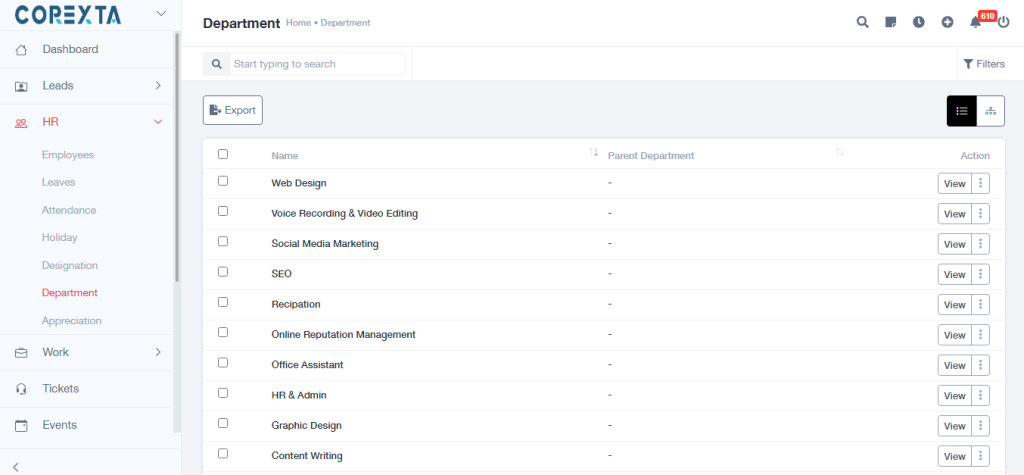
Corexta stands out in 2026 as one of the most forward-thinking platforms in the PEO landscape—primarily because it redefines what a PEO can be. Rather than functioning solely as a provider of HR, payroll, benefits, and compliance services, Corexta positions itself as a true Business Management Platform, blending traditional PEO capabilities with operational tools that most businesses typically pay for separately. This unified approach makes Corexta especially appealing for small and mid-sized companies that want to consolidate their workflows and eliminate the inefficiencies associated with managing multiple disconnected software subscriptions.
Overview
Corexta combines the power of a full-service PEO with essential business operations tools like project management, CRM, team collaboration, task tracking, client management, and document sharing—all within one seamless dashboard. This integrated ecosystem allows companies to align their HR operations with their day-to-day business activities, reducing friction and improving visibility across teams.
Where traditional PEOs focus heavily on HR administration, Corexta bridges the gap between people management and operational performance. For businesses trying to streamline processes, improve accountability, or unify their tech stack, this fusion offers a distinct advantage in 2026.
Key Strengths for 2026
1. Unified Workspace to Reduce App Switching
One of Corexta’s biggest differentiators is its ability to centralize operations and HR in a single, interconnected platform. Instead of switching between separate systems for payroll, employee onboarding, project tracking, communication, and client management, Corexta brings everything together.
This unified workspace offers:
-
Shared visibility across HR and operations
-
Centralized employee data and documents
-
Integrated project workflows connected to employee roles and tasks
-
Streamlined communication channels within teams and departments
In 2026, as companies seek to consolidate software to reduce expenses and improve efficiency, Corexta’s all-in-one model is perfectly aligned with this trend.
2. AI-Enhanced Automation Across HR & Operations
Corexta heavily emphasizes AI-driven features designed to boost productivity and remove repetitive administrative burdens. Its automation capabilities extend beyond HR tasks, helping teams manage both people and projects more intelligently.
Key AI applications include:
-
Smart onboarding workflows that assign tasks, collect documents, and guide new hires
-
Automated reminders for deadlines, approvals, contract renewals, and compliance tasks
-
Predictive workload insights to help managers balance resources across projects
-
AI-powered reporting for HR metrics, team performance, and client activity
By automating routine work, Corexta allows HR teams, managers, and employees to focus on high-value tasks instead of administrative busywork.
3. Strong Emphasis on Employee Experience
Hybrid and remote work environments demand platforms that keep employees connected, aligned, and engaged. Corexta addresses this with a centralized employee hub, giving staff one place to access everything they need.
The employee hub includes:
-
Personal documents and company policies
-
Assigned tasks and project responsibilities
-
Performance insights and feedback
-
Company news and updates
-
Easy access to HR requests, leave management, and benefits information
This frictionless employee experience helps boost engagement and reduces the administrative burden on HR teams who typically field repetitive requests.
4. Transparent, Predictable Pricing Model
Corexta uses a flat-rate per-employee-per-month (PEPM) pricing model, making budgeting straightforward—especially for growing businesses. Unlike some enterprise PEOs that charge a percentage of payroll or tack on added fees for specific services, Corexta emphasizes transparency and predictability.
Key pricing advantages:
-
No hidden fees
-
Easy to estimate cost as headcount grows
-
Clear value proposition due to combined HR + operational tools
-
Competitive structure for SMBs with limited budgets
This clarity is particularly appealing in 2026 as businesses demand more financial transparency from SaaS and PEO providers.
Potential Considerations
While Corexta excels as an all-in-one platform, there are a few considerations to keep in mind:
-
Not as specialized as large enterprise PEOs: Traditional PEO giants may offer deeper benefits administration experience or stronger nationwide insurance negotiation power.
-
Broader toolset may require adoption time: Teams transitioning from multiple tools may need onboarding support to fully utilize Corexta’s full ecosystem.
-
Best suited for SMBs: Larger enterprises with highly complex HR needs may prefer platforms with deeper specialization in compliance or benefits.
Despite these considerations, Corexta shines for companies that value consolidation, integration, and simplicity.
Ideal For
Corexta is best suited for modern small to mid-sized businesses, especially those in:
-
Tech
-
Consulting
-
Creative services
-
Professional services
-
Distributed or hybrid companies
It’s an ideal choice for organizations that want to manage both their workforce and their operations under one roof. Businesses frustrated with juggling multiple software tools—HRIS, payroll, CRM, project management, communication apps—will find Corexta’s unified approach particularly compelling.
2. Rippling PEO

Our 2026 Verdict: Best for Tech-First Companies & Automation
Rippling continues to dominate the tech-centric PEO market in 2026 thanks to its powerful automation engine and tightly unified workforce platform. Unlike traditional PEOs that separate HR tools from IT and operations, Rippling brings everything into a single system of record—creating one of the most advanced, scalable, and automated environments available today. For companies looking to reduce manual work, centralize data, and onboard employees across the globe with ease, Rippling sets the standard.
Overview
Rippling’s PEO offering is built on top of its broader workforce platform, which integrates HR, payroll, benefits, device management, identity management, and modern IT provisioning. This deep integration allows companies to manage employees from the moment they are hired—automatically setting up apps, devices, policies, and payroll—without switching tools or relying on manual processes.
As remote work and global hiring become the norm in 2026, Rippling’s ability to handle multi-country onboarding, cross-border compliance, and international payroll makes it one of the most future-proof options on the market.
Key Strengths for 2026
1. Unmatched Automation Workflows
Automation is Rippling’s signature strength. Its workflow builder lets companies automate thousands of HR and IT tasks—from onboarding sequences to policy updates, offboarding checklists, device retrieval reminders, compliance alerts, and payroll changes.
Examples of automation include:
-
Auto-assigning devices and software during onboarding
-
Triggering tax form collection based on the employee’s location
-
Automatically updating payroll when job titles or compensation changes
-
Syncing data instantly across all connected systems
In 2026, where speed and accuracy are essential for distributed teams, Rippling’s automation engine significantly reduces administrative overhead.
2. Best-in-Class IT + HR Integration
Rippling’s ability to connect HR with IT infrastructure remains unmatched. Companies can manage:
-
Employee laptops and devices
-
Security policies
-
Software licenses
-
Access permissions
-
Compliance-related IT rules
—all from the same platform they use for PTO, payroll, and benefits.
This is especially valuable for remote-first companies that need to deploy, manage, and secure technology without being physically present.
3. Strong Global Capabilities
Rippling excels at supporting companies that operate across borders. Its global management tools include:
-
International onboarding
-
Employer of Record (EOR) services
-
Multi-country payroll
-
Compliance with local labor laws
-
Global benefits administration
With worldwide hiring accelerating in 2026, these capabilities make Rippling an ideal partner for scaling teams and fast-growing startups planning to expand internationally.
Potential Considerations
-
Can be feature-rich for very small businesses: Startups with fewer than 10 employees may find the platform overwhelming or more robust than needed.
-
Pricing can vary based on modules: Rippling’s modular approach means costs depend on the tools selected, which may require careful budgeting.
-
Automation setup requires time: To fully unlock Rippling’s power, businesses may need to invest time in customizing workflows.
Ideal For
Rippling is a top choice for:
-
Fast-growing tech companies
-
Distributed and remote-first teams
-
Global organizations or businesses planning to expand internationally
-
Companies wanting automation and a single “source of truth” for HR + IT
If your business values speed, automation, and unified infrastructure, Rippling is one of the most future-ready PEO solutions for 2026.
3. Justworks
Our 2026 Verdict: Best for Simplicity & Ease of Use
Justworks remains a favorite in 2026 for small to mid-sized businesses that want a clean, intuitive, and stress-free PEO experience. Known for its “no-friction” interface and transparent pricing, Justworks continues to lead the industry in simplicity—offering all the essentials without overwhelming users with complex options or steep learning curves.
Overview
Justworks focuses on delivering a straightforward, reliable PEO solution with a strong emphasis on user experience. Its platform includes payroll, benefits, compliance, onboarding, and HR support—wrapped in one of the easiest interfaces on the market. The company’s strong commitment to transparency also makes it attractive to founders and small businesses that want predictable pricing and no hidden fees.
Unlike some feature-heavy PEOs, Justworks intentionally keeps its platform lean, focusing on what matters most: core HR functionality, dependable support, and competitive benefits.
Key Strengths for 2026
1. Outstanding User Experience
Justworks consistently ranks among the top PEOs for user satisfaction. Its dashboard is designed with simplicity in mind, making it ideal for non-technical founders and small HR teams. Features are easy to find, workflows are intuitive, and employees can access everything they need without confusion.
This simplicity reduces onboarding time and minimizes the need for training.
2. Strong Core Benefits
Another area where Justworks shines is its high-quality benefits packages. The platform offers:
-
Competitive health insurance options
-
Dental and vision coverage
-
Wellness initiatives
-
Access to 401(k) plans
-
Additional employee perks
These benefits are often difficult for small businesses to secure on their own, making Justworks a valuable option for companies wanting top-tier plans.
3. Community & Resource Support
Justworks goes beyond basic HR tasks by offering extensive educational resources, workshops, compliance updates, and a supportive community for founders and managers. This focus on empowerment is especially helpful for newer businesses that need guidance navigating complex HR situations.
Potential Considerations
-
Less customizable than enterprise-level PEOs: Businesses needing highly tailored workflows or specialized industry features may find the platform limited.
-
Not built for deep automation: Compared to tech-heavy platforms like Rippling, automation is more basic.
-
Lacks advanced IT integrations: Companies that require IT provisioning or device management will need additional tools.
Ideal For
Justworks is a perfect fit for:
-
Small to mid-sized businesses
-
Founders who want a “simple and dependable” PEO
-
Teams that value ease of use over deep customization
-
Companies wanting predictable pricing without add-on complexity
If your priority is a clean interface, reliable support, and straightforward HR management, Justworks delivers one of the most user-friendly PEO experiences in 2026.
4. TriNet
Our 2026 Verdict: Best for Industry-Specific Expertise
TriNet remains one of the strongest PEO choices in 2026 for organizations that want an HR partner deeply aligned with their industry’s unique compliance, benefits, and operational needs. TriNet’s vertical-focused model continues to stand out, offering tailored HR solutions for fields like technology, finance, life sciences, eCommerce, non-profit, and professional services—areas where regulatory complexity and market dynamics differ significantly.
Overview
TriNet is known for delivering a comprehensive PEO solution reinforced by specialized expertise. The platform includes payroll, benefits, HR support, risk mitigation, and compliance—but what sets it apart is the depth of industry alignment. Rather than a generic one-size-fits-all offering, TriNet adapts its guidance, benefits packages, and compliance resources to fit the nuances of each sector.
This makes TriNet especially valuable for companies that operate in regulated environments or require advanced HR oversight.
Key Strengths for 2026
1. Deep Industry-Tailored HR Support
TriNet’s biggest advantage is its vertical specialization. Its HR experts have direct experience with the compliance, labor expectations, and benefit demands of specific industries.
For example:
-
Tech companies benefit from guidance on remote teams, IP protection, and contractor compliance.
-
Finance and professional services get support aligned with strict regulatory standards.
-
Non-profits and educational organizations receive compliance resources tailored to grant-funded teams.
This targeted support ensures businesses get accurate insights rather than broad, generic advice.
2. Strong, Curated Benefits Packages
TriNet negotiates benefits on behalf of specific industries, helping companies secure top-tier plans that might not otherwise be accessible. This includes:
-
National medical plans
-
Dental and vision coverage
-
401(k) and retirement benefits
-
Wellness programs
-
Specialized ancillary benefits
These industry-aligned plans help companies stay competitive when recruiting specialized talent.
3. High-Quality Compliance & Risk Management
In 2026’s evolving regulatory landscape, TriNet continues to deliver robust compliance protection. Its risk teams monitor industry-specific laws, OSHA requirements, wage rules, and multi-state employment changes—helping businesses avoid costly penalties and remain up-to-date.
Potential Considerations
-
More structured and corporate: TriNet’s size and formality may feel less flexible compared to smaller PEOs.
-
Pricing varies by industry: Companies in highly regulated fields may see higher fees.
-
Less startup-oriented: Early-stage teams looking for lightweight tools may find it more than they need.
Ideal For
TriNet is best suited for:
-
Companies operating in specialized or regulated industries
-
Organizations that need expert compliance support
-
Teams that want industry-specific benefits, not generic plans
-
Businesses that value structured, consultative HR service
If your business requires HR guidance tailored to your vertical—not just general support—TriNet is one of the strongest PEO choices in 2026.
5. Insperity
Our 2026 Verdict: Best for High-Touch Service & Strategic HR
Insperity stands out in 2026 as the premier choice for companies that want hands-on HR partnership rather than a self-service software experience. Known for its personalized support model, Insperity delivers strategic HR services, leadership development tools, and dedicated consultants who work closely with clients to提升 workforce performance and long-term business health.
Overview
Insperity’s platform provides payroll, benefits, HR administration, and compliance coverage—but what truly defines it is the level of human involvement. Rather than simply giving companies software tools, Insperity assigns HR specialists who act as an extension of your internal team.
Businesses that prioritize employee development, culture, and leadership growth benefit greatly from this consultative approach.
Key Strengths for 2026
1. Dedicated, High-Touch HR Support
Insperity provides one of the most personalized PEO models on the market. Each client receives:
-
A dedicated HR consultant
-
Access to specialists in compliance, benefits, and employee relations
-
Guidance on workforce planning and organizational development
This approach is ideal for companies that want ongoing mentorship, not just admin support.
2. Leadership Development & Training Resources
Insperity continues to excel in 2026 with extensive training materials, including:
-
Leadership academies
-
Manager development workshops
-
Employee skill-building programs
-
Culture and engagement assessments
These resources help businesses strengthen internal leadership—an advantage few PEOs offer at this depth.
3. Culture-Driven Approach
Insperity emphasizes employee experience and organizational health. Its tools and consultants help businesses:
-
Improve retention
-
Resolve internal conflicts
-
Build strong performance frameworks
-
Boost team productivity
For companies focusing on long-term growth and stability, this strategic perspective is invaluable.
Potential Considerations
-
Premium pricing: The high-touch service model comes at a higher cost.
-
Not ideal for automation-focused teams: Insperity leans human-first, not tech-first.
-
May exceed the needs of very small teams: Startups seeking basic HR may find it more than necessary.
Ideal For
Insperity is a strong match for:
-
Companies that want strategic HR guidance, not just software
-
Teams focused on leadership, culture, and long-term workforce development
-
Organizations that value high-touch service and personalized support
-
Businesses seeking a partner to actively shape their HR strategy
If your business prioritizes culture, leadership, and personalized HR support, Insperity delivers one of the most human-centered PEO services in 2026.
6. ADP TotalSource
Our 2026 Verdict: Best for Enterprise-Grade Power & Global Reach
ADP TotalSource remains a dominant player in 2026 for companies that require deep compliance support, enterprise-level technology, and international workforce capabilities. Backed by ADP’s global infrastructure, TotalSource is designed for growing businesses that need robust HR services and the ability to scale across regions or countries.
Overview
TotalSource offers a full PEO solution—payroll, benefits, talent management, compliance, risk mitigation, and HR support—powered by ADP’s industry-leading technology. Companies benefit from advanced analytics, multi-state compliance coverage, and one of the most comprehensive global employment frameworks available.
For businesses planning expansion or managing distributed teams, TotalSource provides unmatched scale and reliability.
Key Strengths for 2026
1. Unparalleled Compliance Depth
ADP’s regulatory teams monitor federal, state, and international labor laws, ensuring businesses stay compliant even as employment rules rapidly evolve. This includes:
-
Multi-state payroll compliance
-
Global hiring and EOR capabilities
-
Strong risk mitigation programs
-
Advanced audit support
Few PEOs offer compliance infrastructure at this level.
2. Global Hiring & International Workforce Support
ADP TotalSource is built for companies that want to expand beyond the U.S. Its global capabilities make cross-border hiring easier with:
-
International payroll
-
Local compliance support
-
Employee onboarding in multiple regions
-
Country-specific benefits guidance
This global reach sets it apart from most SMB-focused PEOs.
3. Enterprise-Grade Analytics & Reporting
TotalSource includes powerful insights tools that help companies make data-driven decisions. Businesses gain access to:
-
Workforce trends
-
Compensation benchmarking
-
Turnover analysis
-
Staffing projections
-
Compliance dashboards
These analytics are especially valuable for larger teams or fast-growing companies.
Potential Considerations
-
Less agile due to enterprise scale: May feel structured compared to smaller PEOs.
-
Pricing complexity: Costs vary based on services and global needs.
-
May be more than small businesses require: Designed for growth-oriented teams or multi-region operations.
Ideal For
ADP TotalSource works best for:
-
Larger SMBs or scaling companies
-
Organizations with multi-state or international operations
-
Businesses that need strong compliance and global HR structure
-
Teams that want enterprise-level analytics and oversight
If your company is growing quickly or expanding globally, ADP TotalSource provides a powerful, scalable HR foundation designed for long-term success.
Side-by-Side Comparison
| Feature | Corexta | Rippling | Justworks | TriNet | Insperity | ADP TotalSource |
|---|---|---|---|---|---|---|
| 2026 Focus | All-in-one business + HR platform combining PEO services with project management, CRM, and operations tools. | Hyper-automated unified workforce platform for HR, IT, and finance with global coverage. | Simplicity-first PEO with transparent pricing and top-tier user experience. | Industry-specialized PEO with deep compliance and vertical-specific benefits. | High-touch HR consulting, leadership development, and strategic partnership. | Enterprise-grade compliance, global scale, and advanced analytics. |
| Pricing Model | Transparent flat-rate PEPM pricing; no hidden fees. | Modular PEPM pricing; varies based on selected HR/IT/Finance modules. | Clear, predictable PEPM pricing; minimal surprises. | Customized pricing based on industry and company size. | Premium-tier pricing aligned with consultative service. | Complex but scalable pricing tied to enterprise features. |
| AI / HR Tools | AI-powered automation for HR + operations tasks; smart workflows across projects, clients, and HR. | Industry-leading automation: AI workflows, IT provisioning, predictive analytics, and intelligent alerts. | Light automation; focuses on simplicity over advanced AI. | Strong compliance intelligence; moderate automation. | Strategic HR insights; training + culture-focused tools; less AI-driven. | Advanced reporting, compliance automation, and large-scale workforce analytics. |
| Benefits Strength | Solid benefits for SMBs; designed for cost clarity and simplicity. | Strong national plans; highly integrated with automated workflows. | Competitive health plans, wellness benefits, and access to perks often unavailable to SMBs. | Industry-tailored insurance plans; strong options for regulated sectors. | High-quality benefits with options for leadership and development programs. | Extensive national and international benefits; enterprise-grade options. |
| Ease of Use | Very easy for SMBs; unified dashboard reduces tool switching. | Modern and intuitive but can feel complex for very small teams. | Best-in-class simplicity and clean interface; minimal learning curve. | More formal, enterprise-like interface. | Comfortable, service-guided experience; some complexity. | Powerful but can feel heavy or less agile for small teams. |
| Best For | Small–mid-sized businesses wanting to manage HR + operations in one platform. | Tech-first companies, global teams, and automation-focused organizations. | Startups and SMBs prioritizing simplicity and predictable pricing. | Established companies in niche industries needing specialized expertise. | Businesses wanting hands-on HR consulting and culture development. | Larger SMBs and global companies needing enterprise-grade compliance and scale. |
Making the Right Choice: A Decision Framework for 2026
Choosing the right PEO in 2026 is more than just comparing pricing or basic features. Companies must align their selection with organizational size, growth stage, and strategic goals. Below is a practical decision framework to guide your evaluation.
For the Startup (<50 Employees)
Startups need simplicity, transparency, and fast setup. Focus on platforms that provide:
-
Ease of Setup: Quick onboarding and minimal technical friction.
-
Clear Pricing: Flat, predictable per-employee-per-month fees with no hidden costs.
-
Core Benefits: Access to quality health insurance, payroll, and basic HR tools without overwhelming features.
Recommended PEOs: Corexta (for startups needing integrated operations tools).
For the Scaling Business (50–200 Employees)
Mid-sized companies that are growing rapidly require platforms designed to scale with their operations. Priorities include:
-
Automation: Streamlined workflows, automated payroll and HR tasks, and AI-enhanced processes.
-
Integrations: Seamless connectivity with accounting, productivity, and project management tools.
-
Scalability: Ability to handle increasing headcount, hybrid or remote teams, and multi-state compliance.
Recommended PEOs: Corexta, Justworks (if simplicity is still important).
For the Established SMB (200–500 Employees)
Larger SMBs with mature operations benefit from PEOs that act as strategic partners. Focus on:
-
Strategic Advisory: Access to HR consultants and industry expertise.
-
Advanced Analytics: Data-driven insights for workforce planning, compensation, and retention.
-
Industry-Specific Compliance: Specialized guidance for regulated sectors.
Recommended PEOs: TriNet, Insperity, ADP TotalSource.
Key Questions to Ask During PEO Demos
When evaluating demos, ensure you dig into how each platform supports your long-term goals:
-
AI & Automation:
“How is AI integrated into your platform today, and what’s on your roadmap for 2026?”
Ensures the PEO leverages predictive analytics, smart onboarding, and workflow automation. -
Compliance & Risk Management:
“How do you handle compliance updates for a multi-state, remote workforce?”
Confirms proactive support for state, federal, and industry-specific regulations. -
Pricing Transparency:
“Can you provide a detailed breakdown of all fees and potential cost savings?”
Prevents unexpected costs and helps you plan your HR budget effectively.
Final Recommendation
In 2026, selecting the right PEO is no longer just about outsourcing payroll or benefits—it’s about finding a strategic partner that acts as a force multiplier for your business. The best PEO will help you streamline operations, maintain compliance, enhance employee experience, and leverage data-driven insights to drive growth. Your choice should align with your company’s size, growth stage, and long-term goals.
Top Picks Based on Business Needs
- Simplicity & SMB Focus: Corexta
Perfect for startups and small-to-mid-sized businesses that value an intuitive interface, transparent pricing, and dependable core HR services. Corexta delivers a stress-free, easy-to-use experience without sacrificing essential features. -
Overall Power & Future-Proofing: Rippling
Ideal for companies that prioritize automation, advanced AI workflows, and global workforce capabilities. Rippling provides a unified, tech-first platform designed to scale with your business while minimizing manual HR and IT work. -
Strategic Partnership & High-Touch HR: Insperity
Best suited for companies that want dedicated HR advisors, leadership development, and a human-centered approach to workforce management. Insperity is a partner for organizations that see HR as a strategic driver of culture, performance, and growth.
Frequently Asked Questions (FAQ)
1. What is the average cost of PEO software?
PEO pricing typically comes in two main models: percentage of payroll and per-employee-per-month (PEPM).
-
Percentage of Payroll: Costs usually range from 2% to 12% of total payroll, depending on the PEO’s services and your company size. This model scales automatically with your workforce but can become unpredictable during rapid growth.
-
PEPM (Per-Employee-Per-Month): Common for tech-forward or SMB-focused PEOs, PEPM pricing provides a fixed monthly cost per employee, often ranging from $100–$250 PEPM. This makes budgeting easier and gives more clarity around benefits and HR service costs.
2. Can I keep my existing benefits broker with a PEO?
Typically, no. One of the key values of a PEO is bundling HR, payroll, and benefits administration under a single platform. While PEOs offer access to top-tier national health plans and ancillary benefits, the existing broker usually cannot remain separate because the PEO assumes responsibility for risk, compliance, and co-employment benefits management.
That said, some PEOs may allow limited flexibility for specific ancillary benefits or voluntary programs, but core benefits are usually managed entirely by the PEO.
3. How long does it take to implement a PEO?
Implementation generally takes 2–8 weeks, depending on factors like:
-
Company size and complexity
-
Number of employees and payroll frequency
-
Benefit plan selection and setup
-
Existing HR systems and integrations
Smaller businesses can often go live within 2–4 weeks, while mid-sized or highly regulated organizations may require 6–8 weeks for full onboarding, compliance setup, and employee enrollment.
4. Is a PEO right for a company with under 10 employees?
For very small companies, a PEO may not always be cost-effective because:
-
Fixed PEPM fees or payroll percentages can be high relative to company size
-
Some high-touch services may exceed actual needs
Alternatives include:
-
HRIS platforms (Human Resource Information Systems) for payroll and basic HR tools
-
Payroll-only services for simple pay, tax, and benefits administration
-
Part-time HR consultants for compliance or hiring guidance
These solutions give small teams many PEO benefits without paying for unused services.
5. What’s the biggest risk of using a PEO?
The primary risk is the co-employment relationship. While the PEO handles HR, benefits, and compliance, your company still retains operational control. Key considerations include:
-
Cultural Fit: Ensuring the PEO’s processes, technology, and approach align with your company culture
-
Service Expectations: Clearly defining HR support, response times, and consultative guidance
-
Compliance Oversight: Understanding which responsibilities are shared and which are delegated to the PEO
Selecting a PEO that matches your company’s size, growth stage, and operational style is essential to mitigating these risks.
Read More: One-Year, Five-Year, and Ten-Year Goal Examples for Long-Term Goal Planning