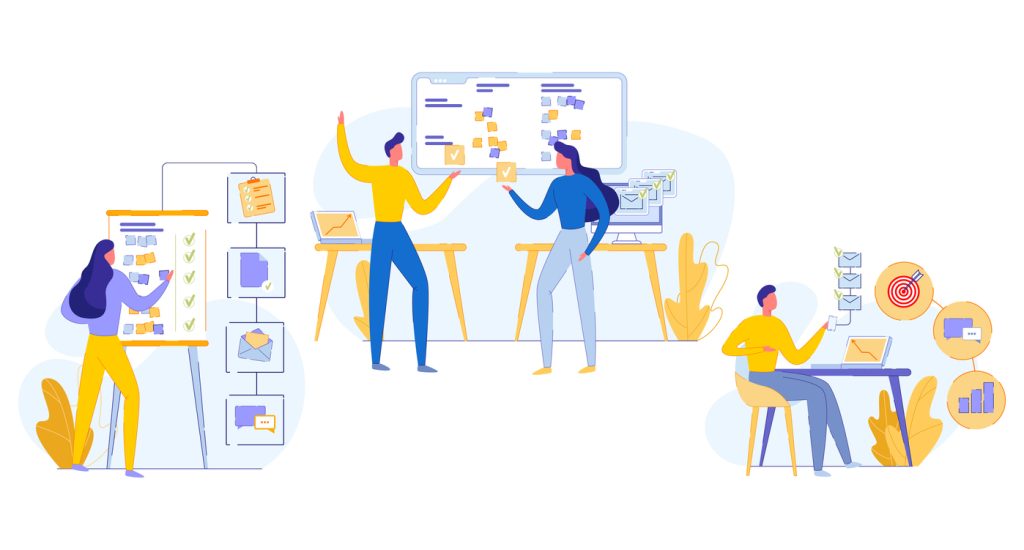
Innovation begins with ideas. Today, businesses cannot succeed by doing the same things they did yesterday. New markets, new customer needs, and new technologies mean companies must constantly invent new products, services, and ways of working. The spark for all of this starts with ideation — the process of generating fresh and useful ideas that can lead to real business value. A strong ideation framework helps teams break out of routine thinking and explore possibilities that would otherwise stay hidden. In business, this isn’t just creative play; it is a structured way to solve problems, generate competitive advantages, and build solutions that customers want.
Whether the goal is a new product launch, a strategy shift, or solving an urgent challenge, ideation techniques help teams think broadly and deeply before narrowing down the best solutions. With the right tools and environment, ideation becomes a core driver of sustainable growth and innovation.
What Is Ideation in Design Thinking?
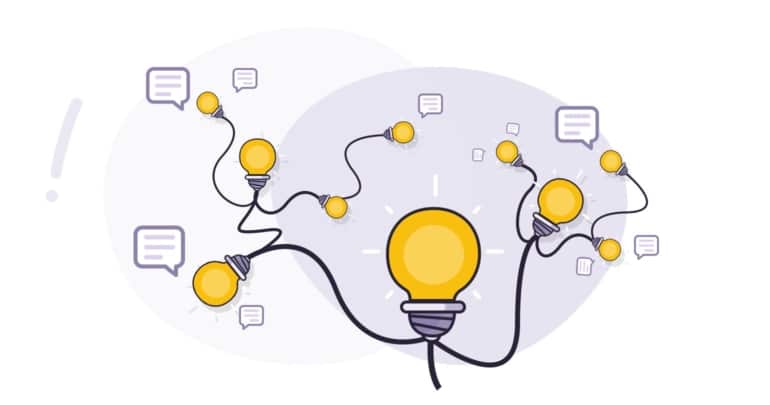
Ideation is a creative process of generating new and original ideas. It is a core part of design thinking — a method teams use to solve complex problems in a user-centered way. In design thinking, ideation comes after teams understand the user’s needs and define the problem clearly. This phase is all about opening up possibilities. Instead of judging solutions too early, teams explore many ideas to find novel ones that address the real challenge. A good ideation phase creates space for creative thinking and encourages varied perspectives to uncover ideas that might lead to breakthrough solutions. In business contexts, ideation is not only about quantity of ideas, but about diversity of thinking that can lead to effective and user-relevant results.
The core elements behind effective ideation
Divergent thinking – Generating many different ideas without filtering or judging them early.
Collaboration – Bringing together diverse people with different views to enrich the idea pool.
Open mindset – Creating a safe space where all ideas are encouraged, even unusual ones.
Clarity on problem – Making sure the team fully understands the challenge before ideating.
User focus – Keeping the end user in mind so that ideas lead to meaningful solutions.
These elements help teams go beyond incremental ideas and find concepts that have real impact.
When to Use Ideation Techniques

Ideation methods are versatile and can benefit many business activities. Use them when you need fresh ideas, better solutions, or new directions.
New product development:
When teams are planning new offerings, ideation helps create features, value propositions, and innovative product concepts before design and development begin.
Process improvement:
Even internal workflows can get stuck in routines. Ideation techniques uncover ways to improve efficiency, reduce costs, or remove bottlenecks.
Strategic planning:
For long-term goals and business direction, ideation stimulates creative thinking about market opportunities, competitive differentiation, and business model changes.
Crisis response:
When faced with a challenge like declining sales or sudden market shifts, ideation helps teams think beyond the obvious responses and discover novel approaches.
How to Run an Ideation Workshop

An ideation workshop is a structured session designed to generate many creative ideas with a team. It combines preparation, facilitation techniques, and tools to help participants think differently and collaboratively.
Here’s how to run one effectively:
Define the goal:
Start with a clear focus. What is the problem or opportunity? A clear goal sets the direction for all idea generation.Prepare participants:
Choose a diverse group. Include people with different skills, backgrounds, and experience so ideas come from multiple angles.Warm up the group:
Start with a short icebreaker to build trust and get participants comfortable sharing freely. Energized teams are more creative.Use ideation techniques:
Introduce methods like brainstorms, mind maps, or visual prompts. Rotate techniques to keep energy high and insights fresh.Capture every idea:
Record all suggestions without judgment. Use sticky notes, digital boards, or whiteboards so nothing gets lost.Cluster and prioritize:
After generating ideas, group similar ones and identify patterns. Then select the most promising based on criteria like impact and feasibility.Action planning:
Turn top ideas into concrete next steps. Assign owners, set timelines, and define what success looks like.Follow up:
Workshops do not end when the session ends. Keep momentum by reviewing ideas, testing prototypes, and refining concepts.
A well-run ideation workshop makes innovation feel possible and empowers teams to think beyond limits.
Proven Ideation Techniques

Generating powerful ideas isn’t random — the best innovation comes from structured creative techniques. Below, you’ll find 12 proven ideation methods used by teams in business, design, product development, and strategic planning. Each section explains what the method is, how it works, and why it’s valuable for driving innovation. These descriptions are based on widely recognized ideation practices and reflect up-to-date understanding of how teams unlock creative thinking.
Brainstorming for High-Volume Ideas
What it is:
Brainstorming is one of the oldest and most popular techniques for generating ideas quickly. The goal is to produce many ideas in a short time, without worrying about quality at first.
How it works:
In a structured session, a facilitator presents a question or challenge and asks participants to contribute ideas freely. The rules are simple:
Quantity over quality — the more ideas the better.
Defer judgment — no criticism or evaluation during ideation.
Build on others’ ideas — use one idea as a springboard for more.
Brainstorming can be done in person with sticky notes and whiteboards or remotely using shared digital boards. Time limits create urgency and keep energy high.
Why it matters:
This technique encourages bold thinking, breaks people out of routine thought patterns, and surfaces unexpected concepts. It’s especially useful when facing an open-ended problem with no obvious starting point.
Brainwriting for Equal Participation
What it is:
Brainwriting is a variation of brainstorming where participants write ideas first, then share them. This reduces dominance by outspoken individuals and gives quieter team members space to contribute without interruption.
How it works:
A common version is the 6-3-5 method: six people each write down three ideas in five minutes. They then pass their sheets to the next person to build on those ideas. After several rounds, the output can be extensive — up to 108 ideas in 30 minutes.
Why it matters:
Brainwriting creates a more inclusive ideation environment and encourages participants to refine ideas collaboratively and iteratively. It’s great for teams with diverse communication styles and when you want a large pool of ideas without early discussion slowing the pace.
Reverse Brainstorming for Finding Root Blockers
What it is:
Instead of asking “How do we solve this problem?” reverse brainstorming challenges teams to think about how to make the problem worse or generate obstacles.
How it works:
Define the problem.
Ask participants to list actions that would increase or exacerbate the issue.
Flip those negative ideas into solutions — turning barriers into opportunities.
Why it matters:
This method uncovers hidden assumptions and root causes that might be overlooked in standard brainstorming. By looking at the problem from a negative angle first, teams often find more robust and creative solutions.
SCAMPER for Systematic Variation
What it is:
SCAMPER is a structured checklist approach that encourages teams to systematically tweak or reframe an idea through seven creative lenses: Substitute, Combine, Adapt, Modify, Put to another use, Eliminate, and Reverse.
How it works:
When faced with a product, process, or concept, ask questions based on each SCAMPER prompt:
Substitute elements with alternatives.
Combine two features into something new.
Adapt ideas from other contexts.
Modify scale, speed, or look.
Put to another use for unexpected applications.
Eliminate unnecessary parts.
Reverse the order or approach.
Why it matters:
SCAMPER helps teams move beyond surface-level thinking and explore variations methodically. It reduces the chaos of open brainstorming by providing specific idea triggers that generate diverse and actionable options.
Mind Mapping for Visual Connections
What it is:
Mind mapping is a visual ideation technique that creates a diagram of ideas radiating from a central theme. This method helps teams explore complex problems by connecting concepts in a non-linear, visual way.
How it works:
Write a main idea or challenge in the center of a board or screen.
Draw branches for related ideas or subtopics.
Expand each branch with deeper connections and associations.
Why it matters:
Mind mapping transforms abstract thoughts into organized visual structures. By revealing relationships and patterns between ideas, it helps teams see angles they might miss in text-heavy discussions. It’s especially useful for problems with many interdependent parts.
Storyboarding for User Journeys
What it is:
Storyboarding takes ideas and turns them into a sequence of scenes that represent a user’s journey or experience. It’s rooted in narrative thinking and is often used in design and UX contexts.
How it works:
Define the scenario you want to explore.
Sketch key moments in sequence — from start to finish.
Add notes about user thoughts, emotions, and pain points for each frame.
Why it matters:
Storyboards make ideas tangible and relatable. By visualizing how real users might interact with a product or service over time, teams uncover hidden friction points and opportunities that purely conceptual thinking could miss.
Bodystorming for Empathy in Motion
What it is:
Bodystorming is an experiential ideation technique where teams act out scenarios physically to explore a problem or user experience.
How it works:
Participants simulate environments, roles, and interactions that users might face. This can involve simple props, role assignments, or full walk-throughs of a process or service.
Why it matters:
Bodystorming pushes teams out of abstract thought and into realistic, embodied exploration. Moving through a scenario reveals emotional and physical touchpoints that might never surface in a typical discussion. It’s especially powerful for services, physical products, and customer-facing experiences.
Worst Possible Idea for Lowering Pressure
What it is:
This playful method asks participants to generate the worst, most absurd ideas possible. The twist is that these “bad” ideas often expose hidden insights when you analyze them and flip them into real solutions.
How it works:
Set the challenge.
Invite participants to create intentionally terrible ideas — no limits.
Review the list and look for patterns or possibilities by reversing the logic.
Why it matters:
By removing fear of judgment, this technique frees people to think without constraints. It also helps teams break mental blocks and find creative solutions that emerge when they analyze why a “bad” idea fails.
Challenging Assumptions for Fresh Angles
What it is:
Every team operates with assumptions — some obvious, others invisible. This technique deliberately surfaces and questions those assumptions to guide new thinking.
How it works:
List current assumptions about the problem or solution space.
Challenge each assumption by asking questions like:
What if this wasn’t true?
What if the opposite were true?
Generate ideas based on these alternative beliefs.
Why it matters:
Assumptions steer thinking toward familiar territory. By questioning them, teams open up fresh perspectives, uncover hidden opportunities, and avoid repeating the same patterns that limit innovation.
Gamestorming for Playful Creativity
What it is:
Gamestorming refers to a collection of game-like, structured activities designed to stimulate creative thinking. These exercises inject fun and play into ideation to help teams loosen up and think broadly.
How it works:
There’s no single format — gamestorming includes many playful methods like role-play, structured competitive prompts, and imaginative scenarios that make ideation interactive and engaging.
Why it matters:
Play reduces stress and shifts the focus away from judgment. Encouraging teams to think like they are playing a game fosters collaboration, risk-taking, and fresh perspectives that traditional exercises often miss.
Crowdsourcing for Outside-In Ideas
What it is:
Crowdsourcing brings in ideas from outside your core team — from customers, partners, or the broader community. It taps into diverse perspectives that internal teams might overlook.
How it works:
Organizations can gather ideas through online portals, public challenges, innovation contests, feedback forms, or social media campaigns. Each input becomes a potential source of inspiration or solution.
Why it matters:
External voices often spot opportunities that insiders miss. By inviting broader participation, teams gain fresh, market-relevant insights that improve idea quality and relevance.
Prototyping for Thinking With Your Hands
What it is:
Prototyping takes ideas and turns them into tangible forms, from simple paper models to functional mock-ups. It’s a core practice in design thinking that moves ideas out of discussion and into reality.
How it works:
Build a low-fidelity or high-fidelity version of your idea. Then test it with real users or internal stakeholders to gather feedback and refine the concept. Prototyping can be physical, digital, or even role-played.
Why it matters:
Tangible prototypes make abstract ideas concrete. They support early testing, reveal unseen flaws, and guide improvements before large investments are made. This fail-fast, learn-fast approach accelerates innovation with real user insights.
Move Ideas to Action with Corexta
Turning great ideas into real business results requires structure, clarity, and tools that help teams stay organized, focused, and aligned. Corexta is a comprehensive business management platform built to help teams bring ideas into action — from planning and task execution to team collaboration and performance tracking. Whether you’re managing a creative innovation process, launching a new product, or coordinating complex projects, Corexta gives you the tools to execute with confidence.
Centralize Work and Ideas in One Place
Innovation often stalls when ideas and tasks are scattered across multiple tools. Corexta eliminates that fragmentation. It combines project planning, task tracking, client management, finance, HR, and communication tools in a single dashboard so teams can see everything that matters in one place. This centralized view keeps everyone aligned on goals, deadlines, and responsibilities — exactly what you need to move ideation outputs into real execution.
Plan, Track, and Execute with Precision
Corexta’s project and task management tools are designed to turn abstract ideas into clear action steps:
Use Kanban boards and Gantt charts to visually plan workflows and project timelines.
Assign tasks, set deadlines, and link them directly to larger innovation goals.
Track progress, monitor expenses, and analyze results in real time.
These features help teams stay organized and accountable throughout the implementation process.
Enhance Collaboration Across Teams
Great ideas often require input from multiple departments. Corexta’s built-in communication and collaboration tools ensure your team stays connected:
Internal chat and messaging make it easy to discuss ideas and their execution.
Real-time notifications keep everyone updated on changes and progress.
Integrations with tools like Slack help streamline teamwork further.
This ensures cross-functional collaboration doesn’t slow down execution.
Streamline Supporting Business Operations
Innovation doesn’t happen in isolation — it impacts finances, HR, client relationships, and more. Corexta integrates all these functions so you can:
Manage budgets, invoices, and payments linked to projects.
Track time, attendance, and workforce productivity.
Maintain customer relationships and follow up with insights tied to project outcomes.
By aligning operational workflows with your ideation strategy, Corexta helps ensure that ideas don’t just stay on paper but lead to measurable business outcomes.
Scalable Tools for Growing Teams
Corexta is built to grow with your team. From small startups to expanding agencies, it offers flexible plans, configurable workflows, and customizable access controls so your business can refine its innovation process without outgrowing the platform.
Ready to turn your ideas into action? Start your free trial with Corexta today and streamline the way your team plans, executes, and delivers innovation that drives real results. Sign up now to experience a smarter, more efficient workflow that turns creativity into business success! 🚀
Final Thoughts
Strong ideas do not appear by chance. They come from clear thinking, open collaboration, and the right techniques. Ideation gives teams a structured way to explore possibilities before jumping into execution. When businesses take time to generate, test, and refine ideas, they reduce risk and increase their chances of meaningful innovation.
The techniques covered in this guide show that creativity is not limited to artistic work. It plays a critical role in product development, operational improvement, strategic growth, and even crisis management. Methods like brainstorming and brainwriting help generate volume. Tools like SCAMPER and mind mapping bring structure. Techniques such as prototyping and storyboarding help teams test ideas in practical ways. Each method serves a different purpose, but together they create a powerful innovation toolkit.
The key is not to rely on only one approach. High-performing teams experiment with different techniques depending on the challenge. They create safe spaces for open thinking. They encourage diverse perspectives. Most importantly, they move promising ideas forward instead of letting them fade after a workshop ends.
Innovation is a continuous process, not a one-time event. With the right ideation practices and a clear path to execution, businesses can build solutions that are creative, practical, and competitive in a fast-changing market.
Read more: How Agencies Can Integrate Project Management and Creative Tools