In today’s crowded SaaS landscape, features are copied rapidly, pricing advantages disappear, and marketing channels become saturated. What separates category leaders from the rest is not just better code or smart go-to-market execution, but how effectively they use AI data.
B2B SaaS companies that treat data as a strategic asset rather than a byproduct of usage are building smarter products, moving faster than competitors, and creating defensive moats that are difficult to replicate. AI data is no longer optional; It is becoming the engine behind product differentiation, customer retention and long-term growth.
AI Data: The New Competitive Battlefield in SaaS
Traditional SaaS competition focuses on features, integrations, and user experience. Today, AI-powered capabilities, recommendations, predictions, automation, personalization are redefining customers’ expectations from software.
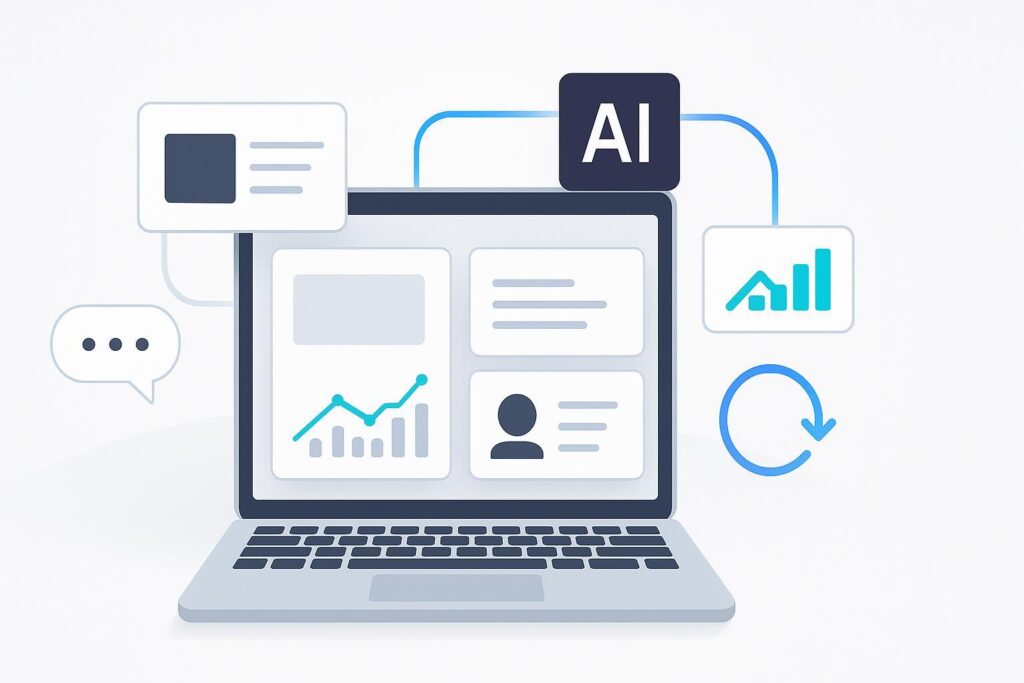
At the heart of these capabilities is AI data: product usage data, behavioral signals, customer interactions, external datasets and contextual information that fuel machine learning models. The companies that win are those that collect the right data, structure it intelligently, and continuously feed it back into their products.
In contrast, SaaS companies that neglect data quality or treat AI as a bolt-on feature often struggle to see meaningful ROI from their AI investments.
Turning Product Usage Data into Intelligence
Every B2B SaaS platform generates massive amounts of usage data: clicks, workflows, feature adoption, session duration, errors, and outcomes. High-performing SaaS companies don’t just store this data they turn it into intelligence.
By analyzing usage patterns with AI, leading teams can:
1.Identify which features promote retention and expansion
2.Find friction points before customers churn
3.Predict which accounts are ready for upsell or at risk
4.Automatically optimize onboarding flows
For example, AI models can flag accounts with declining engagement weeks before a human comes to their attention, enabling proactive customer success interventions. This predictive ability gives SaaS companies a significant edge over competitors who still rely on reactive metrics.
Building Smarter, More Adaptive Products
AI data allows SaaS products to evolve dynamically rather than following a static roadmap. Instead of relying solely on customer surveys or quarterly reviews, AI-powered platforms continuously learn from real-world behavior.
It enables:
1.Personalized dashboard and recommendations per user or account
2.Automated workflows that adapt to customer behavior
3.Context-aware features that improve with use over time
As customers experience software that seems to suit their needs, switching costs increase. Competitors can copy the interface, but they cannot easily replicate years of accumulated data and trained models.
Faster Decision-Making Across the Organization
Top performing B2B SaaS companies use AI data not only in their products, but internally as well. AI-powered analytics helps leadership teams make faster, more confident decisions across product, marketing, sales, and operations.
Common use cases include:
1.Forecasting Revenue and Pipeline Health
2.Optimizing Pricing and Packaging Strategies
3.Identifying high performing acquisition channels
4.Prioritizing Roadmap Investments Based on Estimated Impact
Instead of debating opinions, teams align around data-driven insights. This speed and clarity compounds over time, allowing AI-native SaaS companies to overtake slower competitors.
Creating a Data Moat That’s Hard to Copy
The most powerful advantage of AI data is its defensibility. While features can be replicated, data become stronger at larger scales and over time.
Model accuracy improves with each new customer contact. Each workflow executed adds context. Every decision is fed back into the system. This creates a virtuous cycle where:
1.Better data leads to better AI
2.Better AI attracts more customers
3.More customers generate more data
Competitors entering the market later face an uphill battle, even if their technology is comparable. Without access to the same quantity and quality of data, their AI features seem generic or less accurate.
Enabling Product-Led Growth with AI
AI data is becoming increasingly central in product-led growth (PLG) strategies. Instead of relying solely on sales and marketing, AI-powered products guide users to value faster and more intuitively.
Examples include:
1.Intelligent onboarding that adapts to user behavior
2.In-app recommendations that highlight relevant features
3.Automated insights that display value without manual setup
These experiences reduce time-to-value and increase activation rates, allowing SaaS companies to scale efficiently while maintaining strong unit economics.
Supporting Enterprise Sales and Trust
For B2B SaaS companies targeting mid-market and enterprise customers, AI also plays an important role in data trust and reliability. Buyers are increasingly asking:
1.How is AI trained?
2.How is customer data handled?
3.How is prejudice reduced?
4.How are models monitored over time?
Leading SaaS platforms invest in AI data governance, transparency, and compliance. They build explainable models, maintain clean datasets, and align with regulations like GDPR and SOC2. This not only reduces risk but becomes a sales advantage when competing for enterprise deals.
From Data Exhaust to Revenue Opportunities
Beyond internal optimization, AI data opens the door to new revenue streams. Innovative SaaS companies are monetizing insights gained from aggregated and anonymized data, such as:
1.Benchmarking report
2.Industry Trends and Forecasts
3.Predictive Analytics Add-on
4.AI-powered advisor features
What was once a “data drain” has become a premium offering that competitors cannot match without a strong data foundation.
The Companies That Win Treat AI Data as a Core Asset
The most successful B2B SaaS companies don’t ask, “How can we add AI to our product?” They ask, “How can we build a data foundation that makes AI inevitable?”
They invest early in:
1.Clean, structured and scalable data pipelines
2.Continuous Data Collection and Feedback Loop
3.Cross-functional data literacy
4.Responsible and Compliant AI Practices
As a result, AI becomes embedded in the DNA of the product and business.
Conclusion: AI Data Is the New SaaS Advantage
In an era where software uniformity is the norm, AI data is the real differentiator. B2B SaaS companies that use data effectively aren’t just adding features, they’re building better products, stronger customer relationships, and lasting competitive advantage.
Those who fail to do so risk being overtaken by competitors whose products learn faster, adapt better, and provide more value with each interaction. In the next phase of SaaS evolution, it won’t be the loudest or cheapest platform that will win, it will be driven by the best AI data.