A product may have dozens of features, multiple user types, and a range of goals users want to achieve. For a product manager, the job is not just to build features but to understand why users love a product, how they discover value, and where they get stuck. In this context, an “aha moment” is the instant when a user realizes the product’s true worth. It is the point at which the product stops being just another tool and becomes something the user feels they cannot live without.
In the past, uncovering these moments was slow and manual. Product managers had to stitch together analytics dashboards, user interviews, support logs, and team reports. Gathering this data was time consuming, and making sense of it was even harder. As products grow and user bases expand, the amount of data becomes overwhelming. Modern teams quickly find themselves buried in hundreds of thousands of events, support tickets, and behavioral logs. Mining that volume of information to find meaningful insight by hand can take weeks or months.
Artificial intelligence has changed the way product teams think about insight discovery. With AI tools, product managers can now compress massive data sets into patterns, highlight trends across user behavior, and surface insights that would take humans far longer to find manually. Rather than guessing at why users behave a certain way, AI helps teams base decisions on emerging evidence. This shift gives product leaders a powerful advantage: faster discovery of key user behaviors, simpler interpretation of qualitative signals, and earlier detection of issues that would otherwise hide in plain sight.
In this guide, we will explore what an “aha moment” means in product management, how product teams discover and optimize those moments, and why AI is reshaping how insights are found and acted upon.
What Are Aha Moments in Product Management?

In product management, an aha moment is the specific point in the user journey when a user clearly realizes the value of a product. This moment marks a shift from uncertainty, curiosity, or confusion to confidence and understanding. It is where users say to themselves, “Now I get it,” or “This is useful.” It is often tied to a specific action or experience rather than a general feeling. That action shows the product’s value in a way that users remember.
Aha moments can look different across products. In some cases, it’s when a new user completes a key setup step. In others, it’s the first time a user shares content or completes a task that solves a real need. What matters most is that this moment shows core value — the thing that gets users to stay, return, and become advocates.
For product teams, these moments have two big benefits:
They are indicators of product value, showing what drives engagement and retention.
They offer milestones to measure against, helping teams understand which experiences lead to success and which do not.
Some common examples of aha moments include:
A user completes onboarding and feels comfortable using the interface.
A customer performs a meaningful action (like creating a workflow or sharing content).
A user sends their first message or collaboration item and sees a benefit immediately.
A new user reaches a key metric that correlates with long-term engagement.
These experiences become valuable when they can be observed consistently and tied to measurable outcomes like retention, adoption rate, conversion, or revenue growth.
How Product Managers Discover and Optimize Aha Moments
Product managers use a combination of data analysis, research, and experimentation to find and improve aha moments.
Here are some common methods:
1. Retention Cohort Analysis
This analysis helps teams see which behaviors separate users who stay from those who churn. By comparing cohorts — groups of users who started using the product at the same time — teams can identify the actions that lead to longer retention.
2. User Interviews and Session Recordings
Watching users interact with a product in real time reveals where they get stuck and where they shine. These sessions can show emotional reactions, moments of delight, or points of confusion.
3. Surveys
Asking users directly about their experience — specifically what made them realize the product’s value — helps tie qualitative feedback to product usage.
4. A/B Testing Onboarding Flows
Experimentation helps teams see which onboarding flows lead more users to reach the suspected aha moment. By testing variations, product managers can optimize for higher activation and smoother experiences.
5. Redesigning Onboarding
Once teams know what actions correlate with success, they can redesign the onboarding experience to guide users toward those key behaviors more reliably.
Finding aha moments is not accidental. It requires a systematic approach to compare successful and unsuccessful user experiences, identify meaningful patterns, and measure progress. The real art is turning discovery into a repeatable, measurable set of actions that improve the product’s overall engagement and value.
Why AI Is a Game-Changer for Product Insight Discovery

The volume of user data in today’s digital world has exploded. Users generate massive quantities of behavioral logs, support tickets, interview transcripts, customer feedback, and analytics events. For product managers, this means more sources of insight but also more noise to sift through. Manually piecing together signals from scattered data has become slower and less reliable. Artificial intelligence changes all of this.
AI brings several major improvements to the way product teams discover insight and understand user behavior:
Surfaces Behavioral Patterns
AI excels at identifying micro-patterns across very large data sets. Instead of manually scanning dashboards and reports, AI can automatically correlate signals from user actions, session events, and cohort paths in seconds. It can highlight where users drop off, where they accelerate through flows, and what paths are most likely to lead to success or failure. This capability helps teams understand common user behaviors and identify potential aha moments faster than manual analysis ever could.
For example, AI can reveal friction points that appear only after thousands of interactions, such as:
Repeated drop-offs at a specific step in onboarding.
Actions that consistently lead to long-term retention.
Sequences that show where users hesitate or disengage.
By surfacing these patterns automatically, AI gives product managers a clearer picture of what drives user behavior, even when the signals are subtle or complex.
Supports Decisions with Predictive Signals
Traditional analytics often tell teams what has already happened. AI goes a step further by offering predictive signals — estimates of what is likely to happen next. This includes predictions about churn risk, feature adoption likelihood, or the impact of a roadmap decision. By analyzing historical trends and current user behavior, AI can estimate probabilities for future outcomes.
These predictive signals allow product teams to:
Anticipate user behavior instead of reacting to it.
Test decisions before committing significant resources.
Prioritize features based on potential impact rather than intuition.
This forward visibility gives teams time to act early, reduce risk, and make more informed roadmap decisions.
Turns Qualitative Data into Intelligence
User insights are not only quantitative. Support tickets, open-ended survey responses, social comments, and interview transcripts are rich sources of insight — but they are unstructured and messy. Reading thousands of comments manually to find patterns is slow and subjective.
AI changes this by automatically organizing qualitative data into:
Themes and topics based on what users discuss most.
Sentiment trends showing how users feel about specific features or experiences.
Emerging opportunities highlighted by frequency or intensity of certain phrases.
This transforms qualitative inputs into digestible intelligence that product teams can act on without endless manual sorting.
Unifies Disconnected Data Sources
Most organizations use multiple tools for analytics, feedback, support, and user research. These tools often live in silos, making it hard to connect signals across systems. AI bridges this gap by bringing all data streams into a single insight layer. Instead of switching between dashboards and spreadsheets, product managers can see unified signals that combine behavioral data, qualitative feedback, and experiment results.
This unified view helps teams validate assumptions earlier, connect dots faster, and generate more reliable aha insights. It also reduces the time wasted toggling between apps or manually merging data sets.
5 Ways AI Uncovers Hidden Product Insights
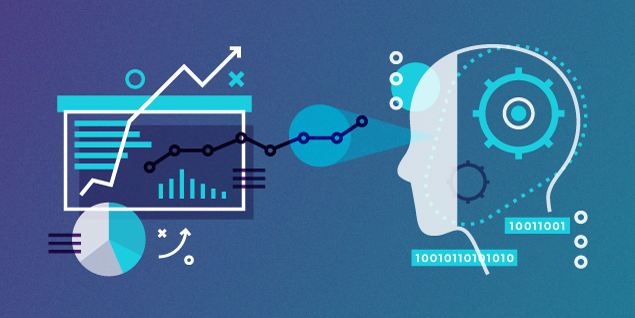
Artificial intelligence does more than speed up analysis. It changes what product managers are able to see. Many insights stay hidden because they sit deep inside large data sets or spread across different tools. AI brings those insights to the surface by analyzing behavior, predicting outcomes, and connecting signals that humans often overlook. Below are five powerful ways AI helps product managers uncover insights that lead directly to meaningful “aha” moments.
1. Spotting Patterns That Humans Usually Miss
Modern products generate massive amounts of data every day. Every click, scroll, task completion, delay, or drop-off adds another data point. While dashboards and reports can show high-level trends, they often fail to reveal complex behavior patterns. Humans tend to look for obvious signals, but many valuable insights live in subtle combinations of actions.
AI is especially strong at detecting patterns across thousands or millions of events. It can analyze long user journeys and identify sequences of actions that consistently lead to success or failure. These sequences are often too complex for manual review. For example, AI may discover that users who complete three specific actions within their first week are far more likely to stay long term, even if those actions seem unrelated at first glance.
AI also excels at comparing user paths. It can automatically group users by behavior instead of by surface-level traits like location or plan type. This helps product managers see how different groups interact with the product in real situations, not just how they are labeled in the system. Over time, these insights help teams identify friction points, smooth onboarding flows, and double down on features that quietly drive value.
Most importantly, AI does not get tired or biased. It analyzes every signal with the same attention, making it easier to uncover patterns that humans might skip, underestimate, or dismiss.
2. Predicting What Users Might Do Next
Traditional analytics focus on the past. They show what users already did. AI adds a new layer by helping teams understand what users are likely to do next. This predictive ability is a major shift for product management.
By learning from historical data, AI can estimate the probability of future outcomes. It can flag users who are at risk of churning, predict which features new users are most likely to adopt, or highlight behaviors that often lead to upgrades. These predictions allow product managers to move from reactive decisions to proactive strategies.
For example, instead of waiting for users to drop off, AI can signal early warning signs. A product team may learn that users who skip a certain setup step are more likely to disengage within two weeks. With that insight, the team can adjust onboarding, add guidance, or trigger helpful nudges at the right time.
Predictive insights also support smarter prioritization. Rather than guessing which roadmap items will have the biggest impact, teams can use AI signals to estimate outcomes before shipping changes. This reduces risk and helps align decisions with user needs and business goals.
AI turns uncertainty into informed direction. It helps product managers act earlier, with greater confidence, and with clearer expectations.
3. Understanding User Sentiment Across Huge Volumes of Feedback
User feedback is one of the richest sources of insight, but it is also one of the hardest to manage. Support tickets, surveys, reviews, chat logs, and interview notes quickly pile up. Reading every message manually is not realistic for most teams, especially as products scale.
AI helps by transforming unstructured feedback into organized insight. Using language analysis, AI can scan thousands of comments and group them by topic, emotion, or intent. It can detect patterns in how users talk about features, workflows, or problems. This makes it easier to see what users truly care about.
Sentiment analysis is a key part of this process. AI can identify whether feedback is positive, negative, or neutral, and track how sentiment changes over time. Product managers can quickly see which releases improved user satisfaction and which caused frustration. They can also spot recurring pain points that might not show up clearly in usage data alone.
Another benefit is speed. Instead of waiting weeks to summarize feedback manually, AI can surface insights almost instantly. This allows teams to respond faster to issues, validate assumptions sooner, and make improvements while user sentiment is still fresh.
By turning raw feedback into structured intelligence, AI ensures that the user’s voice remains central to product decisions, even at scale.
4. Finding Small but Important User Segments
Not all users behave the same way. Some of the most valuable insights come from small user segments that do not stand out in overall metrics. These segments might represent power users, early adopters, or users with unique needs. Without AI, these groups are often overlooked because they are buried within larger averages.
AI makes it easier to discover and analyze these niche segments. Instead of relying only on predefined categories, AI can automatically cluster users based on real behavior patterns. It can reveal groups that share similar paths, preferences, or outcomes, even if they look different on the surface.
For example, AI might identify a small group of users who use a feature in an unexpected way and gain high value from it. That insight could inspire new feature development, better documentation, or targeted onboarding. In other cases, AI may uncover a segment that struggles silently, helping teams address issues before they become widespread.
These insights help product managers design more inclusive experiences. Rather than optimizing only for the “average” user, teams can tailor experiences for different needs and unlock value across the entire user base.
5. Catching Unusual Trends Before They Become Problems
Some of the most damaging product issues start small. A slight drop in engagement, a subtle increase in support requests, or a gradual change in user behavior can go unnoticed until it becomes a major problem. AI helps product teams catch these early signals before they escalate.
By continuously monitoring data streams, AI can detect anomalies and deviations from normal patterns. It can alert teams when something unusual starts to happen, even if the change is small. This might include unexpected behavior after a release, a sudden shift in how users navigate the product, or a quiet rise in negative sentiment.
Early detection gives teams time to investigate and respond. Instead of reacting to a full-blown crisis, product managers can make small adjustments, run targeted experiments, or communicate proactively with users. This reduces risk and protects user trust.
AI does not just highlight problems. It can also spot emerging opportunities. Unusual spikes in feature usage or new behavior patterns may signal unmet needs or new use cases worth exploring.
In both cases, AI acts as an early warning system, helping product teams stay ahead instead of playing catch-up.
Turning Insights Into Action: AI + Product Workflow Integration
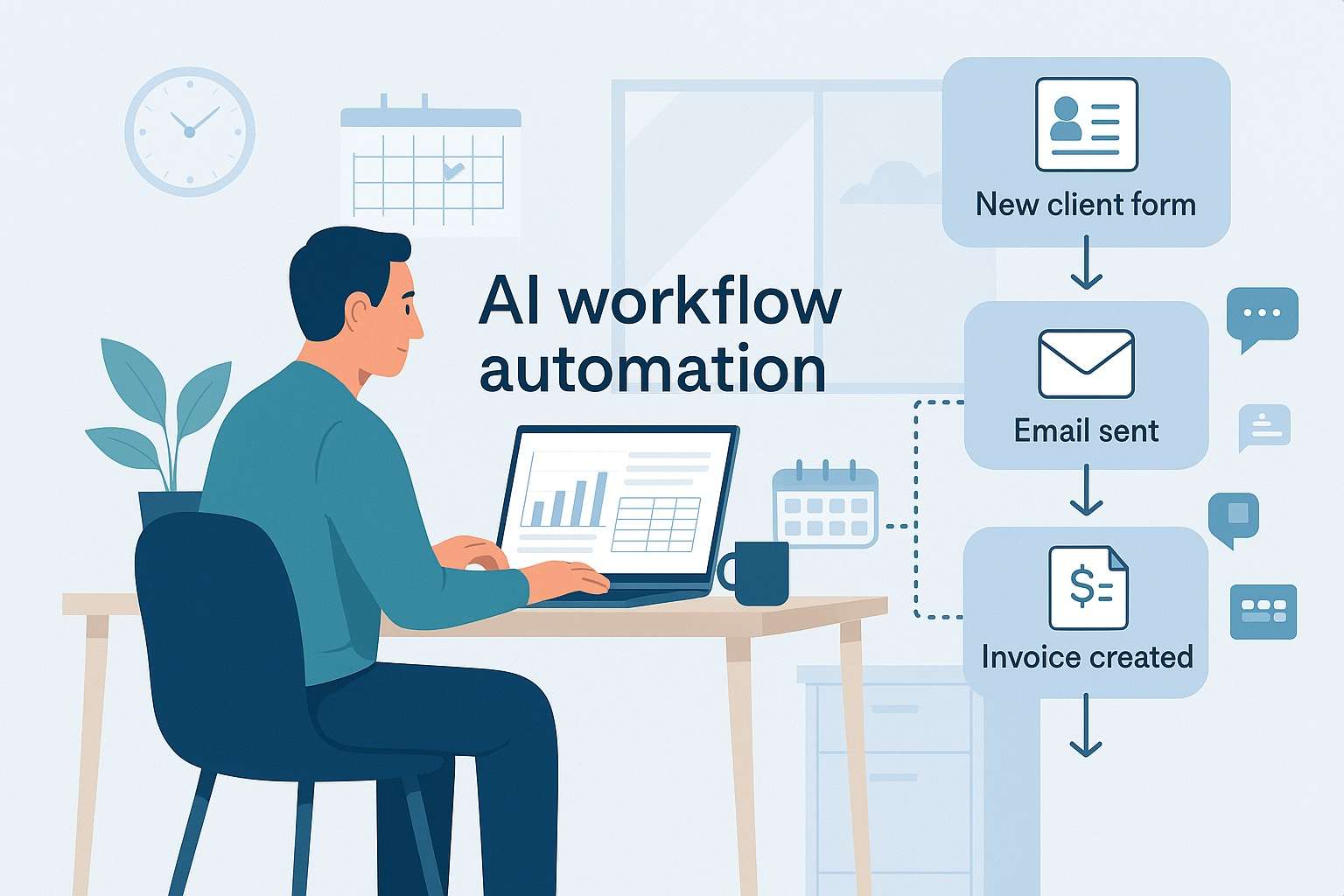
Discovering insights is only half the job. Real value comes when insights lead to clear action. One of the biggest challenges for product managers is turning analysis into decisions that improve the product. AI becomes far more powerful when it is deeply integrated into everyday product workflows.
When AI insights live inside planning, execution, and collaboration tools, teams can act faster and with more clarity. Instead of exporting reports or switching between platforms, product managers can see insights where work already happens. This tight integration shortens the gap between learning and doing.
AI-driven insights can directly inform:
Roadmap prioritization
Feature design decisions
Experiment planning
Sprint goals and success metrics
For example, predictive signals can help teams decide which features to build next based on expected impact. Behavioral insights can guide design discussions by showing how users actually interact with the product. Sentiment analysis can influence release timing or messaging by revealing how users feel about recent changes.
AI also supports better collaboration. When insights are shared across teams in a clear, accessible way, everyone aligns around the same understanding of user needs. Designers, engineers, marketers, and support teams can all work from a shared source of truth instead of relying on assumptions.
Another key benefit is continuous learning. AI systems improve over time as they process more data. This means product insights become more accurate and more relevant with continued use. Teams can iterate faster, validate ideas sooner, and adapt to change with confidence.
By embedding AI into product workflows, product managers move beyond static analysis. They create a living feedback loop where insight, action, and learning reinforce each other. This is where AI truly enables aha moments—not just for users, but for the teams building the product.
How Corexta Helps Product Managers Find ‘Aha’ Moments

Modern product teams need tools that do more than just store data or create tasks. They need systems that bring insights, simplify decision making, and help teams work better together. While many platforms focus only on project planning or communication, Corexta is designed to serve as a central hub for managing work, collaboration, and strategic insight across all parts of an organization. At its core, Corexta unifies key operational functions so product managers can focus less on managing chaos and more on discovering value-driving user insights.
Corexta combines project management, client relations, team collaboration, finance, HR, and more into one workspace. This allows product teams to keep user insights, feature plans, sprint tasks, and team communication all in one place, which is essential when trying to uncover meaningful patterns in user behavior and optimize product experiences. With real-time updates and integrated tools, Corexta helps teams maintain alignment and act quickly on emerging signals that lead to aha moments.
A few ways Corexta supports product insight discovery include:
Centralized Project and Task Tracking:
A product manager can visualize plans, dependencies, and progress using Kanban boards, Gantt charts, and real-time tracking. This consolidated view helps teams spot where users may get stuck, what features are driving engagement, and which tasks are blocking value delivery.
Seamless Collaboration and Communication:
Corexta’s internal chat, notifications, and integrations with tools like Slack keep product teams connected. When insights about user behavior arise — whether from customer feedback, beta testing, or analytics — teams can immediately discuss and act on them without losing context.
Built-In CRM and Client Feedback Management:
Understanding how users feel about product updates is essential for uncovering aha moments. Corexta’s CRM tools allow product managers to track client interactions, prioritize feedback, and link user sentiments back to roadmap decisions.
Real-Time Insight Through Reporting:
With customizable reporting and finance dashboards, Corexta helps teams measure key signals like feature utilization, release impact, and overall product health. These insights ensure that product decisions are data driven, timely, and connected to user outcomes.
Flexible Workflow and Automation:
By reducing manual steps in planning, task creation, and reporting, Corexta frees up product managers to spend more time on analysis and interpretation — the very work that leads to meaningful aha moments.
Corexta brings clarity and cohesion to complex product workflows. Its all-in-one platform helps teams eliminate data silos, spot trends sooner, connect qualitative and quantitative signals, and act on insights without switching tools.
👉 Start a free trial today and see how Corexta can streamline your product insights and help you uncover more aha moments in your product journey.
Real-World Examples: AI in Product
Artificial intelligence isn’t just a buzzword — it is actively shaping product innovation and user experiences in real organizations. Across industries, AI-powered systems help teams move faster, make smarter decisions, and uncover insights that fuel product growth.
1. AI Enhances Product Development and Innovation
Large companies are using AI to accelerate product design and innovation. For example, manufacturers in sectors such as automotive coatings and consumer goods now use AI to analyze vast datasets of material properties and chemical interactions. These systems propose new combinations that engineers had not considered, leading to products like faster-drying paint and optimized formulas — breakthroughs that would take far longer through traditional experimentation.
This pattern shows how AI can become a creative partner in product development. It reveals opportunities that humans might overlook and helps teams rapidly test new concepts, shortening the path from idea to product.
2. AI Improves Personalization and Engagement
Streaming platforms have long used AI to tailor user experiences. By analyzing listening behavior, preferences, and interaction patterns, these products generate personalized recommendations that feel intuitively right for each user. These AI-driven experiences often become deep moments of value recognition — where users feel an emotional connection with the product because it feels uniquely tuned to them.
This kind of personalization not only boosts satisfaction but also drives retention and long-term engagement, demonstrating how AI can create product “aha moments” for millions of users simultaneously.
3. AI Predicts Trends and User Behavior
Organizations are using AI beyond current state analysis toward predictive modeling. Rather than just reporting what has happened, AI analyzes historical data and predicts future behavior — such as potential churn, feature adoption rates, or user needs. This allows product teams to act proactively, adjust roadmaps before problems escalate, and deliver features that align with emerging user needs.
In effect, AI turns noisy, fragmented data into a forward-looking signal, helping teams anticipate trends and deliver solutions that feel timely and relevant to users.
4. AI Streamlines Product Workflows
AI is also embedded into tools that support everyday product work. By automating routine tasks — like summarizing meeting notes, organizing feedback, or tracking progress across multiple teams — AI frees product managers to focus on strategy and insight. These efficiencies reduce cognitive load and help teams discover meaningful patterns faster.
Rather than treating AI as an “extra tool,” effective teams embed AI into workflows that already exist. This integrated approach supports continuous insight discovery without needing separate analytics sessions.
5. AI Bridges Product and User Feedback
One of the biggest challenges product teams face is making sense of qualitative feedback — survey responses, support conversations, open-ended user comments. AI helps by automatically categorizing text, extracting core themes, and tracking sentiment trends over time. This transforms messy feedback into structured intelligence product teams can act on.
Combining structured analytics with AI-driven qualitative analysis helps teams understand not just what users do, but why they do it — and that understanding is often where meaningful aha moments originate.
Real-world adoption of AI in product development and management shows a clear shift toward data-driven decision making, deeper personalization, faster innovation, and smarter workflows. By combining human judgment with machine intelligence, product teams unlock insights that lead to not just better features but richer user experiences and stronger products overall.
Read More: How to Create Effective Instructions for Use