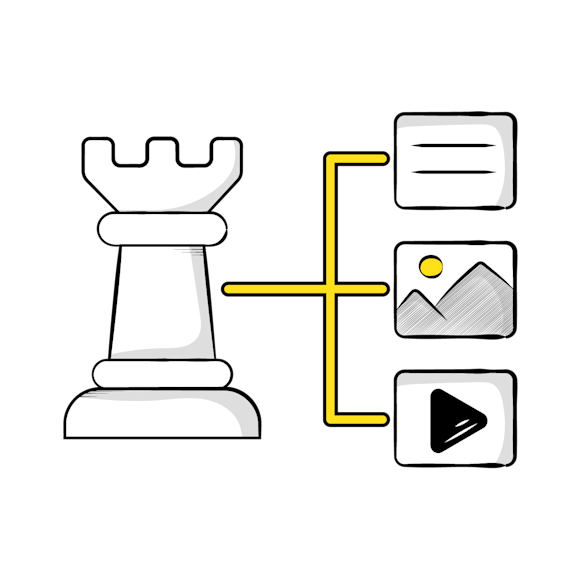
Social media today is more crowded, faster, and more competitive than ever. Brands are no longer just competing for attention—they’re competing for relevance, consistency, and trust. Posting randomly or chasing trends without a clear direction often leads to scattered messaging, low engagement, and wasted effort.
This is where content pillars come in.
Instead of guessing what to post every day, content pillars give your strategy structure. They act as a framework that guides what you create, why you create it, and how it connects to your audience and business goals. With defined pillars, every piece of content has a purpose—whether it’s to educate, inspire, entertain, or convert.
Modern social media strategies rely heavily on this structured approach because:
- Audiences expect consistent value and messaging
- Algorithms reward clarity and niche relevance
- Brands need scalable systems to produce content efficiently
When you build your content around clearly defined pillars, you eliminate guesswork and create a system that’s both repeatable and adaptable across platforms. This allows you to stay consistent while still being flexible enough to experiment with formats, trends, and campaigns.
What Are Social Media Content Pillars?
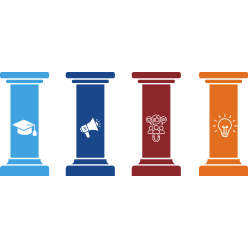
Social media content pillars are the core themes or topics that your brand consistently creates and shares content around. They serve as the foundation of your entire content strategy, guiding everything you post across platforms.
Think of them as content “buckets” or categories. Every post you publish should fit into one of these pillars, ensuring your content stays focused, relevant, and aligned with your brand identity.
A Simple Way to Understand Content Pillars
Imagine your social media strategy as a structure. Content pillars are the supporting columns that hold everything up. Without them, your content becomes inconsistent and disconnected.
With them:
- Your messaging becomes clear
- Your audience knows what to expect
- Your brand becomes easier to recognize
Key Characteristics of Content Pillars
1. They are consistent themes
Content pillars are not one-off ideas. They are topics you repeatedly create content about over time to build familiarity and authority.
2. They align with your goals and audience
Each pillar serves a purpose—whether it’s educating your audience, showcasing your product, or building community engagement.
3. They guide content creation across platforms
While the format may change (Reels, posts, videos, threads), the core theme remains the same. For example, a single pillar can be adapted differently for Instagram, TikTok, or LinkedIn.
4. They keep your strategy focused
Most brands typically use 3 to 5 content pillars to avoid dilution and maintain clarity.
Example of Content Pillars in Action
If you run a fitness brand, your content pillars might look like:
- Workout tips
- Nutrition advice
- Client success stories
- Behind-the-scenes content
- Product promotions
Every post you create fits into one of these categories, making your content more structured and intentional.
Why Content Pillars Are Foundational
Without content pillars, social media becomes reactive—you post based on trends, ideas, or guesswork. With pillars, your strategy becomes proactive and goal-driven.
They help you:
- Stay consistent in what you talk about
- Build authority in specific topics
- Create content faster with less friction
- Maintain a clear and recognizable brand voice
Ultimately, content pillars ensure that your social media presence isn’t just active—but strategically aligned and scalable.
Why Content Pillars Matter for Your Social Media Strategy
A fragmented social media strategy doesn’t fail overnight—it slowly loses effectiveness through inconsistency, inefficiency, and lack of direction. Many brands struggle not because they lack ideas, but because they lack structure. Content pillars solve this problem by creating a unified framework that connects your content, team, and performance into one cohesive system.
Instead of treating each post as a standalone effort, content pillars allow you to think in terms of themes, systems, and long-term impact. They align your entire workflow—from ideation to analysis—so your social media becomes intentional rather than reactive.
Let’s break down exactly why content pillars are essential for building a high-performing social media strategy.
Consistent messaging across platforms
One of the biggest challenges brands face is maintaining a consistent voice across multiple platforms. When different team members handle different channels without a shared structure, the result is often brand voice drift—where your messaging feels inconsistent, disconnected, or even confusing.
Content pillars eliminate this issue by acting as shared guidelines for what your brand talks about. Every platform—whether it’s Instagram, LinkedIn, TikTok, or Facebook—follows the same core themes, even if the format differs.
Without pillars:
- Your content may feel like it belongs to different brands
- Messaging changes depending on who creates the post
- Audiences struggle to understand what you stand for
With pillars:
- Your brand voice becomes recognizable and consistent
- Your audience knows what type of content to expect
- Your messaging reinforces your identity over time
Consistency is not just about aesthetics—it’s about building trust and recall. When audiences repeatedly see aligned content around specific themes, your brand becomes easier to remember and more authoritative in its niche.
Streamlined content planning and creation
Every social media team knows the feeling of staring at an empty content calendar with no clear direction. This “what should we post?” problem leads to rushed ideas, inconsistent quality, and creative burnout.
Content pillars remove this friction by giving your team clear boundaries for ideation. Instead of brainstorming from scratch every time, you’re working within defined themes, which makes planning faster and more focused.
Here’s how this changes your workflow:
Without content pillars:
- Brainstorming sessions are scattered and inefficient
- Ideas are reactive rather than strategic
- Content is often created last-minute
With content pillars:
- You can batch-create content by theme
- Planning becomes structured and repeatable
- Idea generation becomes faster and more targeted
For example, if one of your pillars is “Educational Content,” your team can easily generate:
- How-to posts
- Tips and tricks
- Industry insights
- FAQs
This reduces decision fatigue and turns content creation into a systemized process instead of a daily struggle.
Better team collaboration and alignment
Modern social media workflows often involve multiple stakeholders—content creators, designers, marketers, managers, and sometimes external collaborators. Without a shared structure, collaboration becomes chaotic.
Teams end up asking:
- “Which version is final?”
- “Does this align with our brand?”
- “Where are the guidelines?”
Content pillars act as a single source of truth that aligns everyone around the same strategy. When everyone understands the defined themes, decision-making becomes faster and more confident.
This improves collaboration in several ways:
- Reduces confusion and back-and-forth communication
- Ensures all content aligns with brand goals
- Helps teams work independently without losing direction
Additionally, structured content systems reduce the “context-switching chaos” that slows teams down. When everyone knows the pillars, they don’t need constant clarification—they can create with clarity and purpose.
The result is a more efficient, aligned, and productive team environment.
Easier performance tracking and optimization
Tracking social media performance can quickly become overwhelming. Metrics like likes, shares, and comments are useful—but without context, they don’t tell you why something worked.
Content pillars solve this by enabling pillar-level performance analysis.
Instead of analyzing individual posts in isolation, you can evaluate performance based on themes:
- Which pillar drives the most engagement?
- Which pillar leads to conversions or website traffic?
- Which type of content resonates most with your audience?
This transforms your analytics from guesswork into actionable insights.
Without content pillars:
- Data feels scattered and difficult to interpret
- You rely on assumptions rather than insights
- Optimization becomes inconsistent
With content pillars:
- You can compare performance across themes
- You identify what truly drives results
- You refine your strategy based on real data
For example, you might discover that:
- Educational content drives the most clicks
- Community content generates the highest engagement
- Promotional content converts best but should be limited
This allows you to adjust your content mix strategically, ensuring your efforts are always aligned with performance outcomes.
The Bigger Picture: From Chaos to Strategy
Ultimately, content pillars are not just about organizing content—they’re about transforming how your entire social media strategy operates.
They help you move from:
- Random posting → Strategic planning
- Disconnected efforts → Unified messaging
- Guesswork → Data-driven decisions
By building your strategy around content pillars, you create a system that is scalable, measurable, and sustainable—which is exactly what modern social media demands.
Common Types of Social Media Content Pillars

Once you understand the importance of content pillars, the next question becomes: What should your pillars actually be?
While every brand’s strategy will be unique, most successful social media strategies are built around a set of proven content pillar types. These categories are not rigid rules—they are flexible frameworks that you can adapt based on your audience, industry, and goals.
Below are the most common and effective types of social media content pillars used by modern brands.
Educational content
Educational content is focused on providing value through knowledge. It helps your audience learn something new, solve problems, or better understand your industry.
This includes:
- How-to guides
- Tutorials
- Tips and best practices
- FAQs
- Industry insights
This pillar is especially powerful because it positions your brand as a trusted authority. When you consistently educate your audience, you build credibility and long-term trust.
In many cases, educational content also performs strongly in terms of engagement and reach because it directly addresses audience needs. For example, how-to posts often generate significantly higher engagement compared to purely promotional content.
Inspirational content
Inspirational content focuses on creating an emotional connection with your audience. Instead of teaching, it aims to motivate, inspire, or resonate on a deeper level.
Examples include:
- Customer success stories
- Motivational messages
- Brand storytelling
- Vision and mission-driven content
This pillar helps humanize your brand and makes it more relatable. It’s particularly effective for building brand affinity and emotional loyalty.
However, it’s important to keep this content authentic. Audiences can easily detect generic or overly “feel-good” posts that lack real substance. The goal is to inspire through real stories and meaningful messaging, not empty positivity.
Promotional content
Promotional content is where you directly talk about your products, services, or offers. It plays a crucial role in driving conversions and revenue.
This includes:
- Product launches
- Feature highlights
- Discounts and offers
- Announcements and updates
While this pillar is essential, it should be used strategically. Overloading your audience with promotional posts can reduce engagement and trust.
A balanced approach works best—many strategies recommend keeping promotional content to a smaller portion of your overall content mix, ensuring that value-driven content remains the priority.
Community and engagement content
This pillar is designed to turn passive followers into active participants. Instead of just broadcasting content, you actively involve your audience in the conversation.
Examples include:
- Polls and questions
- Q&A sessions
- User-generated content (UGC)
- Contests and challenges
- Customer shoutouts
Community-focused content builds stronger relationships with your audience and increases interaction rates. It also creates a sense of belonging, which is critical for long-term brand loyalty.
Additionally, user-generated content acts as social proof, showing real people engaging with your brand—something that can significantly influence trust and decision-making.
Behind-the-scenes content
Behind-the-scenes content gives your audience a glimpse into the people, processes, and culture behind your brand.
This can include:
- Team highlights
- Daily operations
- Product creation processes
- Company culture moments
This type of content humanizes your brand and builds transparency. In a digital world where audiences value authenticity, showing what happens behind the curtain helps differentiate your brand from competitors.
It also reinforces trust by making your brand feel more real and approachable.
Building the Right Mix
These five pillar types provide a strong starting point, but the key is not to use them equally—it’s to use them strategically.
A well-balanced content mix might look like:
- A strong foundation of educational content
- Emotional connection through inspiration
- Limited but impactful promotional posts
- Consistent engagement-driven content
- Occasional behind-the-scenes storytelling
The goal is to create a content ecosystem where every pillar serves a purpose and contributes to your overall strategy.
How to Create Content Pillars for Social Media

Building content pillars is not a one-time brainstorming exercise—it’s a structured process that connects your audience insights, business goals, and content execution into a repeatable system. When done correctly, it eliminates guesswork and turns your social media into a scalable strategy.
Below is a step-by-step approach to creating content pillars that are both strategic and practical to implement.
Step 1: Define your audience and goals
Before you decide what to post, you need clarity on who you’re speaking to and what you want to achieve. Content pillars should never be based purely on internal ideas—they must reflect your audience’s needs and your business objectives.
Start by identifying:
- Your target audience demographics (age, role, interests)
- Pain points and challenges they face
- Platforms they actively use
- The type of content they engage with most
At the same time, define your goals. These might include:
- Increasing brand awareness
- Driving website traffic
- Generating leads or sales
- Building a community
The key is alignment. For example:
- If your goal is authority building, educational content becomes essential
- If your goal is engagement, community-driven content should be prioritized
Without this step, your content pillars risk becoming disconnected from real outcomes. With it, every pillar is tied to a clear purpose and measurable result.
Step 2: Audit your existing content
Before creating new pillars, analyze what you’ve already published. A content audit helps you identify:
- What has performed well
- What hasn’t resonated
- Patterns in engagement and reach
- Gaps in your current strategy
Look at your past posts and categorize them into themes. You’ll often notice that certain types of content already perform better—these can naturally evolve into your pillars.
For example:
- Posts with tips may consistently drive saves and shares
- Story-based content may generate more comments
- Product posts may convert but have lower engagement
This step ensures your strategy is data-informed, not assumption-driven. It also prevents you from reinventing the wheel—you’re building on what already works.
Additionally, a content audit helps eliminate redundancy and identify opportunities to repurpose high-performing content into new formats, increasing efficiency.
Step 3: Choose 3–5 core themes
Once you understand your audience and content performance, the next step is to define your actual pillars.
Most effective strategies focus on 3 to 5 core themes. This range provides enough variety to keep your content interesting while maintaining clarity and focus.
When choosing your pillars:
- Ensure each one aligns with your audience’s interests
- Make sure each pillar supports a business goal
- Avoid overlapping themes that create confusion
- Keep them broad enough to generate multiple content ideas
For example, a SaaS brand might choose:
- Product education
- Industry insights
- Customer success stories
- Company culture
Each of these pillars can support dozens of content ideas without becoming repetitive.
A common mistake is choosing too many pillars. This leads to diluted messaging and inconsistent execution. Fewer, well-defined pillars create stronger brand positioning and easier content planning.
Step 4: Map pillars to content formats and channels
Having content pillars is only the beginning—you also need to define how those pillars come to life across platforms.
Different platforms favor different formats:
- Instagram: Reels, carousels, stories
- LinkedIn: Thought leadership posts, documents, videos
- TikTok: Short-form video content
- YouTube: Long-form educational or storytelling content
Each pillar should be adaptable across these formats.
For example:
- An educational pillar can become:
- A carousel post (tips)
- A short video (quick tutorial)
- A long-form video (deep dive)
- A behind-the-scenes pillar can become:
- Stories showing daily operations
- Reels highlighting team moments
- Posts introducing team members
Mapping pillars to formats ensures your strategy is not just conceptual—it’s execution-ready.
It also allows you to maintain consistency across platforms while tailoring content to each platform’s strengths. This is critical for maximizing reach and engagement.
Step 5: Build your content calendar
Once your pillars and formats are defined, the final step is turning them into a structured content calendar.
Your calendar should:
- Distribute content evenly across pillars
- Maintain a balanced mix (not overly promotional)
- Align with campaigns, launches, or key dates
- Allow flexibility for trends and real-time content
For example, a weekly structure might look like:
- Monday: Educational post
- Wednesday: Community engagement post
- Friday: Inspirational or storytelling content
- Weekend: Light promotional or behind-the-scenes content
This structured approach ensures:
- Consistency in posting
- Balanced content distribution
- Reduced last-minute stress
Over time, your calendar becomes a repeatable system that your team can follow, optimize, and scale.
Bringing It All Together
Creating content pillars is about building a system that connects:
- Audience insights
- Strategic goals
- Content execution
- Performance tracking
When these elements work together, your social media becomes more than just active—it becomes intentional, efficient, and growth-focused.
Content Pillar Examples From Real Brands
Understanding theory is helpful—but seeing how real brands apply content pillars makes the concept more actionable.
Successful brands don’t just post frequently—they post with clear thematic consistency. Their content pillars are easy to recognize, even if they’re not explicitly stated.
Here are a few examples of how brands structure their pillars:
Example 1: Fitness Brand
A fitness brand typically focuses on delivering value, motivation, and results. Their pillars might include:
- Educational: Workout routines, exercise tips, nutrition advice
- Inspirational: Transformation stories, motivational content
- Community: User-generated content, fitness challenges
- Promotional: Programs, memberships, product offers
This combination ensures they:
- Educate their audience
- Build emotional connection
- Encourage participation
- Drive conversions
Example 2: SaaS or Tech Brand
A software company often uses pillars that position them as experts while showcasing their product value.
Typical pillars might include:
- Product education: Tutorials, feature walkthroughs
- Industry insights: Trends, best practices
- Customer success: Case studies, testimonials
- Behind-the-scenes: Team culture, product development
This helps them:
- Build authority
- Demonstrate value
- Establish trust
- Humanize their brand
Example 3: E-commerce Brand
An e-commerce brand often focuses on visual appeal and lifestyle integration.
Their pillars may include:
- Product showcases: New arrivals, bestsellers
- Lifestyle inspiration: How products fit into daily life
- User-generated content: Customer photos and reviews
- Promotions: Sales, discounts, campaigns
This mix balances aspiration and conversion, which is key for e-commerce success.
Key Takeaway From These Examples
While industries differ, the underlying pattern remains the same:
- Provide value (education or inspiration)
- Build relationships (community and storytelling)
- Drive action (promotion)
The exact pillars may vary, but the structure is always intentional and repeatable.
How to Measure Content Pillar Performance

Creating content pillars is only half the process—the real impact comes from measuring and optimizing them over time.
Without performance tracking, you’re operating on assumptions. With it, you can make data-driven decisions that improve results consistently.
Track performance by pillar, not just by post
Instead of analyzing individual posts in isolation, group your content by pillar and evaluate performance collectively.
Ask questions like:
- Which pillar drives the most engagement?
- Which pillar generates the most traffic or conversions?
- Which pillar has the highest reach?
This gives you a clearer understanding of what truly resonates with your audience.
Focus on meaningful metrics
Different pillars serve different purposes, so their success metrics should align accordingly.
For example:
- Educational content: Saves, shares, clicks
- Inspirational content: Likes, comments
- Community content: Engagement rate, participation
- Promotional content: Conversions, sales
Tracking the right metrics ensures you’re measuring impact, not just activity.
Identify trends and patterns
Over time, patterns will emerge:
- Certain topics may consistently outperform others
- Specific formats may drive higher engagement
- Some pillars may underperform
These insights allow you to refine your strategy by:
- Doubling down on high-performing pillars
- Improving or replacing underperforming ones
- Adjusting your content mix
Continuously optimize your content mix
Your content pillars are not static—they should evolve based on performance and audience behavior.
For example:
- If educational content drives strong results, increase its share
- If promotional content underperforms, refine messaging or reduce frequency
- If community content grows engagement, expand interactive formats
The goal is to create a dynamic strategy that adapts over time, rather than staying fixed.
Connect performance to business outcomes
Ultimately, social media success is not just about engagement—it’s about results.
Tie your content pillar performance to:
- Lead generation
- Sales
- Customer retention
- Brand growth
This ensures your strategy is aligned with real business impact, not vanity metrics.
Build and Execute Your Content Strategy With Corexta
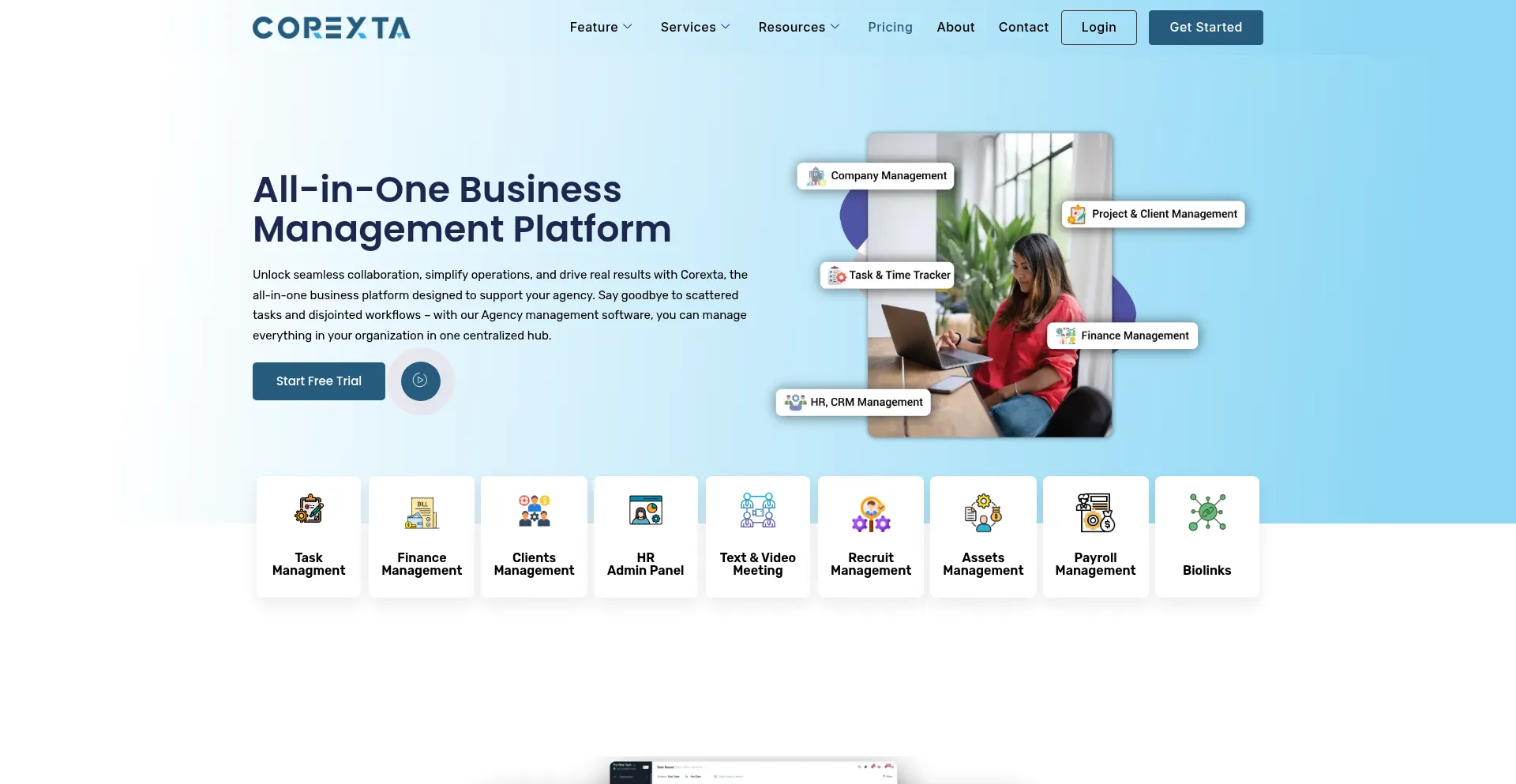
Creating content pillars is only half the equation—the real challenge is executing consistently, collaborating efficiently, and scaling your strategy without chaos. This is where having the right system becomes critical.
Corexta provides a centralized environment that helps teams move from scattered content efforts to a structured, execution-ready content strategy. Instead of juggling multiple disconnected tools, you can manage planning, production, collaboration, and performance from one unified workspace.
Turn your content pillars into actionable workflows
Once your pillars are defined, the next step is turning them into repeatable workflows. Corexta helps you do this by allowing you to:
- Create tasks for each content piece
- Assign responsibilities to team members
- Set deadlines and priorities
- Track progress in real time
With visual tools like Kanban boards and project timelines, you can map your entire content pipeline—from ideation to publishing—ensuring nothing falls through the cracks.
This transforms your content strategy from a document into a living system that your team can execute daily.
Centralize your content planning and calendar
A major challenge in social media strategy is fragmentation—content ideas in one tool, drafts in another, approvals in emails, and publishing in separate platforms.
Corexta eliminates this by acting as a central hub for all content operations. You can:
- Plan campaigns and content calendars
- Store content assets and documents
- Manage approvals and feedback
- Keep all communication in one place
By centralizing everything, your team avoids constant tool-switching and gains a single source of truth for your entire content strategy.
Improve team collaboration and alignment
Content creation is rarely a solo effort. It involves writers, designers, marketers, and managers—all needing to stay aligned.
Corexta enhances collaboration through:
- Real-time internal chat and notifications
- Shared dashboards and project visibility
- Role-based access and task ownership
This ensures everyone knows:
- What they’re working on
- What’s coming next
- How their work connects to the bigger strategy
As a result, your team spends less time coordinating and more time creating high-quality content.
Automate repetitive content processes
One of the biggest bottlenecks in content execution is repetitive manual work—assigning tasks, tracking updates, sending reminders, and managing approvals.
Corexta helps streamline this by automating workflows such as:
- Task assignments and status updates
- Notifications for deadlines and approvals
- Reporting and progress tracking
Automation reduces human error, saves time, and allows your team to focus on creative and strategic work instead of operational overhead.
Track performance and optimize your strategy
Execution without measurement leads to stagnation. Corexta supports performance tracking by providing:
- Real-time project and task visibility
- Reporting and analytics tools
- Insights into productivity and workflow efficiency
By combining content pillar performance insights with operational data, you can:
- Identify bottlenecks in your content process
- Improve turnaround time
- Optimize your content mix based on results
This creates a feedback loop where your strategy continuously improves over time.
Scale your content strategy without chaos
As your brand grows, so does the complexity of your content operations. More platforms, more campaigns, more team members—without the right system, this quickly becomes overwhelming.
Corexta is designed to scale with your needs by offering:
- Flexible workflows and customizable roles
- Integration with communication and notification tools
- A unified system that grows with your team
Instead of adding more tools as you grow, you expand within a single, scalable platform that keeps everything aligned and efficient.
A strong content pillar strategy gives you direction—but execution is what drives results.
With Corexta, you can:
- Turn ideas into structured workflows
- Align your team around a single strategy
- Execute consistently without friction
- Scale your content operations with confidence
If you’re serious about building a high-performing, scalable social media strategy, it’s time to move beyond scattered tools and manual processes.
Start your journey with Corexta today—organize smarter, execute faster, and turn your content strategy into real growth. 🚀
Frequently Asked Questions
How many content pillars should you have?
Most effective social media strategies use 3 to 5 content pillars.
This range works best because it:
- Keeps your messaging focused and clear
- Provides enough variety to keep content engaging
- Prevents dilution of your brand identity
Having too few pillars can make your content repetitive, while too many can create confusion and inconsistency.
The key is balance. Each pillar should:
- Serve a clear purpose
- Align with your audience’s interests
- Support your business goals
If you find yourself struggling to maintain consistency, it’s often a sign that you have too many pillars and need to simplify.
Do content pillars work differently for B2B vs. B2C brands?
The concept of content pillars remains the same, but the execution differs significantly between B2B and B2C brands.
B2B content pillars
B2B strategies tend to focus more on:
- Educational and industry insights
- Thought leadership
- Case studies and success stories
- Product value and use cases
The goal is to build trust, authority, and long-term relationships.
B2C content pillars
B2C strategies often emphasize:
- Entertainment and inspiration
- Lifestyle content
- Community engagement
- Product promotion
The focus here is on emotional connection, engagement, and quick decision-making.
Key difference
- B2B content is typically logic-driven and value-focused
- B2C content is more emotion-driven and experience-focused
However, both rely on the same foundation:
consistent themes, audience alignment, and strategic execution.
What’s the difference between content pillars and a content calendar?
Content pillars and a content calendar are closely related—but they serve different roles in your strategy.
Content pillars
- Define what you talk about
- Represent your core themes or topics
- Provide strategic direction
Content calendar
- Defines when and where you post
- Organizes your publishing schedule
- Ensures consistency and timing
Simple way to understand the difference
- Content pillars = Strategy
- Content calendar = Execution
You first define your pillars (what to say), then use your calendar to plan how those ideas are published over time.
Both are essential. Without pillars, your calendar lacks direction. Without a calendar, your pillars lack execution.
Read More: Monday vs. Asana vs. ClickUp: Which Saves Small Businesses the Most Money?