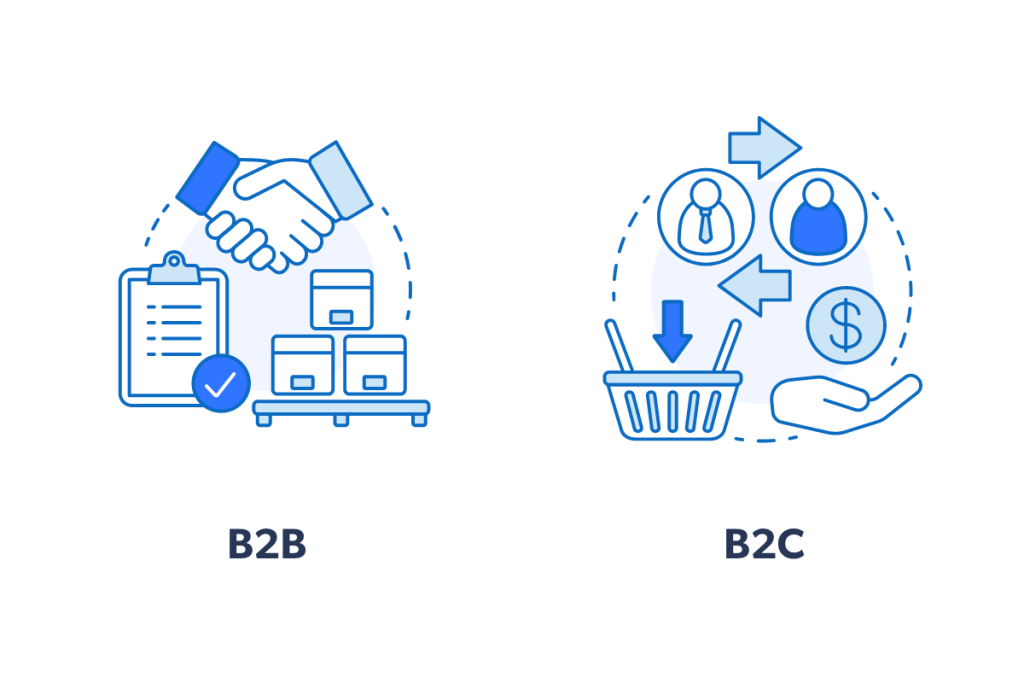
B2B (business-to-business) and B2C (business-to-consumer) marketing share the same core goal—persuading an audience to take action—but the way each audience thinks, decides, and buys is fundamentally different. Understanding these differences is crucial for creating marketing strategies that actually work.
B2B buyers are often logical, detail-oriented, and driven by business outcomes, whereas B2C consumers are more motivated by convenience, emotion, and instant gratification. These contrasts shape everything: how messaging is crafted, which channels are used, how long decisions take, and what motivates conversions.
Before diving into the deeper distinctions and strategies, here’s a clear snapshot of how B2B and B2C marketing differ at a glance.
B2B vs. B2C Marketing Differences at a Glance
| Category | B2B Marketing | B2C Marketing |
|---|---|---|
| Target Audience | Other businesses, professionals, and organizations | Individual consumers purchasing for personal use |
| Decision-Makers | Multiple stakeholders (managers, executives, procurement teams) | Usually a single consumer or household |
| Buying Cycle | Long, multi-step process involving research, approvals, and demos | Short, fast, often impulsive purchase decisions |
| Motivation | ROI, efficiency, long-term value, problem-solving | Emotion, convenience, desire, price sensitivity |
| Messaging & Tone | Logical, educational, value-driven, formal | Emotional, conversational, entertaining, relatable |
| Content Strategy | Whitepapers, case studies, webinars, long-form blogs | Social content, videos, product pages, reels, ads |
| Marketing Channels | LinkedIn, email, industry events, SEO content, webinars | Instagram, TikTok, Facebook, YouTube, influencers |
| Relationship Focus | Long-term partnerships and trust building | Quick conversions and repeat purchases |
| Segmentation | Firmographics, industry type, company size, roles | Demographics, psychographics, interests, behaviors |
| KPIs | Lead quality, pipeline growth, CLV, CPA, retention | Sales volume, conversion rate, AOV, engagement |
Understanding B2B and B2C Marketing
What is B2B Marketing?

B2B (Business-to-Business) marketing refers to strategies and activities used by companies that sell products or services to other businesses, not individual consumers. These businesses typically target professionals, decision-makers, and organizations with specific operational or strategic needs.
B2B marketing focuses on:
Solving business problems
Increasing efficiency or profitability
Demonstrating expertise and authority
Building long-term relationships
Providing in-depth, educational content
Examples of B2B companies include software providers (SaaS), manufacturers, consulting firms, logistics providers, and enterprise-level service companies.
Because the stakes are higher and purchasing decisions impact entire departments or operations, B2B marketing requires logic-driven messaging, detailed explanations, and a strong value proposition.
What is B2C Marketing?

B2C (Business-to-Consumer) marketing focuses on selling products or services directly to individual consumers for personal use. It’s typically designed to create emotional appeal, spark desire, and encourage quick decision-making.
B2C marketing focuses on:
Emotional storytelling
Immediate benefits and convenience
Fast, frictionless purchasing
Brand identity and lifestyle marketing
High visibility through social and digital channels
Common B2C businesses include eCommerce brands, fashion retailers, food and beverage companies, fitness products, subscription services, and mobile apps.
The goal is to capture attention quickly and inspire action—whether it’s making a purchase, following a brand, or engaging with content.
Why Does Knowing the Difference Matter?
Understanding the difference between B2B and B2C marketing is essential because you can’t market to both audiences the same way. Their motivations, buying behaviors, and expectations are completely different.
Here’s why it matters:
Your messaging will change.
B2B buyers want data, ROI, and expertise. B2C buyers want emotion, convenience, and entertainment.Your content strategy must be tailored.
B2B needs long-form educational content; B2C needs short, engaging, visually appealing content.Your marketing channels differ.
LinkedIn works for B2B. TikTok or Instagram works for B2C.Your sales cycle depends on the audience.
B2B requires nurturing and multiple decision-makers. B2C focuses on fast conversions.Your KPIs and success metrics differ.
B2B tracks leads and pipeline. B2C tracks sales volume and engagement.
By knowing the differences, businesses can:
✔ Craft more accurate buyer personas
✔ Choose the right platforms
✔ Improve conversions
✔ Reduce wasted ad spend
✔ Build stronger customer relationships
Understanding B2B vs. B2C helps you communicate the right message to the right audience at the right time—which is the foundation of successful marketing.
Key Differences Between B2B and B2C Marketing
| Aspect | B2B Marketing | B2C Marketing |
|---|---|---|
| 1. Target Audience & Decision-Makers | Targets businesses, professionals, and organized buying committees. Multiple decision-makers such as managers, executives, IT, procurement, and finance teams. | Targets individual consumers or families making personal purchasing decisions. Usually one primary decision-maker. |
| 2. Buying Cycles (Long vs. Short) | Long, multi-stage cycles that involve research, vendor comparisons, demos, negotiations, and approvals. Can take weeks to months. | Fast, short buying cycles—sometimes impulsive. Purchases occur within minutes, hours, or days depending on need and emotion. |
| 3. Emotional vs. Rational Buying Motives | Primarily rational and logic-driven. Motivated by ROI, efficiency, expertise, cost savings, long-term value, and risk reduction. | Emotion-driven. Motivated by desire, convenience, price, brand identity, lifestyle appeal, and instant gratification. |
| 4. Messaging, Tone of Voice & Content Strategy | Formal, data-backed, educational. Content includes whitepapers, case studies, reports, webinars, and long-form articles. | Relatable, emotional, conversational. Content includes social videos, ads, product pages, reels, short blogs, and storytelling. |
| 5. Marketing Channels Commonly Used | Most effective on LinkedIn, email marketing, SEO blogs, industry events, conferences, webinars, and targeted ABM campaigns. | Dominant on Instagram, TikTok, Facebook, YouTube, influencer partnerships, and multi-channel ads. |
| 6. Relationship-Building vs. Transactional Focus | Strong focus on long-term relationships, trust, and account nurturing. High customer lifetime value is the priority. | Focus on quick conversions, repeat purchases, and strong brand loyalty. Customer satisfaction drives long-term retention. |
B2B Marketing Strategies
1. Account-Based Marketing (ABM)
Account-Based Marketing (ABM) is a highly targeted B2B strategy that focuses on engaging specific high-value accounts rather than broad audiences. Instead of casting a wide net, ABM aligns marketing and sales teams to create personalized experiences for key decision-makers within targeted companies.
Key elements of ABM include:
Identifying high-potential accounts based on industry, revenue, or strategic value
Customizing content, offers, and outreach for decision-makers
Using data-driven insights to tailor the buyer journey
Coordinating marketing and sales efforts to guide accounts through the pipeline
Why ABM works:
It increases conversion rates, shortens the sales cycle, and significantly improves ROI because every engagement is highly relevant and personalized.
2. Content Marketing for Thought Leadership
B2B buyers want to engage with brands that demonstrate expertise. Thought leadership content positions your business as an authority in the industry and helps buyers trust your solutions.
Effective B2B content includes:
Whitepapers and industry reports
Case studies showcasing measurable results
Expert blogs and educational guides
Webinars, workshops, and online training sessions
Research-backed insights and trend analyses
Why this strategy matters:
Thought leadership helps businesses attract qualified leads, build credibility, and guide complex buying decisions with valuable information—not sales pitches.
3. LinkedIn and Professional Networking
LinkedIn is the top-performing channel for B2B marketing because it’s where professionals make decisions, share insights, and evaluate vendors.
How to leverage LinkedIn effectively:
Publish thought leadership posts and articles
Run targeted LinkedIn Ads for specific industries or roles
Use LinkedIn Sales Navigator for personalized outreach
Engage in relevant industry groups and discussions
Share case studies and company milestones regularly
Why LinkedIn works for B2B:
It provides direct access to decision-makers, establishes brand authority, and nurtures professional relationships that lead to long-term business opportunities.
4. Long-Term Relationship Nurturing
B2B success depends on building trust and nurturing relationships over time. Most B2B buyers need several touchpoints before committing to a purchase.
Effective nurturing tactics include:
Personalized email campaigns
Regular check-ins from account managers
Customer onboarding and training programs
Exclusive webinars or product updates for existing clients
Loyalty programs or long-term service packages
The goal:
To strengthen retention, increase customer lifetime value (CLV), and turn clients into long-term partners rather than one-time buyers.
B2C Marketing Strategies
1. Social Media and Influencer Marketing

B2C marketing thrives on visibility, engagement, and social influence. Platforms like Instagram, TikTok, Facebook, and YouTube allow brands to reach massive audiences quickly.
Effective B2C tactics include:
Short-form video content (Reels, TikToks, YouTube Shorts)
Influencer partnerships for credibility and reach
Viral challenges or trends
User-generated content (UGC) to build trust
Social ads targeting interests and behaviors
Why it works:
Consumers trust influencers and peer recommendations. Social media provides instant engagement, making it ideal for fast conversions and brand awareness.
2. Emotional Storytelling and Brand Identity
B2C buyers connect with emotion, not logic. Strong storytelling helps brands build a personality that consumers can relate to.
Ways to use emotional storytelling:
Highlight user stories or customer testimonials
Show behind-the-scenes content
Create narrative-driven ads that tap into lifestyle desires
Build a clear brand voice and visual identity
Focus on feelings like joy, comfort, excitement, or belonging
Why this approach works:
People make personal purchases based on how a product makes them feel. Emotional branding boosts loyalty and creates memorable experiences.
3. Discounts, Offers, and Fast Conversions
B2C marketing often centers on triggering quick purchasing decisions. Incentives encourage consumers to take immediate action.
High-performing conversion strategies include:
Flash sales and limited-time offers
First-purchase discounts
Bundle pricing and free shipping
Loyalty rewards and points
Retargeting ads with personalized offers
Why this drives sales:
Price incentives reduce hesitation and create urgency, which is essential for products with short buying cycles.
4. Multi-Channel Campaigns for Visibility
B2C brands rely on consistent visibility across multiple platforms to stay top-of-mind. A multi-channel approach ensures consumers encounter the brand wherever they spend time.
Common multi-channel components:
Social media ads
Email marketing
SMS campaigns
Paid search ads
Influencer collaborations
eCommerce optimization
Display and video advertising
Benefits:
Multi-channel marketing increases reach, boosts brand recognition, and creates a seamless customer experience from discovery to purchase.
Similarities Between B2B and B2C Marketing
Despite their clear differences, B2B and B2C marketing share several foundational principles. Whether a company sells to businesses or individual consumers, the core purpose remains the same: understanding the audience and delivering value. Here are the key similarities both approaches rely on:
Customer-Centric Approach
In both B2B and B2C, the customer is at the center of every marketing decision. The success of a marketing campaign depends on how well a brand understands the needs, desires, and pain points of its audience.
Shared customer-centric priorities include:
Identifying customer challenges and expectations
Offering solutions that genuinely help
Using feedback to refine messaging, products, or services
Creating personalized experiences based on user behavior
Regardless of the audience type, customer experience (CX) plays a major role in conversions and long-term loyalty.
Focus on Building Trust
Trust is the backbone of both B2B and B2C relationships. Buyers—whether professionals or everyday consumers—prefer brands that are reliable, credible, and authentic.
How both build trust:
Delivering on promises
Maintaining transparent communication
Publishing helpful and accurate content
Showcasing testimonials and social proof
Upholding strong customer support
Trust reduces friction in the buying process and increases the likelihood of repeat purchases or long-term partnerships.
Content as a Core Strategy
Content marketing is essential in both B2B and B2C strategies, though the formats may differ. Content helps brands educate, engage, inform, and persuade their audience.
Shared content goals include:
Helping the audience make better decisions
Answering questions and addressing concerns
Demonstrating value and expertise
Improving visibility through SEO and social platforms
Brands that consistently publish valuable content establish authority and build stronger relationships with their audience.
Strong Brand Identity Is Key
A clear, consistent brand identity creates recognition and trust—important for both business buyers and everyday consumers.
Shared brand identity elements:
A consistent brand voice
Distinctive visuals, colors, and style
Clear messaging aligned with the brand’s mission
Emotional resonance (B2C) or professional credibility (B2B)
Consistency across all marketing channels
Both B2B and B2C brands benefit from a memorable identity that differentiates them in competitive markets.
Examples of B2B vs. B2C Marketing in Action
Real-world examples make the differences between B2B and B2C marketing easy to understand. Here are two standout campaigns that demonstrate how each approach works effectively.
B2B Example: IBM’s “Smarter Planet” Campaign + Thought Leadership
IBM’s “Smarter Planet” initiative is one of the most influential B2B marketing campaigns ever created. Instead of promoting specific products, IBM positioned itself as a visionary leader helping industries transform through advanced technology and data-driven solutions.
Why this campaign worked:
It established IBM as a thought leader across industries.
It addressed global challenges such as sustainability, energy, and transportation.
It used long-form content, whitepapers, and in-depth insights tailored for business leaders.
It aligned with the needs of CIOs, executives, and policy-makers seeking digital transformation.
It created a narrative that showcased IBM’s expertise, not just its products.
The campaign elevated IBM’s brand image and attracted enterprise-level clients by focusing on innovation, data, and industry impact.
B2C Example: Duolingo’s Viral Social Media Marketing
Duolingo has mastered the art of B2C marketing through humor, trends, and relatable content—especially on TikTok and Instagram. Their green owl mascot became a viral sensation, turning language learning into a fun and shareable experience.
Why this campaign was successful:
It used humor, memes, and trending sounds to engage young audiences.
The content was short, entertaining, and highly shareable.
Duolingo humanized the brand through a playful personality.
It increased app downloads by creating FOMO and cultural relevance.
Influencers and user-generated content amplified visibility.
This approach shows how emotional engagement and viral creativity can massively boost brand awareness and conversions in B2C.
How Corexta Supports Both B2B and B2C Marketing Teams
Corexta is built to streamline marketing operations for both B2B and B2C teams, helping them manage campaigns, understand audiences, and optimize performance—all in one place. Regardless of industry or business model, Corexta simplifies workflows and enhances marketing efficiency.
1. Centralized Campaign Management
Corexta allows teams to manage all marketing activities from a single dashboard—whether they’re targeting businesses or consumers.
Track ongoing campaigns
Coordinate cross-channel strategies
Improve collaboration between departments
Both B2B and B2C teams benefit from having everything organized and accessible, reducing confusion and eliminating duplicate work.
2. Advanced Audience Insights for Better Targeting
Understanding target audiences is essential for both marketing types. Corexta provides detailed analytics and segmentation capabilities that help marketers:
Analyze buyer behavior
Identify top-performing audience segments
Personalize campaigns based on demographics, industry, interests, or behaviors
B2B teams can segment by company size or job role, while B2C teams can segment by interests, demographics, or purchasing habits.
3. Content and Workflow Automation
Corexta supports content planning, scheduling, and workflow automation to save time and ensure consistent messaging across all touchpoints.
Automated email sequences
Scheduled content across channels
Custom workflows for campaign approvals
B2B marketers can automate lead nurturing, while B2C marketers can automate promotional campaigns and follow-ups.
4. Real-Time Reporting and Data-Driven Decisions
Both B2B and B2C require performance tracking to optimize strategies. Corexta provides role-specific dashboards that showcase:
Campaign performance
Conversion metrics
Revenue attribution
Engagement analytics
These insights help teams make informed decisions, allocate budgets wisely, and continually improve results.
5. Collaboration Tools for Cross-Functional Teams
Corexta ensures seamless communication across marketing, sales, product, and customer success teams.
Shared calendars
Project boards
Internal task assignments
File and asset management
This is particularly helpful for B2B teams with complex sales cycles and B2C teams with fast-moving promotions.
How to Choose the Right Strategy?
Choosing the right marketing strategy—whether B2B, B2C, or a blend of both—starts with understanding the audience and aligning efforts with business goals. Here’s how brands can determine the best approach:
Identify Your Target Audience
The first step is to clearly define who you are selling to.
Are your customers businesses, teams, and professionals?
Or individual consumers purchasing for personal needs?
Do they make decisions alone or as part of a committee?
Your strategy, content, and messaging will depend entirely on this definition.
Understand Your Audience’s Needs and Behavior
Once you’ve identified your audience, dive deeper into their motivations, pain points, and purchase behavior.
B2B buyers value ROI, expertise, and long-term solutions
B2C buyers prioritize convenience, emotion, and brand experience
Understanding their priorities allows you to tailor your value proposition and communication style effectively.
Define Your Unique Value Proposition (UVP)
A strong UVP makes it clear why customers should choose your brand over competitors.
What unique benefits do you offer?
How do you solve your audience’s specific problems?
What sets your solution apart?
Your UVP should be highlighted across all marketing materials—from landing pages to campaigns.
Choose the Right Channels
Your audience determines where you should focus your effort.
B2B: LinkedIn, email marketing, webinars, industry events, SEO content
B2C: Instagram, TikTok, Facebook, YouTube, influencer marketing, paid ads
Selecting the right channels ensures your message reaches the right people at the right time.
Refine and Adapt Continuously
Marketing isn’t static—consumer behavior, industry trends, and digital platforms evolve constantly.
Track performance metrics regularly
A/B test messaging, creatives, and offers
Listen to customer feedback
Adjust strategies based on real-time data
The most successful B2B and B2C marketers embrace continuous improvement rather than one-time execution.
Level Up Your B2B & B2C Marketing Efforts with Corexta
Whether you’re targeting enterprise-level clients or everyday consumers, Corexta equips your team with the tools needed to execute, optimize, and scale your marketing strategy with confidence. From centralized campaign management to advanced analytics, automation, and collaboration features, Corexta helps you streamline workflows and stay ahead in fast-moving markets. B2B teams can nurture long-term relationships and manage complex pipelines, while B2C teams can launch high-impact campaigns that drive quick conversions and brand engagement.
If you’re ready to reduce guesswork, improve productivity, and make smarter data-driven decisions, Corexta is your all-in-one platform to elevate performance. Start optimizing your marketing strategy today—discover how Corexta can transform your growth.
Frequently Asked Questions (FAQs)
What is the main difference between B2B and B2C marketing?
The main difference lies in who the marketing is targeting. B2B marketing focuses on businesses, professionals, and decision-making teams, while B2C marketing targets individual consumers. B2B buying decisions are logical and value-driven, whereas B2C decisions are often emotional and immediate.
Is B2B marketing harder than B2C?
Not necessarily—both have unique challenges. B2B marketing typically involves longer sales cycles, multiple decision-makers, and a need for educational content. B2C marketing, meanwhile, requires strong emotional appeal, creativity, and fast-paced campaigns in competitive consumer markets. Each requires a different approach, but neither is universally “harder.”
Can the same company use both B2B and B2C marketing?
Yes. Many companies serve both businesses and individual consumers. For example, software companies may offer enterprise solutions for organizations and simpler plans for individual users. The key is segmenting audiences and tailoring messaging, channels, and campaigns to fit each group’s needs.
Which marketing channels work best for B2B vs. B2C?
B2B: LinkedIn, email marketing, SEO content, industry events, and webinars.
B2C: Instagram, TikTok, YouTube, Facebook, influencer marketing, and paid social ads.
The ideal channels depend on where your audience spends time and how they prefer to engage.
How does Corexta help in managing B2B and B2C campaigns?
Corexta provides a unified platform for planning, executing, and analyzing marketing campaigns. B2B teams can leverage features like account-level insights, lead nurturing, and multi-touch attribution. B2C teams can benefit from automation, social scheduling, segmentation, and real-time engagement tracking. Corexta ensures both marketing types have the clarity, tools, and data needed to maximize impact and drive consistent growth.
Read More: Top 7 Case Management Solutions – Detailed Reviews & Side-by-Side Comparison