Marketing is changing fast. New tools now help teams work smarter and faster. One of the most talked-about tools is ChatGPT. It helps marketers plan, write, and improve their work with ease. Many teams now use it to save time and reduce effort.
ChatGPT can support daily marketing tasks. It helps with ideas, writing, research, and data support. Marketers can use it to handle simple jobs and focus more on strategy. This makes work smoother and more efficient.
Small teams also benefit from this tool. It acts like a smart assistant that is always ready to help. From content planning to customer support, ChatGPT fits into many areas of marketing.
In this guide, you will learn how marketers use ChatGPT in real ways. Each use case shows how it adds value and improves results. If you want to work faster and smarter, this guide is for you.
Why Marketers Should Use ChatGPT
Marketers deal with tight deadlines and many tasks each day. ChatGPT helps reduce this pressure. It can generate ideas in seconds. This saves hours of brainstorming time.
Content creation becomes easier with ChatGPT. It helps write drafts, outlines, and captions. Marketers can then refine the content instead of starting from scratch. This improves speed and consistency.
ChatGPT also helps with research. It summarizes topics and explains trends in simple terms. This makes planning campaigns faster and more accurate. Teams can make better decisions with less effort.
Personalization is another big benefit. ChatGPT helps tailor messages for different audiences. This improves engagement and response rates.
Most importantly, ChatGPT supports learning and testing. Marketers can try new ideas without risk. It helps teams stay creative and competitive in a fast-moving market.
ChatGPT Marketing Use Cases
Modern marketing teams face massive workloads. From planning content calendars to optimizing campaigns and engaging customers, there’s always more to do than hours in the day. That’s where ChatGPT comes in. It’s a generative AI assistant that can help marketers streamline work, boost creativity, and scale results across multiple areas. Below, we explore eight major marketing use cases where ChatGPT can add real value and make everyday workflows faster, smarter, and more efficient.
1. Content Ideation
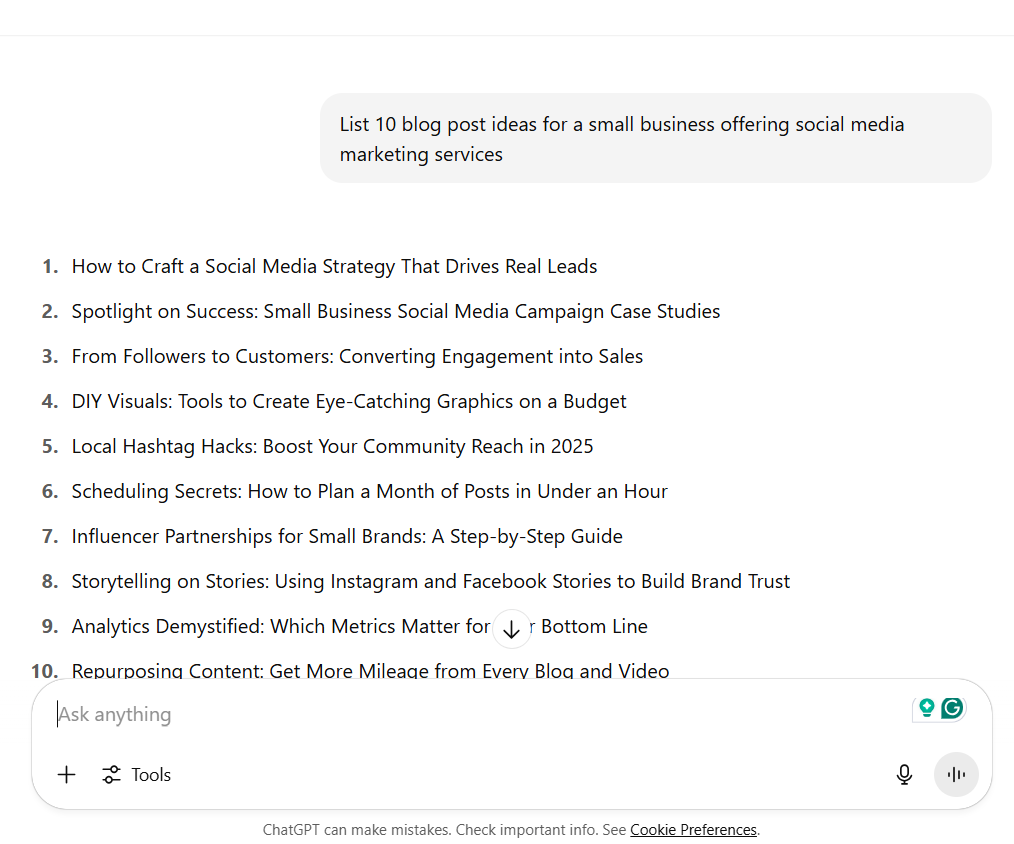
At the heart of every successful marketing strategy is compelling content. But finding fresh topics that attract, inform, and convert can be tough. ChatGPT excels at generating high-quality content ideas in seconds, helping marketers overcome creative blocks and build structured content calendars.
For example, you can ask ChatGPT to generate:
-
A list of blog post topics tailored to your audience’s interests.
-
Social media content angles for different campaign themes.
-
Video content ideas based on seasonal or trending topics.
It can also group ideas by marketing funnel stages (Awareness, Consideration, Decision), ensuring you have ideas that support every step of the customer journey. By automating the initial brainstorming stage, teams avoid starting with a blank page and can focus more on refining and executing the best ideas.
2. Audience Segmentation
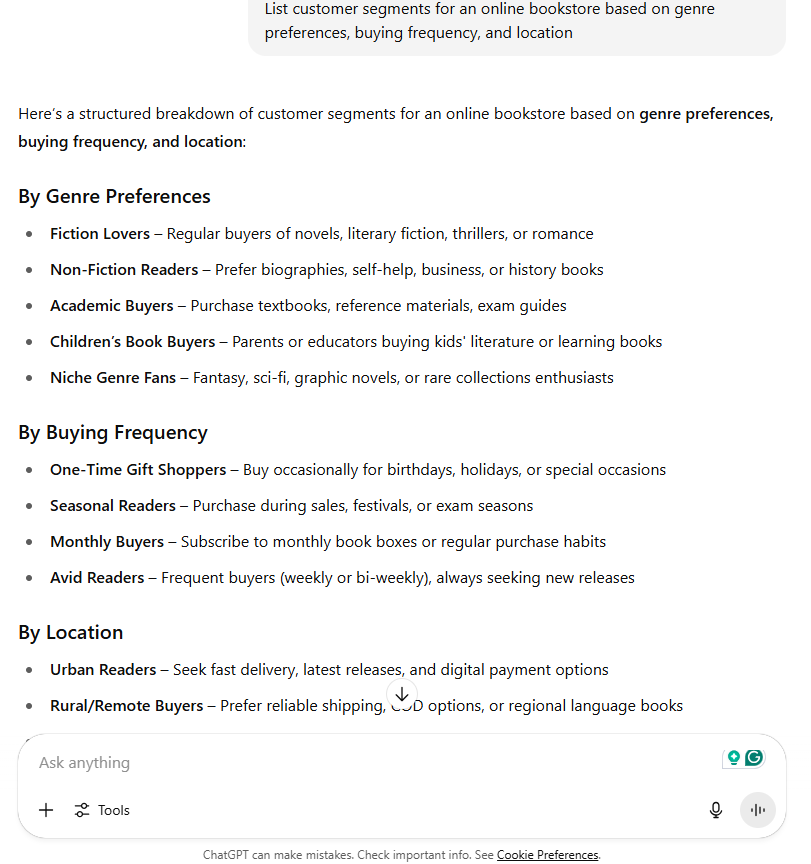
Understanding your audience is essential for relevant messaging and improved engagement. ChatGPT can help define audience segments based on behavior, preferences, demographics, and purchase patterns. You can ask it to build messaging frameworks for each segment, including likely pain points, key messages, and call-to-actions tailored to each group.
This is especially useful when launching targeted campaigns, promotions, or personalization efforts. Instead of manually analyzing complex datasets, ChatGPT can provide a solid starting point for segmented marketing strategies by offering structured outputs that align with your segmentation goals.
3. Optimizing Content
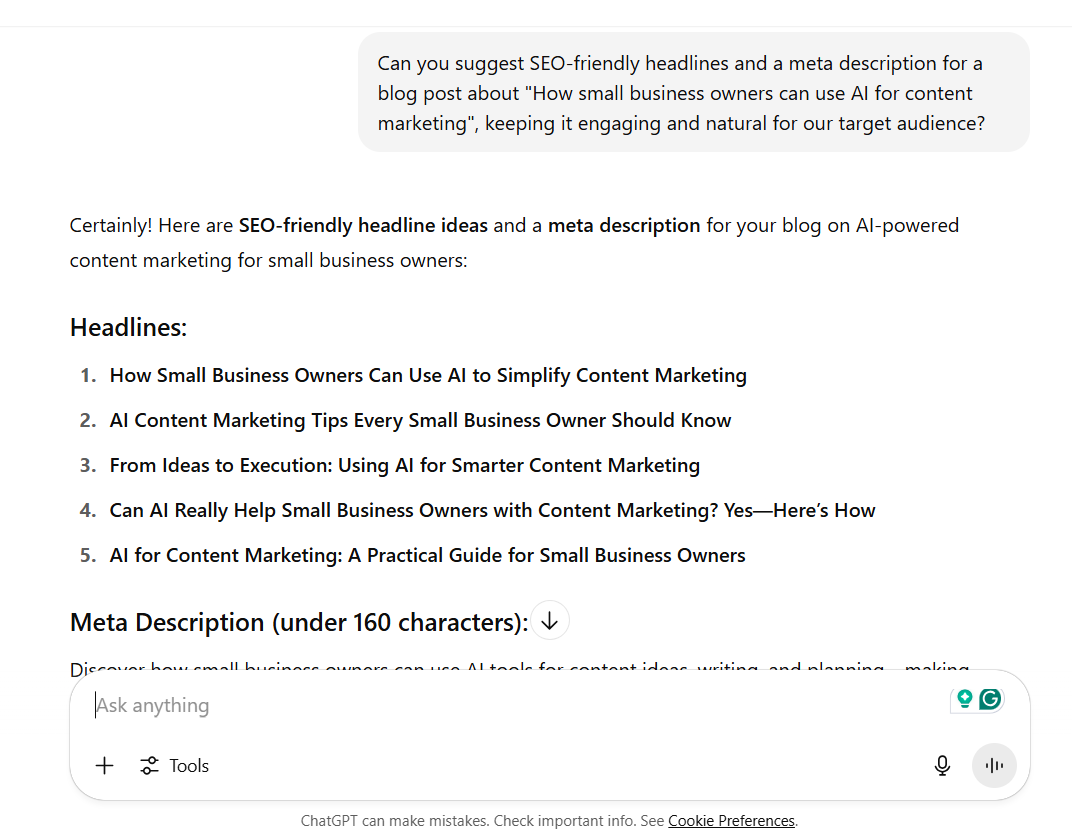
Content optimization is about making your work resonate with both readers and search engines. ChatGPT supports optimization by suggesting:
-
Keyword usage and placement within outlines.
-
Rewrite recommendations for clarity or audience fit.
-
Meta descriptions and title tag variations to improve search performance.
Beyond SEO, it can help improve readability and tone for different channels or audience types. For instance, you can feed a rough draft into ChatGPT and ask it to tailor the language for a specific buyer persona or platform. This results in content that’s not just more discoverable but more engaging, structured, and user-centric.
4. Ad Copywriting
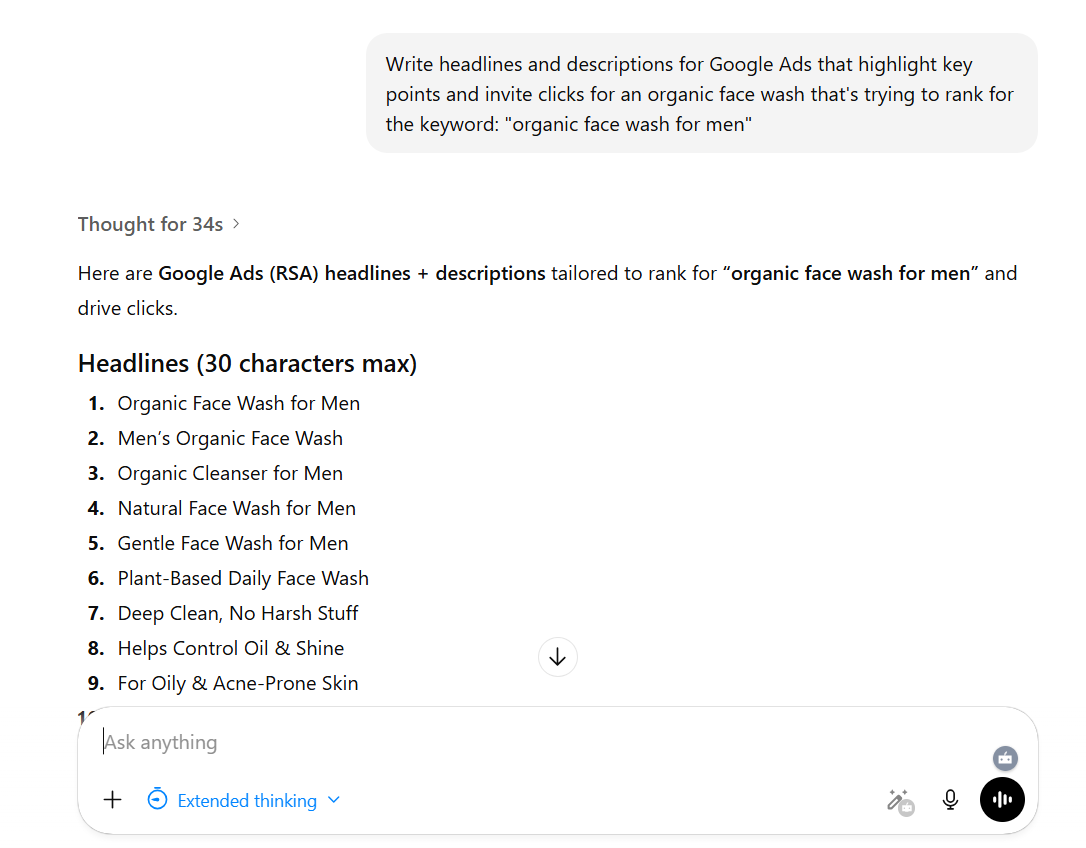
Creating persuasive ad copy can be time-intensive, especially when marketers need multiple variations for A/B testing. ChatGPT helps generate compelling ad headlines and descriptions for platforms like Google, Facebook, LinkedIn, and more.
It’s particularly useful for:
-
Writing different versions of ads targeting unique audience segments.
-
Crafting variations with different emotional appeals or hooks.
-
Suggesting A/B test ideas and explaining what each test measures.
With ChatGPT, marketers can rapidly generate and iterate ad copy, saving time and increasing the chances of achieving higher engagement and conversion rates.
5. Content Repurposing
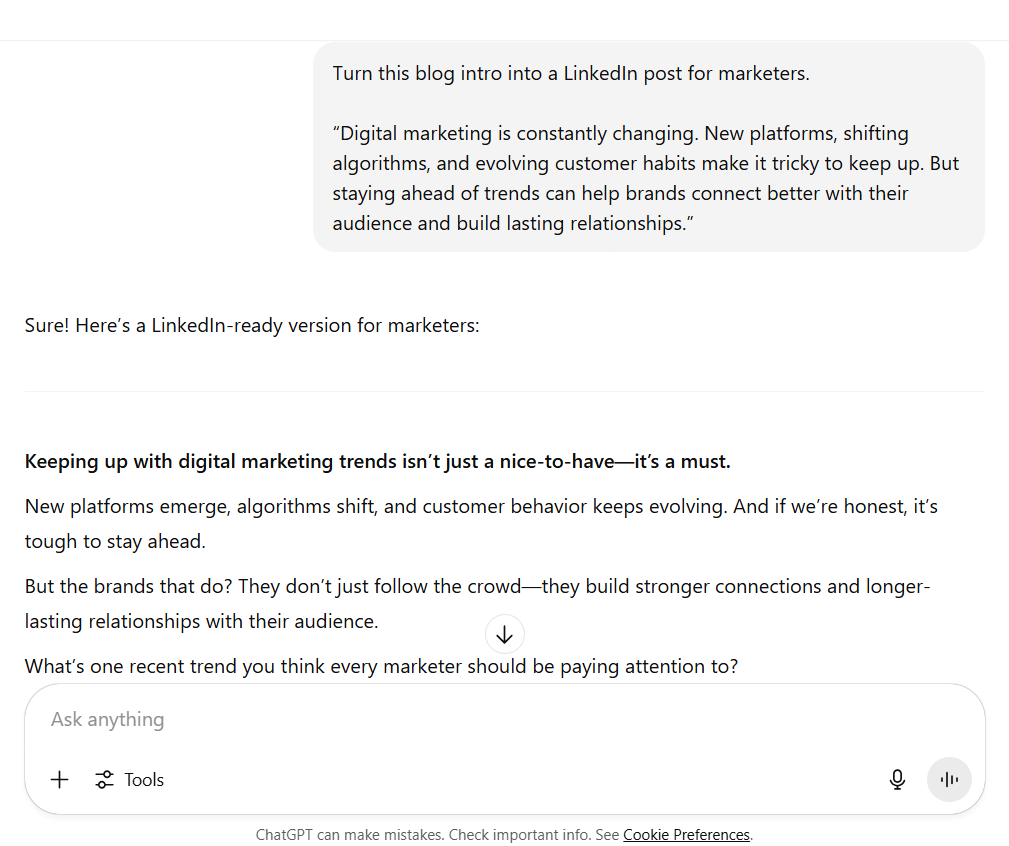
Producing quality content is just the beginning — getting the most mileage from each asset matters. ChatGPT can take existing pieces of work and repurpose them into new formats, expanding reach and engagement across platforms.
Examples include:
-
Turning a blog post into social media posts and captions.
-
Summarizing webinars into key takeaways with shareable snippets.
-
Formatting articles into email newsletters or short video scripts.
Repurposing not only saves time but also ensures consistent messaging across channels, making each piece of content deliver more value with less manual effort.
6. SEO Optimization
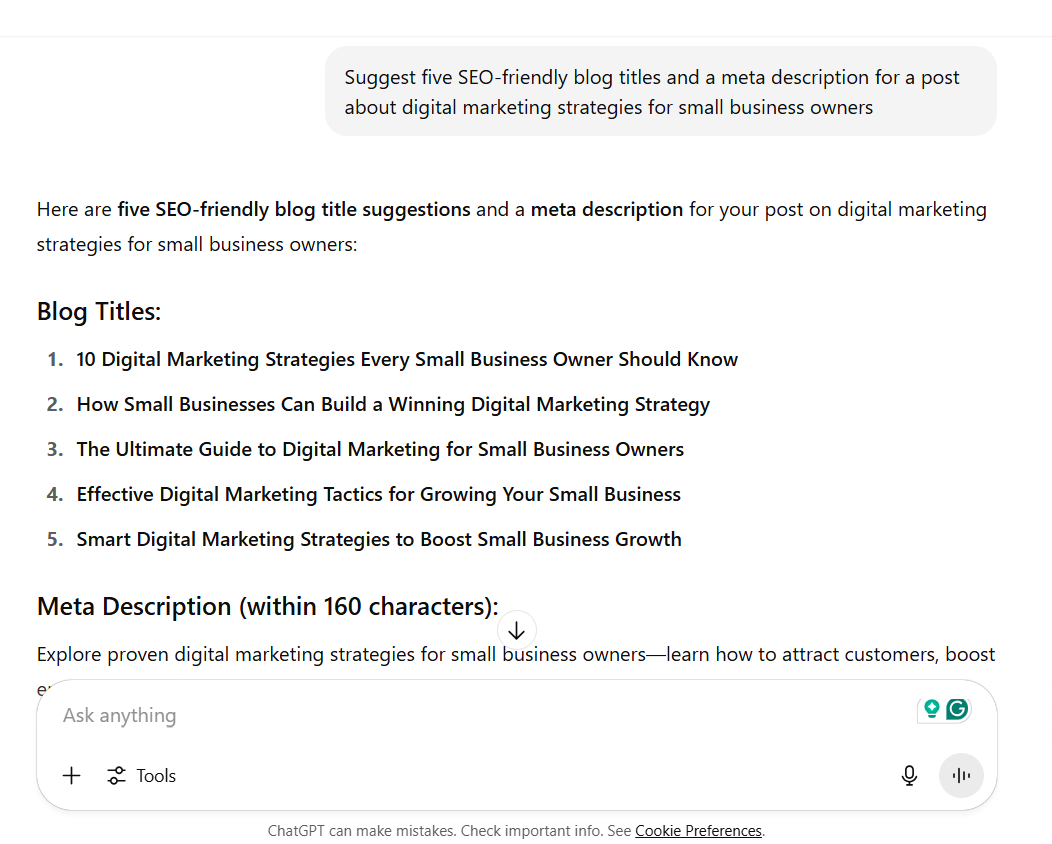
Search engine visibility drives organic traffic, and ChatGPT can help support key SEO tasks. While it doesn’t replace dedicated SEO tools, it speeds up processes like:
-
Generating keyword ideas related to your topic.
-
Crafting SEO-friendly meta descriptions that encourage clicks.
-
Providing suggestions on how to naturally incorporate keywords within content.
By integrating SEO-focused prompts into your workflow, you ensure content targets the terms your audience cares about and follows best practices for on-page optimization. This can improve search visibility and bring more qualified traffic to your pages.
7. Chatbot for Lead Generation and Customer Support
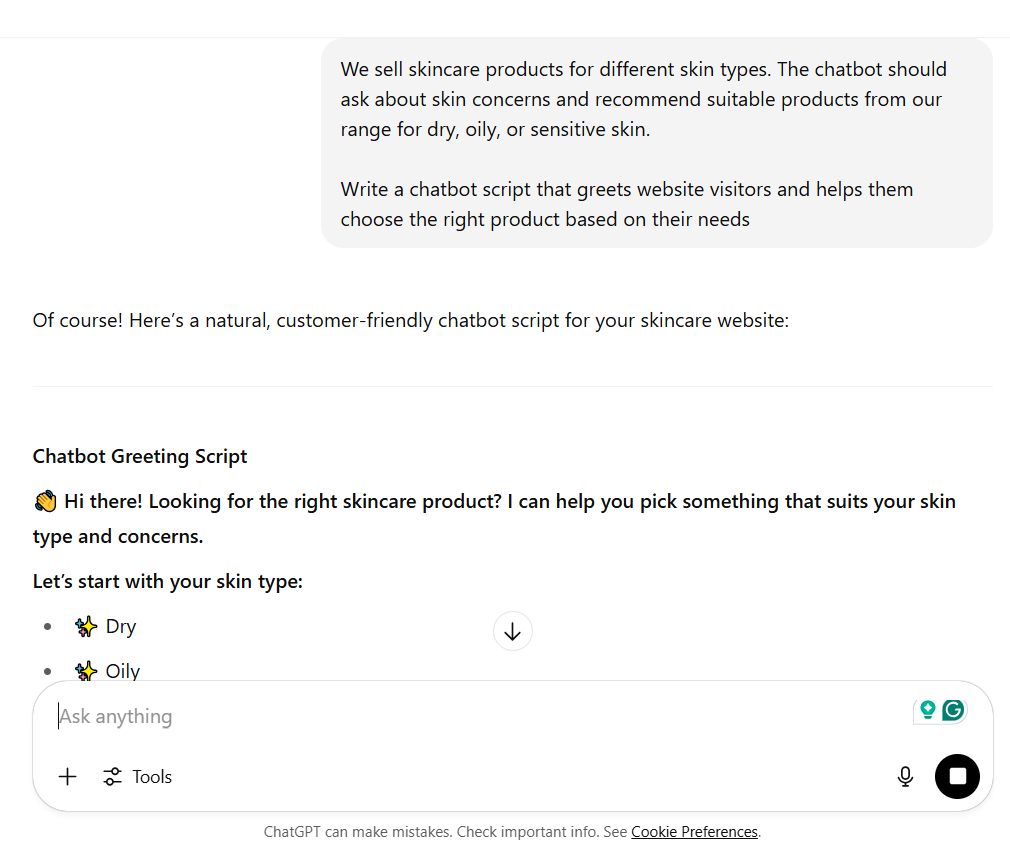
ChatGPT can power conversational experiences that turn visitors into leads and improve customer service. When integrated into a website or messaging platform, it can answer FAQs, guide users through product information, and support basic customer interactions in real time.
Using ChatGPT as a chatbot:
-
Reduces response times and support workload.
-
Enhances engagement by providing personalized, instant replies.
-
Can collect lead information and qualify prospects before passing them to sales.
This use case bridges marketing and support, offering a seamless experience that keeps users engaged and increases the chances of conversion.
8. Data Analysis and Reporting
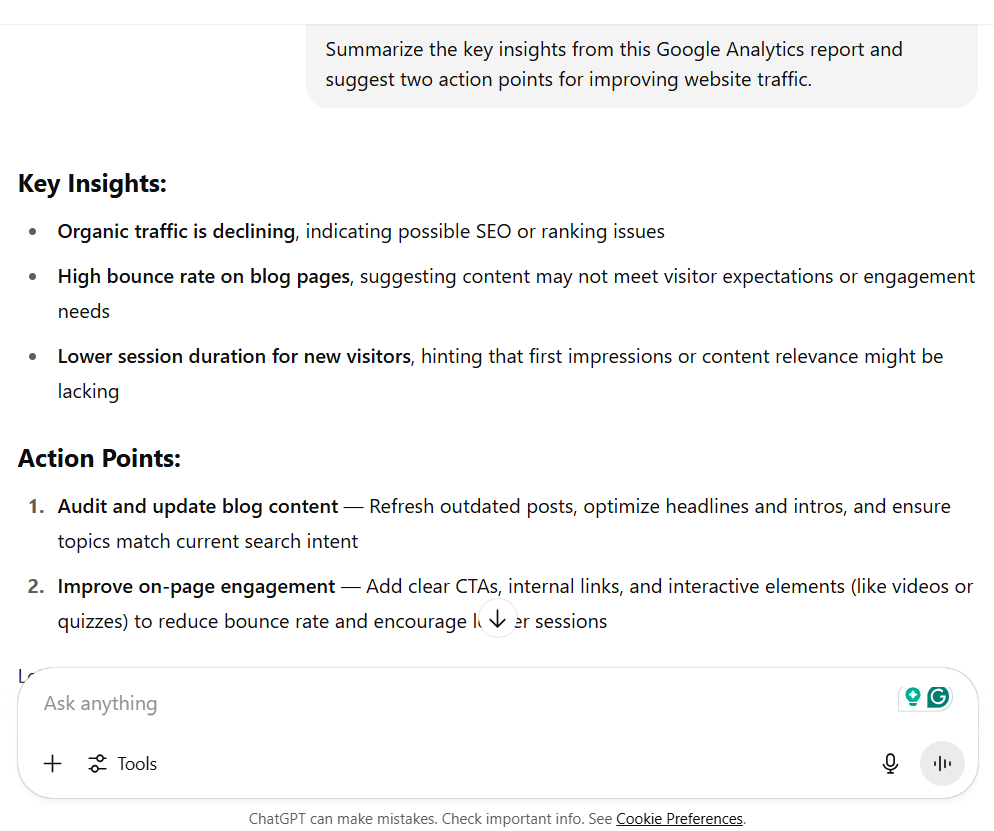
Understanding performance data is crucial to improving campaigns. ChatGPT can assist with data summarization, insights, and reporting by analyzing inputted spreadsheets or datasets. For example, you can ask it to identify top-performing channels, highlight trends, or outline actionable insights from a quarterly marketing performance report.
This makes analytical work more approachable for teams that may lack advanced data skills. Instead of manually parsing numbers, ChatGPT outputs clear, plain-language summaries and helps marketers focus on strategic decision-making rather than number crunching.
Limitations of Using ChatGPT in Marketing

ChatGPT is powerful, but it is not perfect. Even though marketers use it for many tasks, there are limits that every team must understand. Knowing these limits helps you avoid mistakes and use the tool more wisely. ChatGPT can help with writing, brainstorming, and analysis, but it should not replace skilled human judgment.
Lacks Deep Context and Brand Understanding
One of the biggest limitations is that ChatGPT does not truly “understand” your brand the way a human marketer does. It works by predicting text based on patterns in the data it learned from. It cannot feel your brand values, voice, or tone unless you carefully guide it. This means the output may sometimes feel generic or misaligned with your unique brand identity.
If you don’t provide strong guidance and context in your prompts, the results might not reflect your product, audience, or campaign goals. Marketers still need to refine and edit most outputs to make them truly fit their brand messaging.
Can Produce Factually Incorrect Information
ChatGPT generates responses based on patterns, not real-time facts. It may create information that sounds plausible but is incorrect, outdated, or misleading. This can be risky if the content is published without review, especially for topics that require accuracy like product details, statistics, or industry insights.
Therefore, marketers must always verify and fact-check important information. Relying blindly on ChatGPT for research or factual content can lead to errors that hurt credibility or trust.
Limited Understanding of Real-Time Trends
ChatGPT does not automatically update itself with current data or trends. Its knowledge ends at a certain point in time and does not include events or developments that happen after its last training update. For marketers who rely on the latest trends, cultural shifts, or real-time data, this means ChatGPT cannot replace up-to-date research tools.
While it can help generate ideas based on general patterns, marketers still need to use analytics, trend reports, and industry sources to stay current.
Prompt Dependency
The quality of ChatGPT’s output depends heavily on input quality. If you write broad or unclear prompts, the results will be too. This means marketers must learn how to write strong prompts — clear, specific, and detailed. Poor prompts lead to unhelpful answers, wasted time, and more editing work.
For example, asking for “blog ideas about fitness” is too vague. A better prompt would include your audience, tone, and objective. Crafting good prompts takes skill and practice. Without this skill, teams may not get the value they expect.
Lack of Emotional Intelligence
Marketing often requires emotional nuance, creativity, and deep human insight. While ChatGPT can mimic empathetic language, it does not truly grasp human emotions. It may not reliably produce copy that connects emotionally with an audience, especially on sensitive or subtle topics. Human marketers are still needed to shape content that truly resonates.
This limitation is especially important in customer communication, brand storytelling, and community engagement. ChatGPT can help draft content, but humans must guide how that content feels and flows.
Risk of Repetitive or Predictable Output
Because ChatGPT learns from existing patterns, its suggestions may sometimes feel repetitive or too similar to common content already published online. For competitive industries, this can be a problem. Marketers want fresh, unique perspectives — not recycled phrases, ideas, or structures.
Teams must actively edit and enhance AI-generated content to ensure it stands out and does not feel formulaic. If used carelessly, ChatGPT content can blend into the noise instead of rising above it.
Challenges with Complex Strategic Tasks
ChatGPT excels at executing tasks like writing drafts, generating lists, or summarizing topics. But it is not a strategy expert. It cannot independently design a full marketing strategy, assess business goals, understand budget constraints, or make decisions that require real business judgment. For complex strategic planning, human marketers must lead, using AI only as a support tool.
Ethical and Legal Concerns
Another limitation is the risk of ethical issues. ChatGPT can unintentionally generate biased content because it reflects patterns in its training data. Without proper review, it may produce language that is inappropriate, insensitive, or offensive.
There are also legal concerns around copyright and originality. Even when the content is unique, some marketers worry about ownership rights or compliance with platform policies. Teams need clear guidelines on how to use AI responsibly and ensure that content meets legal and ethical standards.
ChatGPT Alternatives in Marketing
While ChatGPT is one of the most well-known generative AI tools, it is not the only solution available — nor always the best fit for every marketing task. Many tools exist that provide similar or complementary capabilities. Knowing your alternatives lets you choose the right tool for your needs, goals, and workflow.
AI Tools Built for Specific Marketing Tasks
Some tools are designed specifically for marketing functions rather than general text generation. These tools often include built-in features for campaign planning, audience analytics, performance optimization, and creative automation.
For example, there are systems that focus on:
-
Automated content calendars with recommended posting schedules.
-
AI-powered design assistants that generate visuals and layouts.
-
Audience analytics platforms that provide segmented behavior insights.
These alternatives integrate deeply with marketing data and platforms, unlike general chat-based models that work best as assistants rather than full solutions.
Specialized SEO Assistants
Search engine optimization requires tools that can access real-time search data, trends, keyword difficulty scores, backlink metrics, and competitor analysis. While ChatGPT can suggest keywords and ideas, it cannot provide live data or measure search performance.
SEO alternatives like dedicated platforms offer:
-
Real-time keyword tracking and ranking data.
-
Integrated site audit tools.
-
Competitive gap analysis.
These capabilities help marketers make data-driven decisions that ChatGPT alone cannot support.
Content Creation Platforms with Built-In Guidelines
Some platforms provide AI writing assistance alongside style guides, brand voice settings, and editorial workflows. These tools ensure that content stays consistent in tone, quality, and formatting for teams with large output demands. They often include:
-
Templates for emails, blogs, and ads.
-
Built-in tone and grammar checks.
-
Collaboration features for team review.
These AI writers support more structured workflows compared to open-ended chat prompts.
Analytics and Reporting Dashboards
For performance analysis, reporting dashboards that connect directly to marketing channels (like social platforms, email systems, and ad networks) provide live insights. These tools can generate automatic reports, trend visualizations, and performance benchmarks.
Alternatives in this space offer:
-
Real-time campaign dashboards.
-
Automated report scheduling.
-
Integration with multiple data sources.
ChatGPT can summarize data you provide, but it cannot pull or visualize data from your live accounts.
Customer Engagement Platforms
While ChatGPT can power basic chatbot interactions, specialized conversational platforms offer deeper integration for lead capture, user segmentation, automated workflows, and CRM connections. These systems allow marketers to:
-
Manage multi-channel messaging.
-
Track user journeys at scale.
-
Trigger actions based on user behavior.
They often include AI, but with marketing automation built in rather than standalone language generation.
Visual Content Generators
ChatGPT focuses on text. But modern marketing needs visual content — images, videos, infographics, and animations. There are AI tools tailored to visual creation that help generate or enhance visual assets faster. These tools are especially useful for social media, display ads, and video campaigns.
Tools for Project and Workflow Management
Marketing projects involve many moving pieces — planning, approvals, timelines, and collaboration among teams. Alternatives that help manage tasks, workflows, and team communication are essential complements to AI writing assistants. These systems:
-
Track progress on deliverables.
-
Assign tasks and deadlines.
-
Centralize team notes, assets, and edits.
They do not replace ChatGPT but help teams stay organized and efficient.
Choosing the Right Mix
Instead of thinking in terms of one tool replacing another, the smarter approach for marketers is to combine tools based on needs. ChatGPT works well for ideation, drafts, summaries, and conversational support. Other tools bring structure, data, execution, measurement, and creativity that go beyond what a single generative model can do.
By using ChatGPT alongside specialized marketing tools, teams can harness strengths from each — blending human insight, real-time analytics, automation, and strategic planning. This balanced toolkit helps marketers produce better outcomes, reduce repetitive tasks, and maintain high-quality results throughout their campaigns.
Corexta for Marketing: Use Cases
Corexta is a modern, all-in-one business management platform built to help agencies and teams manage clients, projects, data, communication, and automation from a single dashboard. It is designed to streamline operations, eliminate tool overload, and support better collaboration — all of which help strengthen marketing efforts in real ways. Below, we explore how Corexta can be used specifically for marketing needs and why it’s becoming valuable for modern marketers.
Unified Customer Data for Better Audience Understanding
Marketing begins with knowing your audience. Corexta’s CRM (Customer Relationship Management) tools let you centralize all customer data in one place — including contact details, past interactions, communication history, preferences, and more. This unified view means you and your marketing team can segment audiences more accurately and tailor campaigns to specific groups based on real data instead of guesswork.
With all customer information stored in one system, you can easily:
-
Track lead sources and campaign touchpoints.
-
Monitor customer engagement over time.
-
Identify high-value segments for targeted messaging.
This central data hub supports smarter marketing decisions and stronger personalization.
Advanced Audience Segmentation and Personalization
Corexta supports advanced audience segmentation by pulling key data points into meaningful groups. Marketers can divide audiences by demographics (age, job role, location), behavior (purchase history, site activity), lifecycle stages (new leads, loyal customers), and more. These segments enable highly personalized content for different groups, which increases relevance and engagement.
You can use this segmented data to tailor:
-
Email campaigns with dynamic subject lines and custom offers.
-
Website landing pages that change based on visitor profiles.
-
Ads that speak directly to specific customer interests.
By organizing your audience into meaningful clusters, Corexta helps you deliver customized marketing experiences at scale, rather than one-size-fits-all messaging.
Marketing Task Automation and Workflow Efficiency
Repetitive marketing tasks often eat up time that could be spent on strategy and creativity. Corexta’s automation features help automate routine activities, such as lead follow-ups, email scheduling, and status updates. Instead of manually guiding each step, automation ensures your workflows continue seamlessly even while you focus on bigger goals.
For example:
-
Send automated emails to new leads after signup.
-
Trigger follow-up reminders for sales or nurture sequences.
-
Update lead statuses automatically after certain actions.
This level of automation not only saves time but also ensures consistency and timeliness in your audience interactions — two key ingredients for successful marketing.
Integrated Campaign Collaboration and Team Communication
Marketing campaigns typically require input from multiple team members — designers, copywriters, strategists, and data analysts. Corexta brings teams together in one workspace where communication and collaboration happen naturally and in real time. Built-in chat, task assignments, and progress tracking means that everyone stays on the same page without relying on separate communication tools.
With centralized team collaboration, marketers can:
-
Assign and monitor campaign tasks easily.
-
Share feedback and assets without losing context.
-
Get real-time updates and notifications to stay aligned.
This collaborative environment reduces misunderstandings and speeds up campaign execution, making it easier to meet deadlines and coordinate cross-functional efforts.
Project Management for Marketing Campaigns
Marketing success depends not just on ideas but on execution. Corexta includes rich project management capabilities such as visual task boards, timelines, progress tracking, and time tracking. These help teams plan campaigns from start to finish with clarity and control.
Specific project management benefits include:
-
Prioritizing marketing tasks and milestones.
-
Mapping out campaign phases with Gantt charts or Kanban boards.
-
Tracking time spent on content creation, design work, or meetings.
Marketers can see what’s done and what’s next at a glance, reducing confusion and improving workflow pacing. This visibility keeps campaign execution on track, even when multiple projects run concurrently.
Real-Time Reporting and Insights
Data-driven decisions are essential in marketing. Corexta’s reporting features help teams track performance metrics across campaigns, lead generation activities, and customer engagement. Customizable dashboards show insights in real time, such as pipeline health, campaign progress, and revenue impact.
With real-time analytics:
-
Teams can measure what’s working and what needs adjustment.
-
Marketing leaders get transparency into performance trends.
-
Decisions for future campaigns become grounded in data.
Instead of exporting data to separate tools, all key insights live within Corexta’s platform, making reporting faster and more integrated with your workflow.
Invoicing and Budget Tracking for Marketing Projects
Marketing teams often work with budgets, vendor costs, and billing scenarios. Corexta helps streamline financial management by offering invoicing, expense tracking, and payment processing tools. This makes it easier to align finance with marketing operations.
For example:
-
Create and send invoices for campaign work.
-
Track expenses for content promotion or advertising costs.
-
Generate financial summaries directly from campaign data.
By linking financial metrics with project and client data, marketers get a clearer view of ROI and budget performance. This supports smarter spending decisions and improves accountability across campaigns.
Scalability for Growing Marketing Teams
Whether you’re running a small in-house marketing team or a full agency with multiple clients, Corexta is built to scale. It supports flexible user roles, customizable access controls, and additional modules as your needs evolve. This flexibility means that Corexta can grow with your marketing goals without forcing you to switch platforms later on.
Scalability features make it ideal for:
-
Expanding teams with varied access permissions.
-
Adding more complex workflows as campaigns grow in scope.
-
Integrating additional tools over time without losing continuity.
By keeping all operations under one roof, marketers avoid fragmentation and tool sprawl as their teams and campaigns expand.
Corexta is more than a CRM or project tool — it’s a centralized marketing operations platform that connects customer data, collaboration, automation, and insights in one intuitive workspace. For marketers, this means better segmentation, stronger personalization, more efficient workflows, and deeper analytics — all of which contribute to more effective and scalable marketing efforts.
Read More: How to Track, Measure & Report on Strategic Initiatives