The AI Usage Gap: Why Rapid Personal Adoption Doesn’t Mean Immediate Workplace Wins

Share on:

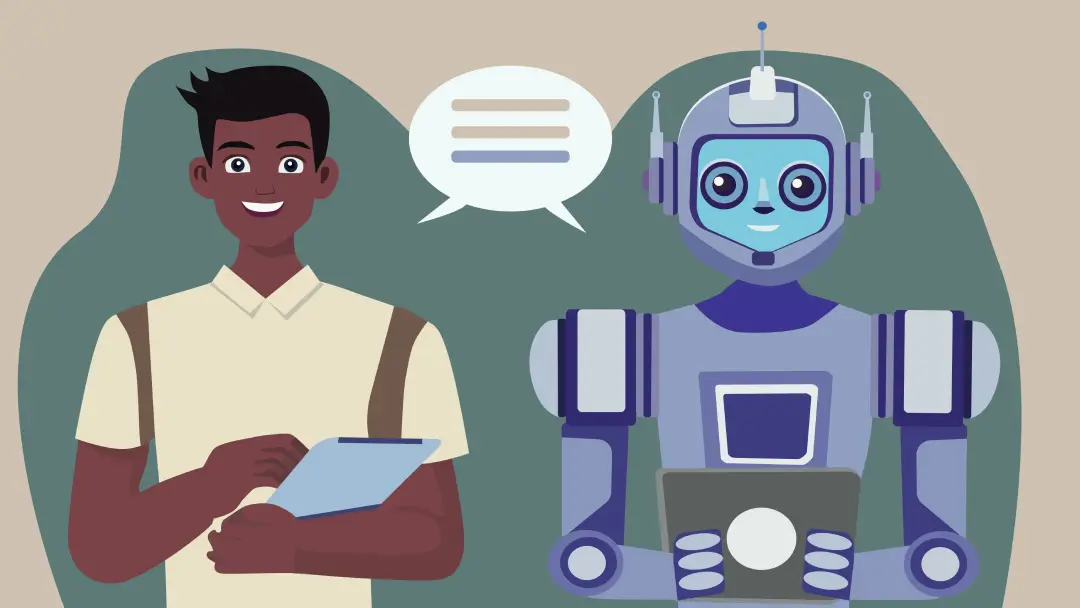
Artificial intelligence has quickly become part of everyday life. From generating emails and summarizing documents to brainstorming ideas and automating routine tasks, people around the world are experimenting with AI tools in their personal workflows. Many professionals now rely on AI assistants to write faster, research quicker and manage information more efficiently. This rapid personal adoption suggests that AI is already transforming how individuals work and think about productivity.

However, the story looks very different inside many organizations.

Despite the growing familiarity with AI tools, businesses often struggle to translate individual experimentation into measurable workplace outcomes. Employees may use AI informally to speed up small tasks, but company-wide adoption, structured workflows and consistent productivity gains are still developing. This disconnect between how quickly individuals adopt AI personally and how slowly organizations realize its full value is often referred to as the AI usage gap.

Several factors contribute to this gap. Many companies are still evaluating how AI fits into their existing workflows, tools and security policies. Teams may lack clear guidance on which tools to use, how to integrate them into daily work or how to maintain data privacy while using them. In other cases, employees are eager to use AI but do not have the training or confidence to apply it effectively in professional environments.

At the same time, organizations recognize the enormous potential of AI to improve productivity, decision-making and collaboration. When implemented thoughtfully, AI can reduce repetitive work, accelerate research, enhance communication and help teams focus on higher-value tasks. The challenge lies not in the availability of AI tools, but in bridging the gap between experimentation and meaningful workplace transformation.

Understanding this gap is essential for businesses that want to turn AI enthusiasm into real operational advantages. By examining how employees currently use AI, what barriers prevent deeper adoption and what strategies can support responsible implementation, organizations can move from scattered usage to structured, impactful AI-powered workflows.

4 Key Trends Shaping AI Usage in Our Workplaces

Artificial intelligence has moved rapidly from experimental technology to a mainstream productivity tool. Yet the way AI spreads across workplaces is complex and uneven. While individuals are adopting AI tools quickly in their daily work, organizations often struggle to convert that enthusiasm into structured, large-scale productivity improvements.

Recent surveys and workforce research reveal several patterns shaping how AI is actually used in professional environments today. These patterns highlight why the AI usage gap exists and what organizations must understand to close it.

Below are four key trends defining the current state of AI adoption in modern workplaces.

Everything everywhere: the growing footprint of AI
the growing footprint of AI

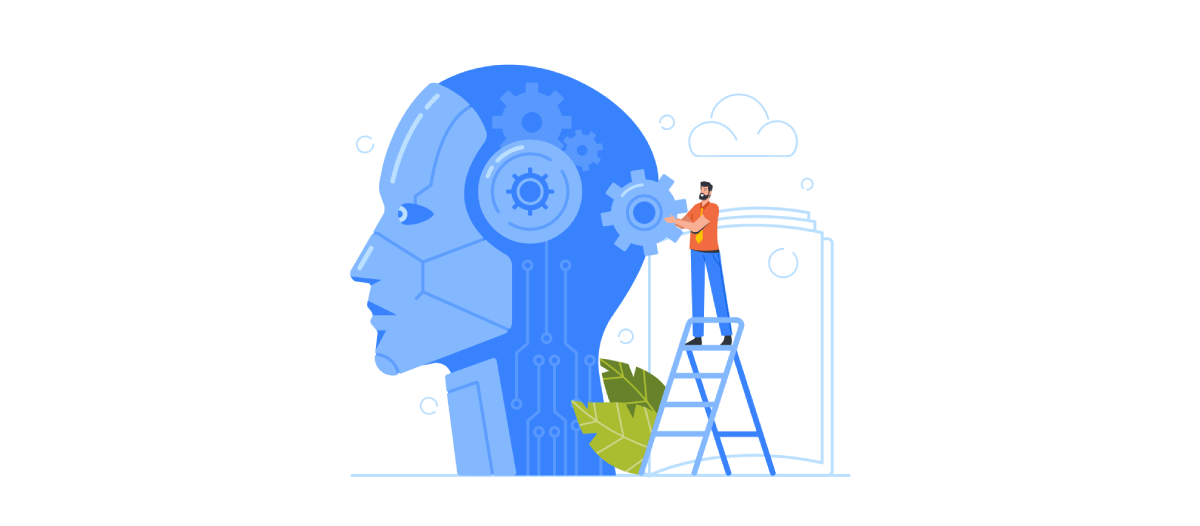
Artificial intelligence is no longer confined to research labs or technology companies. Today, AI tools are embedded across industries, job functions and daily workflows. From marketing teams generating content to developers using coding assistants and analysts automating reports, AI is becoming a universal layer of modern work.

Recent workforce data shows how quickly this shift is happening. The percentage of employees using AI at work has nearly doubled in just two years, rising from about 21% in 2023 to roughly 40–45% by 2025.
At the same time, frequent use of AI tools has increased significantly, with a growing number of employees relying on AI weekly or daily for routine tasks.

This rapid adoption reflects how accessible AI has become. Tools that once required specialized expertise are now available through simple conversational interfaces. Employees can generate reports, summarize meetings, write code or brainstorm ideas using natural language prompts.

Across organizations, the most common workplace uses of AI include:

  • Writing and editing documents

  • Brainstorming ideas and content creation

  • Summarizing information and research

  • Automating repetitive tasks

  • Data analysis and reporting

Studies show that workers most often use AI to consolidate information (42%) and generate ideas (41%), highlighting how AI is increasingly functioning as a collaborative assistant rather than a replacement for human thinking.

The growing footprint of AI also spans industries. Knowledge-based sectors such as technology, finance and professional services report some of the highest adoption rates. For example, over three-quarters of technology workers report using AI tools, while more than half of professionals in finance and consulting roles rely on AI for their work.

At the same time, AI is spreading into non-technical fields as well. Marketing teams use AI for campaign creation, customer support teams use AI chat assistants, and HR departments use AI tools to analyze employee feedback or recruitment data.

In many organizations, AI is becoming a general-purpose productivity layer that sits across multiple tools and workflows.

However, widespread exposure to AI does not automatically mean structured adoption. While many employees experiment with AI tools informally, the challenge lies in integrating those tools into coordinated workflows that deliver measurable organizational value.

This leads directly to the second trend shaping workplace AI usage.

Potential vs. adoption: AI in the workplace
Potential vs. adoption: AI in the workplace

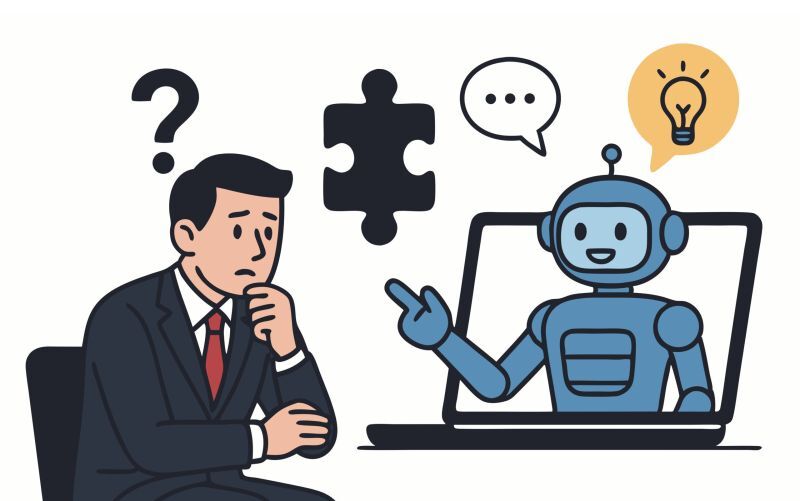
The excitement around AI’s potential is enormous. Business leaders frequently discuss how AI can transform productivity, reduce costs and automate complex processes. Yet the actual level of structured AI adoption within organizations often lags behind this vision.

One of the clearest signs of this gap appears when comparing personal AI usage with workplace usage.

Surveys show that many professionals experiment with AI tools in their personal or informal work environments, but far fewer use them regularly within official company workflows. For example, one workforce survey found that 64% of respondents had used AI tools personally, yet 55% reported never using AI at work.

Even among employees who do use AI professionally, regular usage remains relatively limited. Only a small percentage report daily engagement with AI tools, while many others use them occasionally or for specific tasks.

This discrepancy highlights an important reality: AI enthusiasm does not automatically translate into enterprise adoption.

Several factors explain why organizations struggle to convert AI potential into real workplace transformation.

First, AI tools often emerge faster than companies can evaluate and approve them. Employees may discover new tools on their own, but organizations need time to assess security risks, compliance issues and data privacy implications before integrating them into official workflows.

Second, many companies are still experimenting with AI strategies. Some organizations run pilot projects or limited trials rather than implementing AI across entire teams. As a result, AI usage remains fragmented instead of becoming part of standardized processes.

Third, organizations frequently underestimate the complexity of AI integration. Deploying AI effectively often requires:

  • Data infrastructure upgrades

  • Workflow redesign

  • Employee training programs

  • New governance policies

Without these structural changes, AI remains an optional productivity tool rather than a core component of business operations.

The result is a workplace environment where AI potential is widely recognized but unevenly realized. Employees may see clear benefits from using AI individually, yet organizations struggle to scale those benefits across departments.

This gap between expectation and implementation is a defining characteristic of today’s AI adoption landscape.

The use case gap: how we’re using AI vs. what we really want
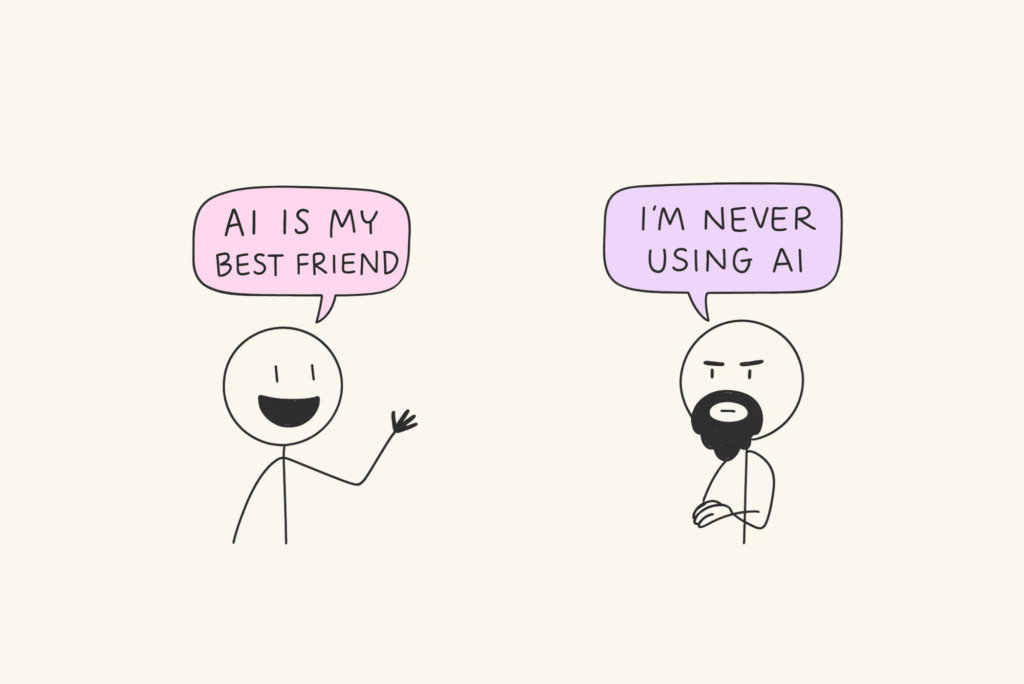
how we’re using AI vs. what we really want

Another important trend shaping AI usage is the use case gap—the difference between how people currently use AI and how they wish they could use it.

Most employees today rely on AI for relatively simple productivity tasks. These include drafting emails, summarizing documents, brainstorming ideas or organizing information. While these applications are valuable, they represent only a small portion of AI’s potential capabilities.

Research shows that workers primarily use AI to assist with tasks like writing, editing and ideation, which are among the most accessible entry points for generative AI tools.

However, when employees are asked about the capabilities they would most like AI to provide, their expectations are far more ambitious.

Professionals often want AI systems that can:

  • Automate entire workflows

  • Provide intelligent decision support

  • Analyze large datasets instantly

  • Integrate seamlessly with project management systems

  • Predict outcomes or risks before they occur

In other words, employees envision AI as a workflow partner rather than just a writing assistant.

The challenge is that many organizations have not yet implemented the infrastructure needed to support these advanced use cases.

Enterprise-level AI adoption requires deeper integration with internal systems such as:

  • CRM platforms

  • project management software

  • knowledge bases

  • communication tools

  • data analytics platforms

Without these integrations, AI tools remain disconnected from the workflows where employees actually perform their work.

This creates a scenario where employees use AI for isolated tasks rather than as part of an integrated productivity system.

Another dimension of the use case gap is skill readiness. Even when AI tools are available, employees may not fully understand how to apply them to complex tasks. Surveys show that many workers believe their current skills may not align with the future of AI-driven work environments.

As a result, employees often limit their AI usage to simple tasks where the benefits are obvious, rather than exploring more advanced capabilities.

Closing the use case gap requires organizations to do more than provide access to AI tools. They must help employees understand how AI fits into their actual workflows and how it can support strategic decision-making, collaboration and productivity.

Until that happens, AI usage will continue to be dominated by basic tasks rather than transformative applications.

Barriers decoded: what’s keeping people away from AI?

what’s keeping people away from AI

Despite growing interest in AI, several persistent barriers continue to slow workplace adoption. Understanding these obstacles is essential for organizations that want to unlock AI’s full potential.

One of the most significant barriers is lack of training and AI literacy.

Many employees learn to use AI tools independently rather than through formal training programs. This self-directed learning can lead to inconsistent usage patterns and uncertainty about best practices. In many organizations, employees receive only limited guidance on how to use AI responsibly or effectively.

At the leadership level, the problem can be even more pronounced. Surveys reveal that many executives overestimate how widely AI is used within their organizations, highlighting a disconnect between leadership perception and employee reality.

This perception gap can make it difficult for companies to design effective adoption strategies, because decision-makers may believe AI is already integrated into workflows when it is not.

Another major barrier is trust and security concerns.

Organizations must ensure that AI tools comply with data privacy regulations, intellectual property policies and cybersecurity standards. Many companies hesitate to allow unrestricted use of AI tools because sensitive business information could be exposed through external platforms.

As a result, employees may want to use AI but lack clear policies on which tools are approved or how they should be used.

A third barrier involves workflow disruption.

Introducing AI often requires rethinking how work is structured. Employees must adapt to new tools, processes and collaboration models. Without clear guidance, AI adoption can create confusion rather than efficiency.

In some cases, poorly implemented AI systems can even increase workload rather than reduce it. For example, employees may need to verify AI-generated outputs, correct errors or manage multiple tools simultaneously.

Recent workplace research also suggests that excessive AI usage can contribute to cognitive overload when workers rely on multiple systems at once without proper workflow integration.

Finally, organizational inertia remains a powerful obstacle.

Many companies operate with legacy systems and established workflows that are difficult to modify. Integrating AI into these environments requires investment, experimentation and cultural change.

Without leadership commitment and clear strategy, AI initiatives often remain isolated experiments rather than organization-wide transformations.

Together, these four trends explain why the AI usage gap continues to exist. AI tools are spreading rapidly across industries, yet real organizational adoption remains uneven. Employees are enthusiastic about AI’s potential, but practical challenges—training gaps, fragmented tools, unclear policies and workflow integration issues—often prevent companies from realizing the full benefits.
4 Strategic Recommendations

The gap between rapid personal AI adoption and slower workplace transformation is not simply a technology issue. It is primarily a strategy, workflow and organizational readiness challenge. Many employees are already experimenting with AI tools individually, but without clear direction, those efforts remain scattered and inconsistent.

To close the AI usage gap, organizations must move beyond experimentation and establish a structured approach to AI adoption. This means aligning tools, training, policies and workflows so that AI becomes a reliable part of everyday work rather than an isolated productivity trick.

✅ Unify the AI toolkit

One of the most common challenges in modern workplaces is tool fragmentation. Employees often use multiple AI tools simultaneously—writing assistants, research tools, coding assistants, automation platforms and analytics tools—without a centralized system to manage them.

While this experimentation can drive innovation, it also creates several problems:

  • Employees waste time switching between different tools

  • Teams use inconsistent workflows

  • Sensitive data may be shared across unapproved platforms

  • Organizations lose visibility into how AI is actually being used

Surveys show that many professionals adopt AI tools independently rather than through official company channels. This leads to a growing number of unmanaged AI solutions operating across the workplace.

Unifying the AI toolkit helps solve this problem by consolidating AI capabilities within a controlled environment.

Instead of allowing every team member to rely on separate tools, organizations should create a centralized AI ecosystem where employees can access the capabilities they need through integrated platforms.

This unified approach provides several benefits:

Improved productivity
Employees spend less time managing tools and more time completing tasks.

Better governance
Organizations can ensure that AI tools meet security, privacy and compliance standards.

Consistent workflows
Teams collaborate using the same AI systems, which reduces confusion and increases efficiency.

Data protection
Sensitive company information remains within approved systems.

Another important advantage of a unified AI toolkit is the ability to integrate AI directly into existing business platforms such as project management tools, communication systems and knowledge bases. When AI operates inside the tools employees already use, adoption becomes far more natural and effective.

Organizations that successfully unify their AI ecosystem often experience faster adoption and stronger productivity gains because AI becomes embedded within everyday workflows rather than functioning as an external add-on.

✅ Build an AI-ready workforce

AI-ready workforce

Technology alone cannot close the AI usage gap. Even the most advanced tools will fail to deliver results if employees lack the skills and confidence to use them effectively.

One of the most frequently cited barriers to workplace AI adoption is lack of training and AI literacy. Many professionals learn to use AI tools through trial and error, online tutorials or informal experimentation rather than structured learning programs.

This approach creates uneven knowledge across teams. Some employees become highly skilled AI users, while others remain uncertain about how AI can help them in their roles.

Building an AI-ready workforce requires organizations to invest in comprehensive AI education and skill development.

This training should go beyond basic tool tutorials. Instead, it should help employees understand:

  • How AI works and where it adds value

  • When to rely on AI and when human judgment is essential

  • How to write effective prompts and instructions

  • How to evaluate and verify AI-generated outputs

  • How to apply AI to real workplace scenarios

Practical training is especially important. Employees learn best when they can see how AI improves their own workflows. For example:

  • Marketing teams can learn how AI supports campaign planning and content creation

  • Product teams can explore AI-assisted research and analysis

  • Customer support teams can practice AI-driven response automation

  • Managers can use AI for reporting and decision support

Organizations should also encourage cross-department knowledge sharing. Employees who already use AI successfully can demonstrate real use cases and teach colleagues how to integrate AI into daily work.

Another critical aspect of workforce readiness is helping employees understand the limitations of AI. AI systems are powerful but imperfect. Workers must be able to verify outputs, identify errors and apply human oversight when necessary.

When companies invest in AI education, they empower employees to move beyond simple tasks like writing assistance and begin using AI for problem solving, research and workflow optimization.

An AI-ready workforce transforms AI from a novelty into a strategic productivity tool.

✅ Establish trust through transparency

Trust plays a central role in AI adoption. Employees are far more likely to embrace AI tools when they understand how those tools work, what data they use and how their outputs should be evaluated.

Unfortunately, many organizations introduce AI without clear policies or communication. This lack of transparency can lead to confusion, skepticism or even resistance among employees.

Some workers worry that AI might replace their jobs, while others fear that using AI tools could expose sensitive information or violate company policies.

Establishing trust requires open communication and clear governance frameworks.

Organizations should begin by defining transparent guidelines that answer key questions such as:

  • Which AI tools are approved for workplace use?

  • What types of data can be shared with AI systems?

  • How should AI outputs be verified or reviewed?

  • Who is responsible for monitoring AI usage?

Providing clear answers to these questions helps employees feel confident about using AI responsibly.

Transparency also involves explaining why AI is being implemented. When employees understand that AI is meant to reduce repetitive work, improve productivity and support better decision-making, they are more likely to view it as a helpful partner rather than a threat.

Leadership communication plays a crucial role here. Executives and managers should regularly discuss how AI fits into the company’s long-term strategy and how it benefits both the organization and its employees.

Another important step is establishing ethical AI practices. Responsible AI adoption requires organizations to monitor potential risks such as bias, misinformation and inaccurate outputs. By demonstrating that AI systems are used responsibly and carefully evaluated, companies strengthen employee trust.

Transparency also extends to how AI decisions are made. When AI tools assist with tasks such as data analysis or recommendations, employees should be able to understand the reasoning behind those outputs.

Ultimately, transparency transforms AI from a mysterious “black box” into a trusted workplace collaborator.

✅ Make AI your workflow’s foundation

AI workflow foundation

The most successful organizations treat AI not as a separate tool but as a core component of their workflows.

Many companies begin their AI journey by experimenting with standalone tools. Employees might use AI to write emails, summarize documents or generate ideas. While these tasks are helpful, they only scratch the surface of AI’s potential.

Real productivity gains occur when AI becomes embedded into the systems that power daily work.

This means integrating AI into platforms such as:

  • project management systems

  • knowledge management platforms

  • communication tools

  • customer relationship management software

  • analytics and reporting systems

When AI is integrated directly into these environments, it can support entire workflows rather than individual tasks.

For example, AI integrated within project management tools can:

  • Automatically summarize project updates

  • Generate task descriptions or documentation

  • Identify workflow bottlenecks

  • Analyze team productivity patterns

Within communication platforms, AI can help summarize discussions, extract key decisions and generate follow-up tasks.

Inside knowledge bases, AI can help employees instantly find relevant information across large document libraries.

Embedding AI into workflows also reduces friction. Instead of leaving their primary tools to interact with AI platforms, employees receive AI assistance exactly where their work happens.

Another important benefit is data context. When AI systems operate inside business platforms, they can access relevant project data, documentation and communication history. This context allows AI to provide more accurate and meaningful insights.

Organizations that make AI a workflow foundation often see stronger productivity improvements because AI becomes a natural extension of how teams operate.

Over time, this approach allows companies to move beyond simple AI tasks and begin leveraging more advanced capabilities such as predictive analytics, intelligent automation and decision support.

Closing the AI usage gap requires a shift in mindset. Organizations must move from viewing AI as an experimental tool to treating it as an essential part of the modern workplace.

By unifying AI tools, preparing employees with the right skills, building trust through transparency and embedding AI directly into workflows, companies can transform individual experimentation into sustainable, organization-wide productivity gains.

These strategic steps lay the foundation for a future where AI supports not just isolated tasks but the entire ecosystem of modern work.

How Can Corexta Help?

Closing the AI usage gap requires more than simply giving employees access to AI tools. Organizations need a structured environment where AI works directly within daily workflows, supports collaboration and helps teams turn insights into real productivity improvements. This is where platforms designed for AI-powered work management and collaboration become especially valuable.

Corexta helps organizations bridge the gap between AI experimentation and meaningful workplace transformation by integrating AI capabilities into project management, team collaboration and operational workflows.

Instead of relying on disconnected AI tools across multiple platforms, Corexta brings key productivity functions into a single unified workspace, allowing teams to plan, execute and optimize work more efficiently.

Below are several ways Corexta helps organizations turn AI potential into real workplace results.

AI-powered work management

One of the biggest challenges organizations face is integrating AI into their daily workflows. Corexta addresses this by embedding AI-powered capabilities directly into project and task management systems.

Teams can use AI to:

  • Generate task descriptions and project documentation

  • Summarize meeting discussions and project updates

  • Organize large volumes of information quickly

  • Identify priorities and next steps automatically

This allows employees to spend less time managing repetitive administrative tasks and more time focusing on strategic work.

AI-supported project management also helps teams maintain clarity across complex projects, ensuring that everyone understands priorities, deadlines and responsibilities.

A unified workspace for teams

Another major barrier to effective AI adoption is tool fragmentation. Employees often use multiple systems for tasks, documentation, communication and project tracking.

Corexta helps solve this by providing a centralized workspace where teams can manage projects, documents, discussions and workflows in one place.

By consolidating these functions, organizations gain several benefits:

  • Reduced tool switching and improved productivity

  • Better collaboration across departments

  • Clear visibility into project progress

  • More consistent workflows across teams

When AI capabilities are integrated into a unified workspace, employees can apply AI insights directly within their work processes rather than switching between disconnected tools.

AI-driven knowledge management

Information overload is a major challenge in modern workplaces. Teams generate massive amounts of data through documents, reports, messages and project updates.

Corexta’s documentation and knowledge management features help organizations store, organize and access critical information efficiently.

AI can assist teams by:

  • Summarizing long documents and reports

  • Quickly retrieving relevant information from knowledge bases

  • Helping employees locate answers without searching multiple systems

This reduces time spent searching for information and allows teams to make faster, better-informed decisions.

Improved collaboration and communication

AI adoption often fails when teams work in silos. Corexta helps organizations maintain strong collaboration through integrated communication and real-time collaboration features.

Teams can:

  • Collaborate on projects and documents together

  • Track tasks and responsibilities clearly

  • Share updates and insights across departments

  • Maintain alignment on goals and deadlines

AI-enhanced collaboration tools help teams stay organized and informed, ensuring that important insights do not get lost in fragmented communication channels.

Scalable productivity for growing teams

As organizations expand, managing workflows and information becomes increasingly complex. Corexta provides scalable systems that help teams maintain efficiency as workloads grow.

By combining project management, documentation, collaboration and AI-powered productivity features, Corexta helps organizations create AI-ready workflows that grow alongside their teams.

Instead of relying on scattered tools and manual processes, businesses can build a structured work environment where AI supports everyday productivity.

Turn AI adoption into real results

The biggest challenge many companies face today is not whether to adopt AI—it is how to implement AI effectively across their organization.

Corexta provides a practical solution by combining AI capabilities with the systems teams already rely on for managing work.

With the right platform in place, organizations can move from isolated AI experimentation to consistent, scalable productivity improvements across departments.

Ready to transform the way your team works with AI?
Explore how Corexta can help your organization build smarter workflows, improve collaboration and unlock the full potential of AI-powered productivity.

Start building a more efficient workplace with Corexta today.

FAQs About The AI Usage Gap

What is the AI usage gap?

The AI usage gap refers to the difference between how quickly individuals adopt AI tools in their personal workflows and how slowly organizations integrate AI into structured workplace processes.

While many professionals experiment with AI independently, businesses often take longer to implement AI across teams due to security concerns, training needs and workflow integration challenges.

Why do employees use AI more personally than professionally?

Employees often adopt AI tools personally because they are easy to access and require little approval. In contrast, workplace usage must comply with company policies, data security standards and operational workflows.

Organizations also need time to evaluate tools, train employees and integrate AI systems into existing platforms.

What are the biggest barriers to workplace AI adoption?

Several factors contribute to slow AI adoption in organizations, including:

  • Lack of AI training and workforce readiness

  • Data privacy and security concerns

  • Fragmented tools and disconnected workflows

  • Unclear company policies regarding AI usage

  • Limited integration with existing business systems

Addressing these barriers is essential for closing the AI usage gap.

How can organizations close the AI usage gap?

Organizations can close the AI usage gap by focusing on four key strategies:

  • Unifying AI tools within a centralized ecosystem

  • Training employees to become AI-ready professionals

  • Establishing transparent governance and trust policies

  • Integrating AI directly into everyday workflows and systems

These steps help transform AI from an experimental tool into a reliable productivity driver.

Will AI replace employees in the workplace?

Most research suggests that AI is more likely to augment human work rather than replace it entirely. AI excels at automating repetitive tasks and analyzing large datasets, while humans remain essential for strategic thinking, creativity, decision-making and leadership.

When implemented effectively, AI allows employees to focus on higher-value work instead of routine administrative tasks.

What industries are adopting AI the fastest?

AI adoption is currently strongest in knowledge-based industries such as technology, finance, consulting and marketing. However, AI usage is rapidly expanding into healthcare, education, retail and many other sectors as tools become easier to use and more widely available.

Over time, AI is expected to become a standard productivity layer across nearly every industry.

Read More: ESP32-Based Smart Surveillance System With Cloud Alerts

Leave a Reply

Your email address will not be published. Required fields are marked *

First Month Subscription

Get 100% Off